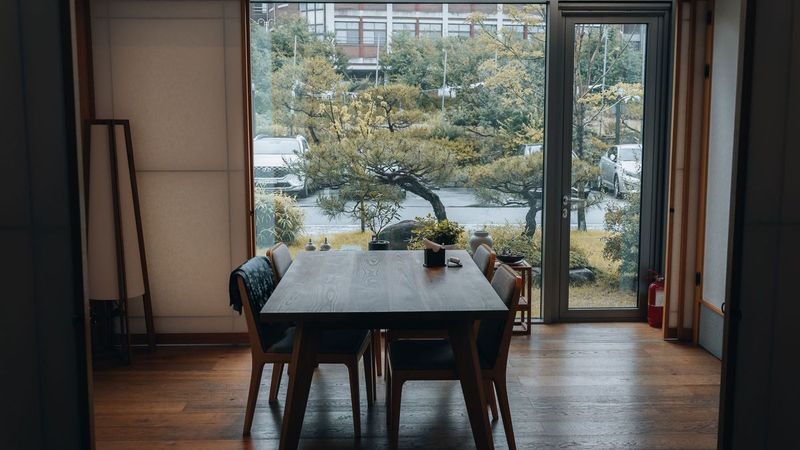
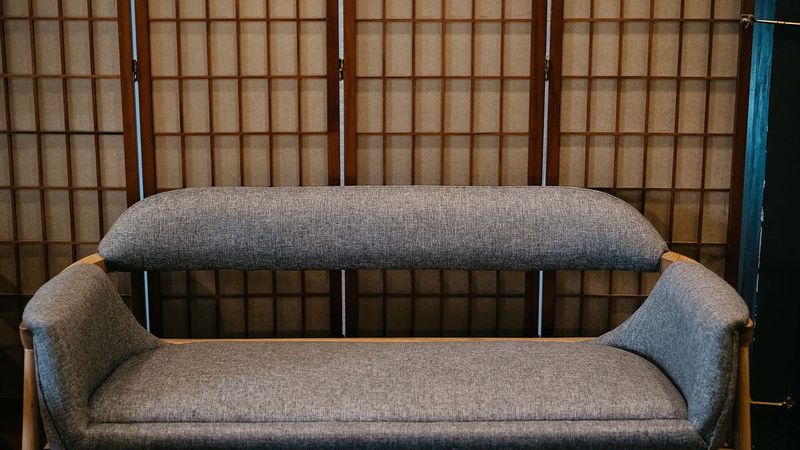
For furniture that takes daily wear, keyaki (zelkova) and nara (Japanese oak) are the hard, heavy woods, suited to dining tables and large pieces. Hinoki (Japanese cypress) is valued for its scent, lustre and resistance to decay, sugi (Japanese cedar) is light and easy to move, and kiri (paulownia), one of the lightest woods there is, is the traditional wood for chests of drawers. Choose by use: hardness for a table, lightness for pieces you move, and scent and quiet colour for a bedroom.
Five woods at a glance
The descriptions below draw on material published by Japan's Forestry Agency and on a Government of Japan feature on chest making. Two of the woods are conifers grown widely in planted forests; three are broadleaf trees.
- Hinoki (Japanese cypress): conifer, fine and smooth to the touch, with a calming scent; durable and slow to rot. Used for shrines, temples, baths, bedroom furniture and cutting boards.
- Sugi (Japanese cedar): conifer, very light, red-brown heartwood against pale sapwood, mild sweet scent. Used for floors, light tables and pieces that are moved often.
- Kiri (paulownia): broadleaf, extremely light and pale. The traditional wood for chests of drawers for clothes and kimono.
- Keyaki (zelkova): broadleaf, hard and heavy, with a strong, distinct grain and red to orange tones. Used for main pillars, beams, temple building, traditional furniture, lacquered trays and bowls.
- Nara (Japanese oak): broadleaf, hard and heavy, resists warping and scratches, sometimes shows a tiger-stripe figure. Used for large furniture, floors and whisky casks.
Hinoki
Hinoki grows straight and is easy to work. The Forestry Agency describes it as beautiful in colour and lustre, pleasantly scented, durable and slow to rot, which is why it has long been used for palaces, shrines and temples. Horyu-ji in Nara, which the agency describes as the oldest wooden building in the world, is the best-known example.
Its scent comes in part from hinokitiol, a compound in the wood. A Forestry Agency booklet published by its Kushiro office in Hokkaido in 2020 notes that hinoki is said to keep growing stronger for around 200 years after it is cut, and that it is also used for cutting boards and kitchen tools.
In a home, hinoki suits bed frames, shelves, bath stools and small tables. It is a softwood, so ask the maker which finish they recommend for a surface that will be used every day.
Sugi
Sugi grows fast and straight and has long been planted in Japan. According to the Forestry Agency, sugi and hinoki together make up about 70% of Japan's planted forest area (as of 31 March 2022), and sugi covers the largest share.
The Kushiro booklet describes sugi as very light, so furniture made from it is easy to carry, and suggests it for folding tables and pieces that are moved often. It releases moisture readily, which the booklet says makes it less prone to warping. The heartwood is red-brown or pink and the outer wood is pale, a contrast many people like in floors and table tops.
Its lightness makes it a good choice for a bench in the entry, a low table in a tatami room or shelving.
Kiri and the chest of drawers
Kiri is the wood of the traditional chest of drawers for clothes. A 2017 article in Highlighting Japan, published by the Government of Japan, describes it as second only to balsa in lightness and notes that it is seldom used for furniture outside Japan because of its limited strength. In Kamo, Niigata Prefecture, chests have been made from kiri for over 220 years, and makers there leave the sawn wood outdoors for one to three years before use.
Aichi Prefecture describes its Nagoya kiri chests, designated as a traditional craft of Japan in 1981, as known for keeping out damp, not passing heat and rarely warping. These are the qualities you want in a chest for clothes.
Given its limited strength, a kiri chest suits storage better than heavy daily use. Ask the maker how to clean it and whether the surface has been finished or left natural.
Keyaki
Keyaki grows into a large, hard and heavy tree, and its timber has long been used for the main pillar and beams of Japanese houses. The Kushiro booklet describes its grain as distinct and beautiful and the wood as tough and stable, and notes that it has been regarded as one of Japan's finest broadleaf woods and was essential in temple building.
It is also used for traditional furniture, for urushi lacquer trays and bowls, and for taiko drums and rice-cake mortars. For a dining table or a chest, keyaki gives weight and presence. Because each board's grain is so visible, ask for photographs of the actual boards before a piece is made.
Nara (Japanese oak)
Nara, in particular mizunara, is the Japanese oak. The Kushiro booklet explains that oak from Japan, China and Russia is generally called nara, and oak from North America is called oak; the two are similar in character and colour and are sometimes treated as the same.
Nara is heavy and hard, so it resists warping and scratches, and it is used for large furniture and floors. Its grain can show a tiger-stripe figure; tastes differ, though the booklet notes that the part showing it is said to be the hardest. It is also used for whisky casks.
If your Japandi room already has oak furniture from Europe, nara sits comfortably beside it while keeping the piece made in Japan.
Where the wood comes from and what to ask
Japan's planted forests cover about 10.09 million hectares, around 40% of its forest area, according to the Forestry Agency (as of 31 March 2022). Even so, much of the wood used in Japan is imported: the agency's wood supply and demand table for 2024, published in November 2025, put the wood self-sufficiency rate at 42.5%. A piece described as Japanese furniture may therefore be made in Japan from imported timber.
If you are drawn to mingei (Japanese folk craft) or to furniture from a particular region, ask where the wood was grown. The questions below are worth asking before you order, especially for a home that stays closed through humid summers.
- Where was the timber grown, and is it solid wood or veneer?
- How long was it dried, and how does the maker expect it to move with humidity?
- Which finish is used: oil, urushi lacquer, or a synthetic coating?
- How should it be cleaned, and can it be refinished later?
How STAYGO ATELIER can help
STAYGO ATELIER chooses furniture in Japanese woods with a designer's eye, from makers across Japan, and asks them the questions above on your behalf before you decide. We then arrange the purchase and shipping; you pay the makers directly. We do not visit the home or install pieces.
Questions owners ask
What is the best Japanese wood for a dining table?
No single wood suits every table, but keyaki and nara are the usual choices for a table used every day because they are hard and heavy. Hinoki and sugi are lighter woods, so for a table ask the maker which finish they recommend.
What is hinoki used for?
Hinoki has long been used for shrines, temples and palaces, and today also for baths, bed frames, shelves and cutting boards. The Forestry Agency describes it as durable, slow to rot and pleasantly scented.
What is the difference between hinoki and sugi?
Both are Japanese conifers grown widely in planted forests. Hinoki is valued for its lustre, scent and durability; sugi is lighter and softer, with a clear contrast between red-brown heartwood and pale outer wood.
Why are chests of drawers made of kiri?
Kiri is extremely light, and makers in Aichi describe their kiri chests as keeping out damp, not passing heat and rarely warping, which suits clothes and papers. Its strength is limited, so it suits storage better than heavy daily use.
Sources
- Forestry Agency, Hokkaido Regional Forest Office, Kushiro Forest Management Center, 木工クラフト (Woodworking craft: tree species for building and furniture, Japanese) (2020)
- Forestry Agency, Kinki Chugoku Regional Forest Office, ヒノキ (Hinoki, Japanese) (2026)
- Forestry Agency, スギ・ヒノキ林に関するデータ (Data on sugi and hinoki forests, Japanese) (2022)
- Forestry Agency, 令和6年(2024年)木材需給表 (Wood supply and demand table 2024, press release, Japanese) (2025)
- Government of Japan, Highlighting Japan, Lords of the Tansu (2017)
- Aichi Prefecture, 名古屋桐箪笥 (Nagoya kiri chests, Japanese) (2026)