Japanese paper is easy to buy in Tokyo and hard to understand there. A sheet of good washi is light enough to lift with a breath and strong enough to outlast the room it was made for; Mino paper has covered shoji for centuries, and Echizen paper once carried the government's money. To see why, go to the valleys where it is still made by hand and watch a sheet form on a bamboo screen in cold water.
This article is about two of those valleys, Mino in Gifu and the Goka villages of Echizen in Fukui, and the three papers UNESCO lists. We read the pages of UNESCO, Japan's Agency for Cultural Affairs, the prefectures of Gifu and Shimane, the Echizen papermakers' cooperative, the Echizen Washi Village museums and a news site on November 5, 2026, and contacted none of them; the sources are listed at the end. For Eiheiji and the Echizen coast, see Fukui by Shinkansen; for the gold leaf and lacquer of the next prefecture north, see Kanazawa and Kaga.
Key points
- UNESCO lists Japanese handmade paper through three papers: Hon-minoshi from Mino, Hosokawa-shi from Saitama and Sekishu-banshi from Shimane, each made only from kozo, the paper mulberry.
- Mino has made paper for about 1,300 years, and its merchant quarter keeps the udatsu, raised firewalls at the ends of the roofs.
- Echizen traces its paper to a goddess said to have taught the villagers about 1,500 years ago; her shrine's lower hall, finished in 1843, is an Important Cultural Property.
- At the Udatsu Paper and Craft Museum in Echizen, a certified traditional craftsperson teaches the full method with Japanese kozo, by reservation.
ASK US TO SHAPE A DAY IN THE PAPER VALLEYS →
WHAT UNESCO LISTED AND WHY KOZO MATTERS
UNESCO describes washi as paper made by hand from the fibres of the paper mulberry, soaked in clear river water and filtered through a bamboo screen and passed on through families, preservation associations and the towns themselves. Japan's Agency for Cultural Affairs records the listing in 2014.
The listing rests on three papers, each held by its own association: Hon-minoshi from the Warabiu district of Mino; Hosokawa-shi from Ogawa and Higashichichibu in Saitama; and Sekishu-banshi from the Iwami area of Shimane. The shared rule is strict: only kozo, and every sheet formed by nagashi-zuki, the flowing method. Hon-minoshi goes mainly to shoji and to the repair of cultural properties.
MINO AND THE STREET OF UDATSU
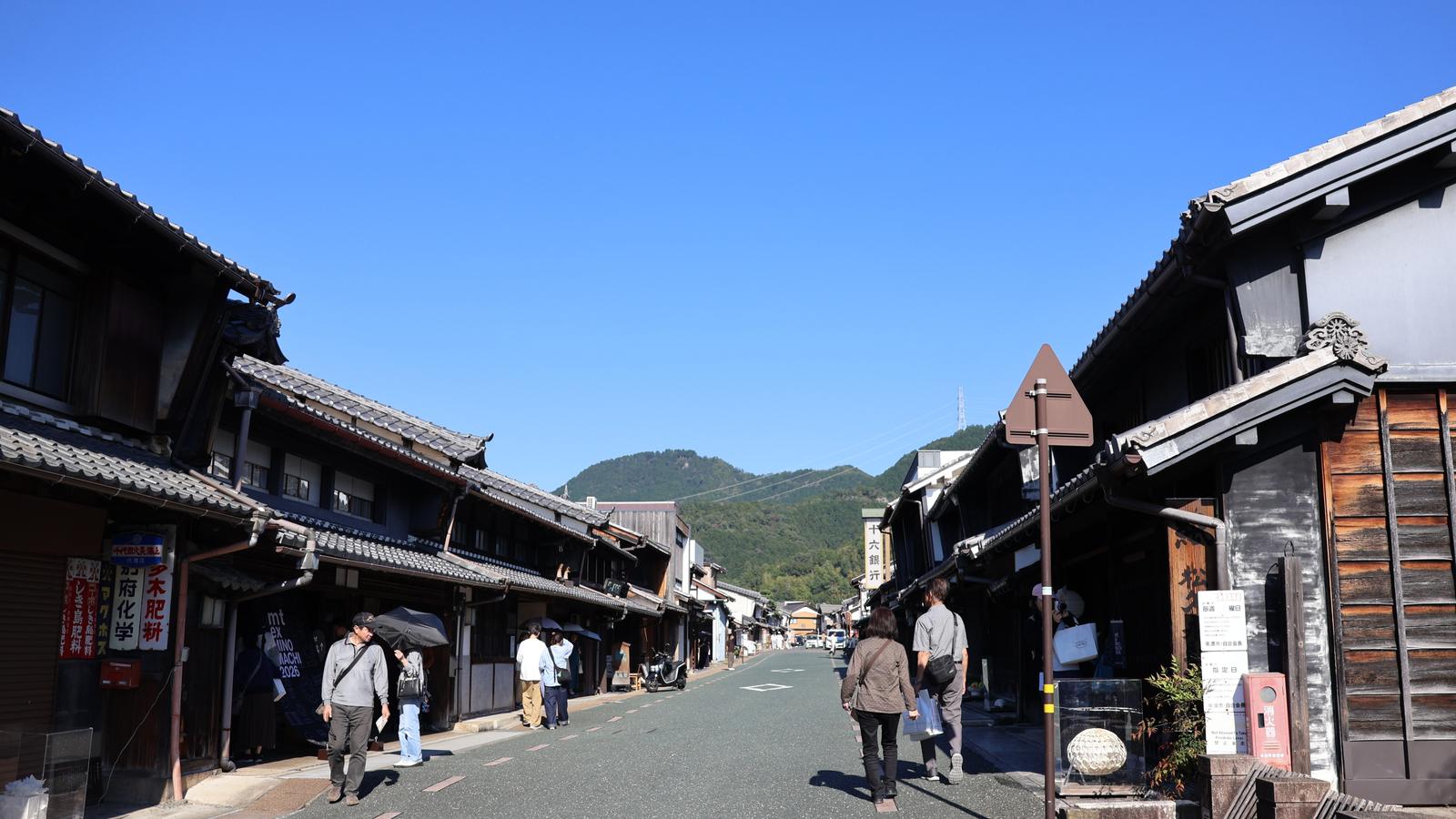
Gifu's tourism federation dates papermaking around Mino to about 1,300 years ago, and KOGEI JAPAN notes manuscripts in the Shosoin at Nara that point to the Nara period. In the Edo period Mino became the paper of the shoji screen. The merchant quarter, laid out as a castle town by Kanamori Nagachika more than 400 years ago, is lined with houses from the Edo and Meiji periods, many raising udatsu at the ends of their roofs: short firewalls to stop a fire leaping from house to house. Only the prosperous could build them, which is why Japanese still say of someone who never gets ahead that his udatsu does not rise. The quarter is a nationally selected preservation district.
Two former washi wholesalers' residences in these streets are now a hotel, NIPPONIA Mino Merchant Town, with a reception room, a Japanese garden and a two-storey strongroom. It suits an unhurried day: the old town early, the paper valley after breakfast.
WARABIU AND THE PAPER AT THE MUSEUM
The Mino Washi Museum stands in Warabiu, where Hon-minoshi is made. Its galleries cover the history and technique of Mino paper, a special exhibition each year looks at one kind of paper, and visitors can form a sheet with the same tools and materials the papermakers use. It closes on Tuesdays.
Hon-minoshi is made under rules that read like a vintner's. Japan's tourism agency explains that its makers use only the white inner bark of Daigo Nasu kozo from Ibaraki, for its long, silky fibres; the bark was once spread in the shallow river to bleach in the sun, and the fibres are suspended with a mucilage pounded from the roots of tororo-aoi. The paper is thin, strong and translucent, which is what a shoji panel or a conservator needs. We ask a workshop in Warabiu whether a papermaker can receive you at the vat; whether and when is the papermaker's decision.
ECHIZEN AND THE GODDESS OF THE RIVER
Echizen tells a different story. The Fukui papermakers' cooperative records that a young woman appeared upstream on the Okamoto River, saw a narrow valley with little farmland and good water, and taught the villagers to make paper. Asked her name, she said only that she lived upstream, and vanished. They called her Kawakami Gozen, the lady of the upper river, and a figure of her still sits on the highest shelf of every paper house in the district.
Her shrine, Okamoto Shrine and Otaki Shrine, has an inner shrine on the summit of Mount Gongen and a lower shrine at its foot. Nippon.com reports that the lower shrine was completed in 1843 by the master carpenter Okubo Kanzaemon, under a roof of curved and gabled forms often called the most complex in Japan; it was named an Important Cultural Property in 1984. The paper for the Meiji government's Dajokan notes was made here.
A MORNING AT THE VAT IN ECHIZEN
Echizen Washi Village, about ten minutes by car from Echizen-Takefu Station on the Hokuriku Shinkansen, gathers three places. The Udatsu Paper and Craft Museum is a papermaker's house said to date from 1748, moved and restored, where certified traditional craftspeople work through the whole process from fibre to drying. The Paper and Culture Museum tells the history of the Goka villages and their shrines, and Papyrus House offers a short session of 20 to 40 minutes.
For a guest who wants to understand the paper, we would suggest the Udatsu museum's full lesson with a certified craftsperson and 100 percent Japanese kozo, JPY 22,000 including tax, by reservation. The papermakers can be watched until 16:00 and the village closes on Tuesdays, so we place it on a morning. Echizen hosho, the thick kozo paper that carried the revival of woodblock prints, was named an Important Intangible Cultural Property in 2000; its makers beat the fibre by hand and dry the sheets on wooden boards. We ask the workshops of the Goka villages whether one can show you that work; the answer is the workshop's to give.
HOSOKAWA AND SEKISHU AND HOW WE PLAN IT
Hosokawa-shi, from Saitama, and Sekishu-banshi, from Shimane, which the prefecture describes as strong yet surprisingly light, can be added. Mino and Echizen make the clearest pair: one valley shaped by the shoji and the merchant, the other by a goddess, a shrine and the nation's money.
Within Signature, our planning for journeys of 7 to 21 days, a paper route usually takes two to three nights, Mino first and then Echizen on the Hokuriku Shinkansen, often joined to Eiheiji or to Kanazawa and the Hokuriku coast. We arrange the cars, the hotel, the lesson and the workshop visits, and settle each in the simplest way available, usually on your hotel bill or on the day.
SOURCES AND HOW WE CHECKED
We read the pages below on November 5, 2026. We did not contact any workshop, museum, shrine, hotel or agency.
- UNESCO, Washi: paper mulberry, river water, bamboo screen, how the craft is passed on
- Agency for Cultural Affairs, Washi (Japanese): 2014 listing, the three papers and their associations, kozo only
- Agency for Cultural Affairs, intangible heritage (Japanese): Warabiu, uses of each paper, Sekishu kozo
- Agency for Cultural Affairs, Echizen hosho (Japanese): designated 2000, hand beating, board drying
- Japan Tourism Agency, Making Hon-Minoshi: Daigo Nasu kozo, river bleaching, tororo-aoi
- Gifu Tourism Federation, Mino Washi Museum (Japanese): about 1,300 years, exhibitions, papermaking, Tuesday closing
- Gifu Tourism Federation, the udatsu streets (Japanese): firewalls, the saying, Kanamori Nagachika
- Gifu Tourism Federation, NIPPONIA Mino Merchant Town (Japanese): two former washi wholesalers' houses
- KOGEI JAPAN, Mino Washi: Shosoin manuscripts, shoji paper of the Edo period
- KOGEI JAPAN, Echizen Washi: Okamoto River basin, Meiji banknote paper
- Fukui Prefecture Washi Industry Cooperative (Japanese): Kawakami Gozen, the shrines, 1984, domain and Dajokan notes
- Nippon.com, Okamoto and Otaki Shrines (Japanese): 1843, Okubo Kanzaemon, the roof
- Echizen Washi Village (Japanese): the three facilities, Papyrus House, ten minutes from the station
- Udatsu Paper and Craft Museum (Japanese): house of 1748, JPY 22,000 lesson, hours
- Paper and Culture Museum (Japanese): the Goka villages and shrines
- Shimane Prefecture, Sekishu washi (Japanese): Nara-period origin, strong yet light
QUESTIONS TRAVELLERS ASK
Can we make paper ourselves?
Yes. The Mino Washi Museum lets visitors form a sheet with the papermakers' tools, and the Udatsu Paper and Craft Museum in Echizen offers a full lesson with a certified craftsperson by reservation.
Mino or Echizen, if we have one day?
Mino for the merchant town and the UNESCO-listed Hon-minoshi; Echizen for a working papermaking district with its shrine and museums. With two days we would suggest both.
How do we get to Echizen Washi Village?
By the Hokuriku Shinkansen to Echizen-Takefu Station, then about ten minutes by car.
Is the village open every day?
The museums close on Tuesdays and over the New Year, and the papermakers can be watched until 16:00, so a morning suits it.
ASK US TO SHAPE A DAY IN THE PAPER VALLEYS
Tell us when you are coming, who is travelling and what you would like to see made. We will set out Mino, Echizen and the workshops, with the reasons, so that you can choose.
Begin planning →We reply within 24 hours, in writing
Some of the restaurants and bars we arrange seat guests only by introduction or membership. We ask on your behalf; the table and the evening are the house's decision. We do not publish their names.