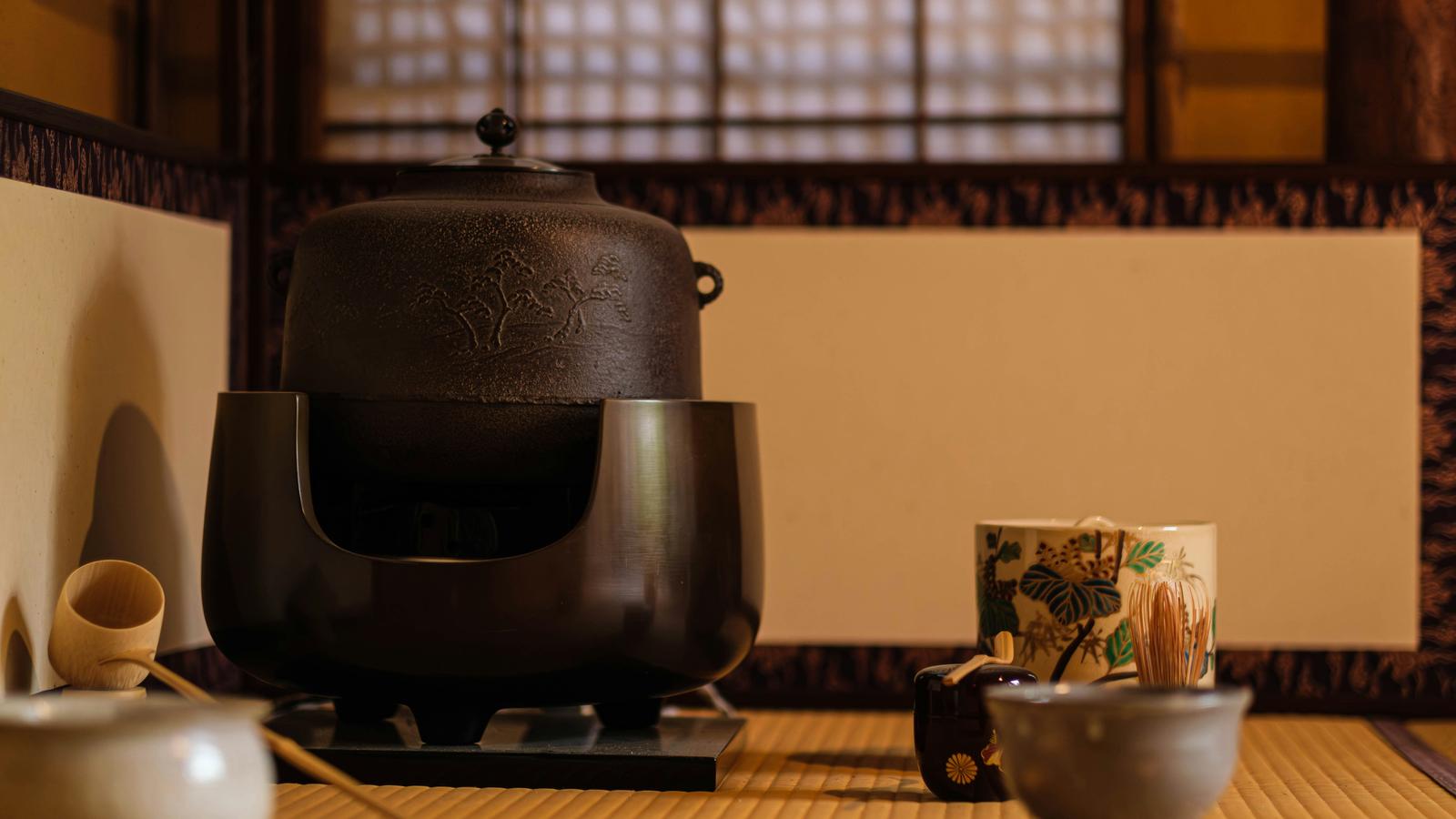
In Tokyo you can drink tea made in front of you for as little as ¥1,815 at a garden tea house, or take a private session for your own party in a hotel tea room. On the official pages we read on October 28, 2026, a walk-in bowl of matcha at Happo-en's Muan tea house cost ¥1,815 (Friday to Monday, 11:00 to 15:00), a 60-minute session at The Okura Tokyo's Chosho-an cost ¥5,000 per person for two or more, the Imperial Hotel's Toko-an listed a 60-minute tea experience at ¥8,000, and a private session for one to three guests in the Zangetsu tea house at Hotel Chinzanso Tokyo cost ¥90,000 per group. Most sessions last 30 to 90 minutes and need booking two to fourteen days ahead.
This guide explains what happens at a chakai and how to behave in the room, then sets out where you can have tea in Tokyo from the venues' own pages: four hotel tea rooms, two garden tea houses, the city's autumn tea gathering at Hama-rikyu, open to anyone, and what a fully private session costs. We read every rule and price on the official pages on October 28, 2026, and the sources are listed at the end. If Kyoto is also on your route, a private tea ceremony in Kyoto, step by step covers the tea houses and hosts there and the movements of drinking in more detail.
Key points
- A chakai is a tea gathering built around a sweet and a bowl of thin tea, usucha. In Tokyo almost every session open to visitors is a shortened chakai of 30 to 90 minutes; the full chaji with a meal is rarely offered to visitors.
- Prices on official pages, October 28, 2026: Happo-en Muan walk-in tea ¥1,815; The Okura Tokyo Chosho-an ¥5,000 per person (minimum two); Keio Plaza Hotel Sho-fu-an ¥5,000 for a 60-minute demonstration; Imperial Hotel Toko-an ¥5,000 for tea and ¥8,000 with whisking your own bowl.
- A room for your party alone costs more: Hotel Chinzanso's Zangetsu is ¥90,000 for one to three guests, and a reserved otemae at Happo-en adds a room charge of ¥48,400 or ¥72,600 and an arrangement fee of ¥60,500 to the per-person price.
- Language is stated on few pages. Chinzanso offers English, Chinese and Japanese, and the Imperial Hotel's booking form asks you to choose Japanese or English.
- On October 31 and November 1, 2026, the Tokyo Grand Tea Ceremony at Hama-rikyu Gardens sells same-day seats at ¥800 a session, including an outdoor tea in English.
LET US ARRANGE YOUR TEA IN TOKYO →
WHAT HAPPENS AT A CHAKAI
A chakai is a tea gathering: a host makes tea for guests in a room prepared for the day. The longest form, the chaji, adds a kaiseki meal, the laying of the charcoal, and both thick and thin tea, and it is held mostly among practitioners. What a visitor in Tokyo is offered is a shortened chakai, and the order is nearly always the same.
The room. You leave your shoes at the entrance and enter in socks. In a tatami room you first look at the alcove, the tokonoma, where a hanging scroll and flowers have been chosen for the season. Some Tokyo tea rooms also have a ryurei room, where host and guests sit on chairs at a table. Happo-en's Muan has both, and its walk-in tea is served in the ryurei seats.
The sweet. A seasonal sweet comes first, so its sweetness is still with you when the bitter tea arrives. You lift it onto a square of paper, kaishi, and cut it with a small pick. At the Tokyo Grand Tea Ceremony, the organisers hand every guest kaishi and a kuromoji pick so that first-time guests can follow along.
The tea. The host purifies the utensils with a silk cloth in a fixed order, measures matcha into the bowl, adds hot water and whisks it with a bamboo whisk. Each guest receives a bowl of usucha, the thin tea. Thick tea, koicha, is rarely part of a short session.
Making your own. Many Tokyo sessions end with each guest whisking a bowl. The Imperial Hotel and Keio Plaza Hotel price this as a separate, longer plan, and Happo-en adds it to its reserved otemae for ¥1,210 more per person.
ETIQUETTE IN THE TEA ROOM
Nobody expects a visitor to know the movements, and the host will guide you through each one. These are the points worth knowing before you arrive.
- Socks. Bring a clean pair. The Imperial Hotel asks guests on its tea experience plans to bring socks, white if they have them, and Hama-rikyu Gardens asks visitors to wear socks inside its tea houses.
- Hands and jewellery. Rings, bracelets and watches can scratch old bowls. Take them off or keep your hands well clear of the bowl's surface.
- Receiving the bowl. Bow slightly when the bowl is set down. Lift it with your right hand onto your left palm, turn it so the decorated front faces away from you, and drink in a few sips. Wipe the rim where you drank with your fingers, turn the bowl back and set it down. Schools differ on the direction and number of turns, so follow your host.
- Sitting. Seiza, kneeling on your heels, is the posture of a tatami room, and few visitors can hold it for long. Ask for a ryurei room with chairs, or for a stool, when you book. Muan has ryurei seats, the outdoor sittings at the Tokyo Grand Tea Ceremony are on chairs, and Hama-rikyu provides a limited number of chairs at its Matsu no Ochaya gathering.
- Photographs. Ask the host before you take any. The Imperial Hotel's booking page states that photographs in its public areas need the hotel's permission and may not be used commercially.
- Timing. Arrive a few minutes early. The Imperial Hotel may cancel a booking if it cannot reach a guest who is 15 minutes late, and Hotel Chinzanso may shorten a session or charge for overrun if a guest is more than 30 minutes late.
Wider manners for restaurants, temples and ryokan are in Japan etiquette for luxury travellers.
HOTEL TEA ROOMS WITH A SET SCHEDULE
Several of Tokyo's older hotels keep a tea room run by a tea teacher, and four publish sessions open to visitors with a price. The table shows what each hotel published on October 28, 2026, tax and service included.
| Tea room | Sessions | Price | Booking |
|---|---|---|---|
| Chosho-an, The Okura Tokyo, Toranomon | About 60 minutes; Tuesday, Thursday and Saturday at 12:00, 13:30 and 15:00; a 30-minute matcha and sweet option | ¥5,000 per person, minimum two; 30 minutes ¥3,000 | At least 7 days ahead; the 30-minute option by phone only |
| Toko-an, Imperial Hotel, Hibiya | Tea and sweet, 30 minutes for one to five guests; tea experience with whisking, 60 minutes for one to four | Tea ¥5,000; tea experience ¥8,000; hotel guests ¥4,750 and ¥7,600 | Online; same day, next day and larger groups by phone |
| Sho-fu-an, Keio Plaza Hotel, Nishi-Shinjuku | Sundays and Mondays from September to December 2026, at 11:00, 14:00, 15:00 and 16:00; up to four guests a session | Demonstration, about 60 minutes, ¥5,000 per person; with matcha preparation, 90 to 120 minutes, ¥10,000 | At least 2 days ahead; cash only |
| Zangetsu, Hotel Chinzanso Tokyo, Mejiro | Private, about one hour, weekdays from 13:00 to 17:00; English, Chinese or Japanese | ¥90,000 for 1 to 3 guests, ¥120,000 for 4 to 6, ¥180,000 for 7 to 12 | At least 10 days ahead |
Chosho-an is on the fourth floor of The Okura Tokyo's Heritage Wing, beside the Yamazato restaurant. The hotel describes it as a tea room in the style of Yuin, an Urasenke room, and runs sessions all year. The page does not state the language of the session.
Toko-an is on the Imperial Hotel's booking page with two kinds of plan: tea and a sweet, or a tea experience in which you also whisk your own bowl. Sessions grow longer with the size of the party, up to 90 minutes for tea and 120 minutes for the experience. The booking form asks you to choose Japanese or English for the day, and there is no dress code.
Sho-fu-an is on the tenth floor of Keio Plaza's Main Tower. Its sessions are led by Sentoshu Yano, a senior professor of the Great Japan Tea Ceremony Association, and the hotel's spring 2026 announcement of the room's reopening described English explanations. The current page lists dates only to December 2026, so we check the schedule for later trips.
Zangetsu stands in the hotel's garden, and Chinzanso describes it as a Registered Tangible Cultural Property. It is the only one of the four priced per group, so the room is yours. Kimono dressing can be added from ¥22,000 per person, with hair styling ¥6,000 more. Cancellation costs 50% from seven days before and 100% from three days before.
The Hotel New Otani's Seisei-an tea room has also served tea to visitors, but its official page said on October 28, 2026 that Seisei-an is closed for the time being, with no reopening date.
GARDEN TEA HOUSES
A garden gives the tea a setting that a hotel floor cannot, and two gardens in central Tokyo serve matcha in historic tea houses.
Muan at Happo-en, Shirokanedai
Muan stands beside Happo-en's Japanese garden. Happo-en writes that the tea house was built by the merchant Tanaka Heihachi in the late Edo and early Meiji years and moved here whole by the industrialist Kuhara Fusanosuke, who brought tea teachers from Kyoto to live on the site and added the ryurei room. It offers two formats.
- Teicha, walk-in. Friday, Saturday, Sunday and Monday, 11:00 to 15:00, no booking, ¥1,815 per person for matcha and a sweet at the ryurei seats.
- Otemae, reserved. Friday and Monday at 11:30 or 13:00, booked at least two weeks ahead. In the ryurei room it costs ¥3,630 per person, or ¥4,840 with a tea experience, plus a room charge of ¥48,400 and an arrangement fee of ¥60,500. In the tatami hiroma it costs ¥9,680 per person, or ¥10,890 with the experience, plus a room charge of ¥72,600 and the same ¥60,500 fee. Other days can be discussed at a special room rate.
For two guests, the reserved ryurei otemae comes to ¥116,160 and the hiroma to ¥152,460, tax and service included.
Nakajima no Ochaya at Hama-rikyu Gardens
Hama-rikyu is the former shogun's garden on Tokyo Bay, and its tide pond still draws seawater from the bay. On an island in the pond, reached by a long wooden bridge, stands Nakajima no Ochaya. The Tokyo Metropolitan Park Association writes that the tea house was once used to enjoy the evening cool and the moon, and that the present building was rebuilt in 1983 and serves matcha. It opens 9:00 to 16:45, with last orders at 16:30, and closes only for the New Year holidays. The official page did not list a price for the matcha on October 28, 2026. Garden admission is ¥300 for adults and ¥150 from age 65.
The garden's other tea houses, Matsu no Ochaya, Tsubame no Ochaya and Taka no Ochaya, were rebuilt from historical records in 2010, 2015 and 2018. Their interiors are usually seen only on a free volunteer tour on Thursdays at 11:00, 12:00, 13:00 and 14:00, about 40 minutes, for the first 25 people of junior high school age or older. On November 15, 2026, for the garden's 80th anniversary, Matsu no Ochaya hosts a tea gathering with seven sittings between 10:00 and 16:15, each about 25 minutes for 15 guests, at ¥2,500 plus admission, booked in advance through the garden's ticket site.
PRIVATE SESSION OR SHARED SEAT
The price of tea in Tokyo depends on how much of the host's time and of the room you take. There are three levels.
A shared seat means walk-in tea at Muan or Nakajima no Ochaya, or a sitting at a public event. It costs little and gives you the bowl and the setting, with little explanation.
A hotel session at Chosho-an, Toko-an or Sho-fu-an is small and priced per person, with a teacher who explains as they go. Keio Plaza takes up to four guests a session, and the Imperial Hotel lengthens its sessions with the size of the party. The pages do not say whether another party may share your sitting, so we ask for one for your party alone. For two to four guests this is the most direct way to see a full temae and to whisk your own bowl.
A private room, priced per group, buys a historic tea house and a host's whole attention, and usually a choice of time. Zangetsu at Chinzanso and a reserved otemae at Muan are the two we found with published prices. Both cost ¥90,000 or more for a party of two, and both suit a family or a small group better than a couple, since the price changes little up to three or six guests.
With children, a short hotel session works well: the Imperial Hotel's tea and sweet takes 30 minutes for up to five guests. At Hama-rikyu's Matsu no Ochaya gathering, guests must be of junior high school age or older to protect the building.
THE TOKYO GRAND TEA CEREMONY
Each autumn the Tokyo Metropolitan Government and Arts Council Tokyo hold the Tokyo Grand Tea Ceremony, in which tea schools serve tea to the public. The 2026 edition, the seventeenth, was held at the Edo-Tokyo Open Air Architectural Museum on October 24 and 25 and continues at Hama-rikyu Gardens on Saturday, October 31 and Sunday, November 1, from 10:00 to 17:30.
- The sittings. An indoor tea on tatami, an outdoor nodate on chairs, an outdoor nodate in English with consecutive interpretation, and a nodate served by high school tea clubs.
- Tickets. Every sitting is sold on the day at the venue, first come, first served, with sales ending at 15:40. There is no advance booking this year, and sittings can sell out.
- Price. ¥800 per person per sitting for tea and a sweet, plus garden admission of ¥300. Payment is in cash, transport IC cards or several Japanese e-money services; credit cards are not accepted.
- Hours. Hama-rikyu stays open to 21:00, last entry 20:30, from October 30 to November 3.
It is a lively public event, far from a quiet private session, and for a traveller in Tokyo that weekend the English nodate is the easiest way to sit with a tea school.
TEA IN TOKYO OR IN KYOTO
Kyoto is the home of the three Sen schools, and its tea houses and private hosts give the widest choice of setting. With several days in Kyoto, we would place a longer private session there; our Kyoto guide sets out those hosts and prices.
Tokyo suits tea in three cases. When the trip ends in Tokyo and there is a free afternoon. When the hotel itself has a tea room, so the session is a lift ride away. And when someone in the party cannot kneel, since Muan's ryurei seats and a request made with the booking make chairs easy to arrange. A tea session at The Okura Tokyo or the Imperial Hotel also fits neatly before an evening at the theatre; kabuki in Tokyo covers the other half of that day.
HOW WE ARRANGE TEA IN TOKYO
We arrange the session in your name and write to the tea room in Japanese beforehand with the details that shape the hour.
- The format. A short tea, a session with whisking, or a private room, chosen for your party's size and the time you have.
- The language. Where a page does not state it, we ask in writing whether the host will explain in English, and arrange an interpreter if not.
- Seating. We ask for chairs or a ryurei room for anyone who cannot kneel.
- Dietary needs. Seasonal sweets often contain wheat, egg or beans, and we pass on allergies with the booking.
- The day. Muan's otemae runs on Fridays and Mondays, Chosho-an on Tuesdays, Thursdays and Saturdays, Sho-fu-an on Sundays and Mondays, and Zangetsu on weekdays. We place the tea on a day it is offered and leave room for the garden before or after.
A tea session pairs well with the other private visits in private Japan.
SOURCES AND HOW WE CHECKED
We read each schedule, price and rule on the official pages listed below on October 28, 2026. We did not contact the venues. Prices change, and hotel tea rooms change their days through the year; we confirm the current schedule when we arrange the session. Prices are as published, tax and service included, unless noted.
- Happo-en, tea room Muan: history, walk-in teicha and reserved otemae, days, times, prices, room charges and arrangement fee
- The Okura Tokyo, tea ceremony at Chosho-an: location, days, start times, price, minimum party, booking lead time
- Imperial Hotel Tokyo, Toko-an booking page: plans, prices, durations, party sizes, language choice, socks, photography and lateness
- Keio Plaza Hotel Tokyo, Sho-fu-an: September to December 2026 schedule, prices, capacity, lecturer, cash only
- Keio Plaza Hotel Tokyo, March 2026 release: reopening of Sho-fu-an and English explanations
- Hotel Chinzanso Tokyo, tea ceremony experience: Zangetsu, group prices, hours, languages, kimono, cancellation
- Hotel New Otani Tokyo, tea ceremony room: Seisei-an suspension notice
- Tokyo Metropolitan Park Association, Hama-rikyu Gardens and facilities: Nakajima no Ochaya history and hours, admission, closing days, tea house tours, English tours
- Hama-rikyu Gardens, Matsu no Ochaya tea gathering: November 15, 2026 sittings, price, capacity, booking
- Hama-rikyu Gardens, Tokyo Grand Tea Ceremony notice and Arts Council Tokyo, event page: dates, hours, same-day tickets, extended garden hours
- Arts Council Tokyo, Tokyo Grand Tea Ceremony 2026 release: programmes, English nodate, fees, payment methods
QUESTIONS GUESTS ASK
How much does a tea ceremony in Tokyo cost?
On the official pages we read on October 28, 2026, walk-in matcha at Happo-en's Muan cost ¥1,815, and 60-minute hotel sessions cost ¥5,000 per person at The Okura Tokyo and Keio Plaza Hotel and ¥8,000 at the Imperial Hotel with whisking your own bowl. A private tea house for one to three guests at Hotel Chinzanso cost ¥90,000 per group.
Can I do a tea ceremony in English in Tokyo?
Yes. Hotel Chinzanso offers its private session in English, Chinese or Japanese, and the Imperial Hotel's booking form lets you choose English. Other pages do not state the language, so we ask the host in writing and arrange an interpreter where needed.
Do I have to kneel on the floor?
No. Several Tokyo tea rooms have ryurei seating at a table, including Happo-en's Muan and the outdoor sittings at the Tokyo Grand Tea Ceremony. Tell the venue when you book, and the host will seat you on a chair.
How far ahead should I book?
Keio Plaza asks for at least two days, The Okura Tokyo seven days, Hotel Chinzanso ten days, and Happo-en two weeks for a reserved otemae. Walk-in tea at Muan and Nakajima no Ochaya needs no booking.
What should I wear to a tea ceremony?
Comfortable clothes that let you sit, and clean socks. The Imperial Hotel asks for white socks if you have them and states no dress code. Remove rings and watches that could touch the bowl.
LET US ARRANGE YOUR TEA IN TOKYO
Send us your dates, where you are staying, how many of you will join, and whether anyone would rather sit on a chair. We will come back with two or three tea rooms that fit the day, the format and the published price for each, and we arrange the one you choose.
Begin planning →We reply within 24 hours, in writing