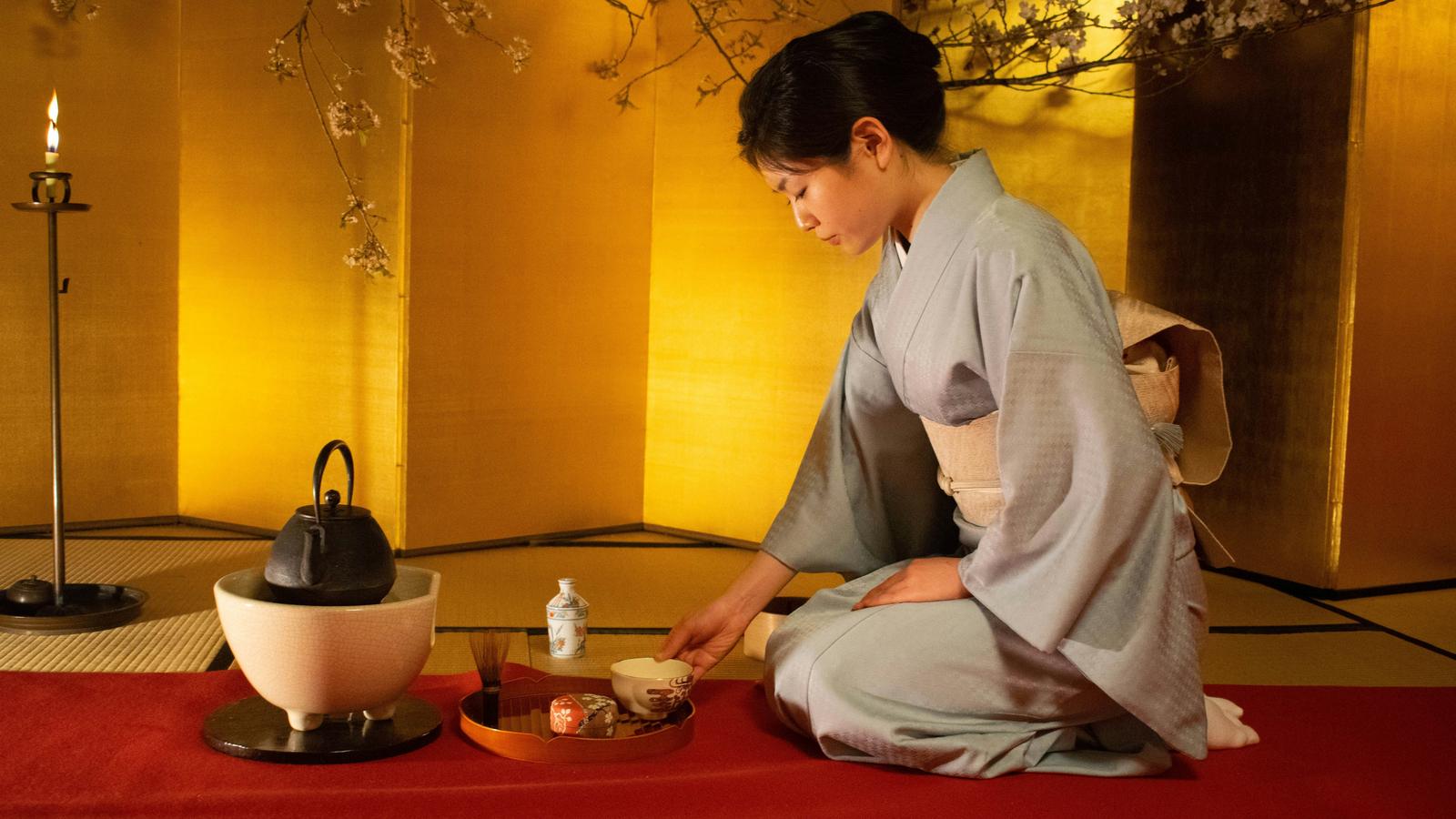
A private tea ceremony in Kyoto is usually a 60 to 150 minute session for your party alone: you enter a tatami room, look at the scroll in the alcove, eat a seasonal sweet, and receive a bowl of usucha, the thin whisked matcha, sometimes followed by koicha, the thick tea. Bring clean white socks and wear clothes that cover the knee. On the hosts' own pages, private sessions in Kyoto started at about ¥26,000 per person in October 2026, most with a minimum of two guests. A full chaji, the four-hour gathering with a meal, is rarely offered to visitors.
This article explains what happens in the room, how to hold and drink the bowl, how a short demonstration, a chakai and a chaji differ, and what the private sessions we use cost. We checked every price, duration and condition on the hosts' official pages and on the booking pages of the experience platform we work with on October 14, 2026. Shoes, temples and the wider rules of behaviour in Japan are covered in our etiquette guide; this article stays inside the tea room.
Key points
- The order is always the same: look at the alcove, eat the sweet, then drink the tea. With thin tea each guest has their own bowl; thick tea is often shared from one bowl.
- Private sessions on the booking pages we checked ran from ¥26,216 per person for 90 minutes to ¥47,316 per person for 120 minutes, tax included, and most need at least two guests.
- Every private session we checked on the hosts' booking pages asks for socks, and several ask for white socks, knee-length clothing and no rings or other accessories.
- The Urasenke school's Chado Research Center serves tea to museum visitors for ¥1,000 plus ¥1,000 admission, seated on chairs, in sessions of about 30 minutes.
- Murin-an's own tea experience costs a basic ¥30,000 plus ¥2,700 per guest, with English support ¥40,000 extra, and must be requested at least ten days ahead.
WHAT HAPPENS IN A PRIVATE TEA CEREMONY
Hosts vary the details by school, season and the time they have, but the shape of a session is fixed. Knowing it in advance is what lets you relax in the room.
Arriving and the waiting room
You remove your shoes at the entrance and, where the host provides one, put on fresh socks. In a traditional tea house there is a waiting room where guests gather, are offered a cup of hot water or plain tea, and leave coats and bags. Some hosts begin here with a short talk on the room and the season.
The garden path and the low door
The path to the tea room is called the roji. In many tea houses you rinse your hands and mouth at a stone basin on the way. Older tea rooms have a small square entrance, the nijiriguchi, about knee height, so every guest bows and enters on hands and knees. It is meant to leave rank outside. If kneeling is difficult, say so beforehand; most private hosts have a second entrance.
The alcove
Inside, the first thing you do is go to the tokonoma, the alcove, kneel, and look at the hanging scroll and the flowers. The scroll is chosen for the day and often for the guests, and it sets the theme of the gathering. You then take the place the host shows you. The first guest, the shokyaku, sits nearest the alcove and speaks for the group, so in a private session one of your party will be asked to take that seat. The host will guide whoever it is.
The sweet
The sweet comes before the tea, so the sugar is on your tongue when the bitter matcha arrives. Moist sweets, omogashi, are made for the season and usually accompany thick tea; small dry sweets, higashi, usually accompany thin tea. You lift a sweet onto a square of folded paper called kaishi, cut it with a pick or the small knife provided, and finish it before the tea is placed in front of you.
Usucha the thin tea
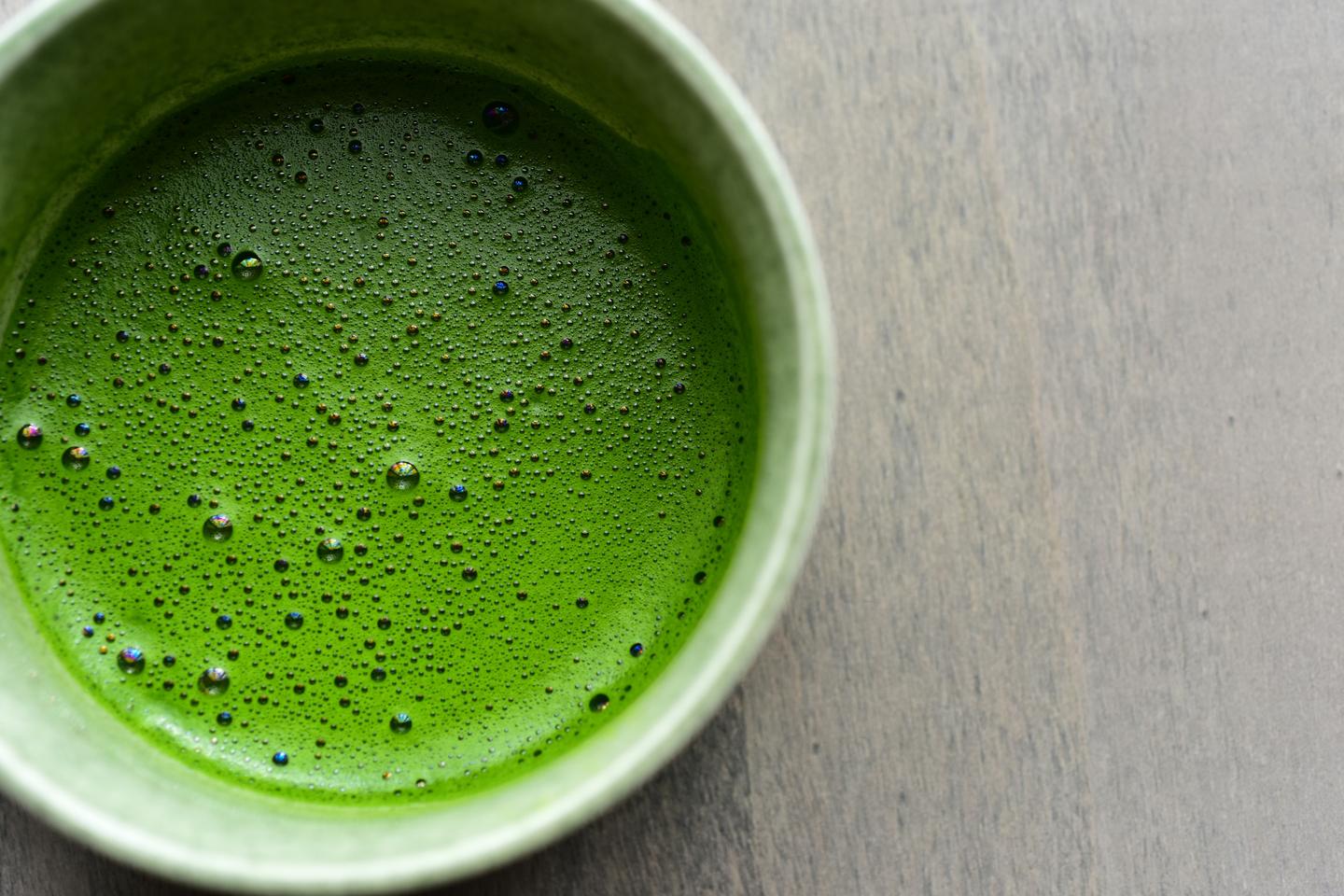
The host purifies each utensil with a silk cloth in a fixed sequence, measures the matcha into the bowl, adds hot water from the kettle and whisks it with a bamboo whisk until it is smooth. Each guest receives a separate bowl. This is the tea most visitors mean when they talk about a tea ceremony, and it is the one served in nearly every short session.
Koicha the thick tea
Koicha uses about twice the matcha and much less water, and the host kneads it slowly into a dense liquid with almost no foam. In a formal gathering it is the centre of the event, served before the thin tea, often in one bowl that passes from guest to guest. Few short sessions include it. Among the private sessions we checked, one is built around koicha made from organic leaves.
Looking at the utensils
At the end, the first guest may ask to see the tea caddy, the tea scoop and the bowl. They are passed along close to the mat and examined low, with both hands, because many are old and some are irreplaceable. The host tells you who made them and the poetic names they carry. Then everyone bows, and the session ends.
HOW TO RECEIVE AND DRINK THE BOWL
Your host will show you all of this in the room, and nobody expects a visitor to get it exactly right. These are the movements as most Kyoto hosts teach them to beginners. Details such as which way the bowl turns and how many turns differ between schools, so follow your host where they differ from this list.
- When the bowl is set before you, bow slightly to the host. If another guest is beside you, place the bowl between you and say "osaki ni", which means "excuse me for going before you".
- Bring the bowl in front of your knees, bow again and say "otemae chōdai itashimasu", a thank-you for the tea the host has made.
- Pick the bowl up with your right hand and rest it on your left palm.
- Turn it twice, a quarter turn each time, so the decorated front of the bowl faces away from you. You drink from the side, out of respect for the bowl.
- Drink the thin tea in a few sips and finish it. In Urasenke a small audible sip at the end is usual and tells the host the bowl is empty.
- Wipe the rim where you drank with your thumb and finger, and wipe your fingers on your kaishi.
- Turn the bowl back so the front faces you, set it down, and look at it for a moment. Lift it only a little above the mat if you pick it up again.
- With shared koicha, take about three sips, wipe the rim with the cloth or paper provided, and pass the bowl to the next guest.
Sitting in seiza, on your heels, is the posture of the room, and few visitors can hold it for long. Hosts know this. One private host states that it provides no seiza cushions, and says plainly that guests may relax their legs if kneeling is hard. If anyone in your party has knee or back trouble, a session on chairs is the better choice, and we choose for that.
The care in these small movements is the same care that runs through Japanese hospitality as a whole; the background is in what omotenashi actually means.
DEMONSTRATION CHAKAI AND CHAJI
The words are often used loosely in English, and the difference explains most of what you will be offered.
A short demonstration
A tea demonstration lasts 30 to 60 minutes. A host prepares tea while explaining the steps, guests receive a sweet and a bowl of thin tea, and many sessions let you whisk a bowl yourself. Group classes, museum tea rooms and hotel tea rooms are almost all of this kind.
A chakai
A chakai is a tea gathering. In Japan it usually means a gathering where guests are served sweets and thin tea, sometimes thick tea as well, with no full meal. Large public chakai at temples and in gardens serve many guests in turns through the day, and tickets are often sold through tea circles. A private session in Kyoto is closest to a small chakai for your party: one host, one room, one or two kinds of tea.
A chaji
A chaji is the complete form. It takes about four hours and is held for a handful of guests. It includes the laying of the charcoal in front of the guests, a meal called chakaiseki served in courses with sake, a break in the garden while the room is changed, then thick tea, a second laying of charcoal, and thin tea. A chaji is given by a host to people they have invited. We found none listed with a price for visitors on the hosts' official pages we checked, so we do not quote one.
Two of the private sessions we use come closest. One begins with a light seasonal meal in the chakaiseki style at a ryokan, and then takes you into its tea room. The other, in Takagamine, offers a chakaiseki meal at a nearby restaurant as an option on request.
| Form | Length | Tea | Food |
|---|---|---|---|
| Demonstration or class | 30 to 60 minutes | Thin tea, often one you whisk yourself | One sweet |
| Chakai | About 1 to 2 hours | Thin tea, sometimes thick tea | Sweets |
| Chaji | About 4 hours | Thick tea then thin tea | Chakaiseki meal in courses, then sweets |
The setting also follows the calendar. In the cooler months most tea rooms use a sunken hearth cut into the floor, and in the warmer months a brazier standing on the mat. The change to the hearth, around November, is one of the most important moments of the tea year, so an autumn session will often feel like a new beginning in the room.
PRIVATE SESSION OR GROUP CLASS
A group class sits you with strangers at a fixed time, usually in a room arranged for many guests, and follows the same script for everyone. It is a fair introduction if you only want to taste matcha and see the movements.
A private session is held for your party alone. Every listing we checked on the platform we use states that sessions are private for your group, and that it does not arrange mixed sessions. In practice this changes three things.
- The host speaks to you. The scroll, the sweet and the bowls can be chosen with your party in mind, and there is time for questions.
- The room is a real tea room. Several private hosts receive you in tea rooms in machiya townhouses or tea houses, with the garden path and the alcove intact.
- You can shape the session. You can ask for koicha, a meal, flowers or calligraphy alongside the tea, or a slower pace for children or older guests.
The cost is the main difference. Private sessions on the hosts' booking pages started at ¥26,216 per person, and nearly all require at least two guests; with a single guest the minimum charge for two applies. One host charges a fixed fee for the group up to five guests, so the price per person falls as your party grows.
WHAT TO WEAR AND WHAT TO BRING
The hosts' own conditions are consistent, and they are strict about the first two points.
- Socks. Every private session we checked on the booking pages asks guests to wear socks or stockings and not to go barefoot. Two ask specifically for white socks, and one asks you to bring white socks and change into them at the venue. One tea room sells white socks for ¥200 if you arrive without them. A clean pair in your bag is the simplest answer.
- Clothes that cover the knee. Skirts or trousers long enough to cover the knees are required by every private session we checked on the booking pages. You will kneel, so loose trousers or a long, full skirt are easiest.
- No rings, bracelets or watches on your hands. Several hosts and the Urasenke museum tea room ask you to remove rings and accessories, because they can scratch old bowls.
- No perfume. One host asks for none at all. The scent of the incense and the tea is part of the room.
- A handkerchief. One host lists it as required.
The host provides the kaishi paper and the sweet pick; at one private session you take home a folding fan, a sweet knife and kaishi. None of the pages we checked asks for kimono. Photographs are another matter: the Urasenke museum tea room does not allow them at all, and private hosts may set their own limits, so ask before you lift a phone.
WHERE TO HAVE TEA IN KYOTO AND WHAT IT COSTS
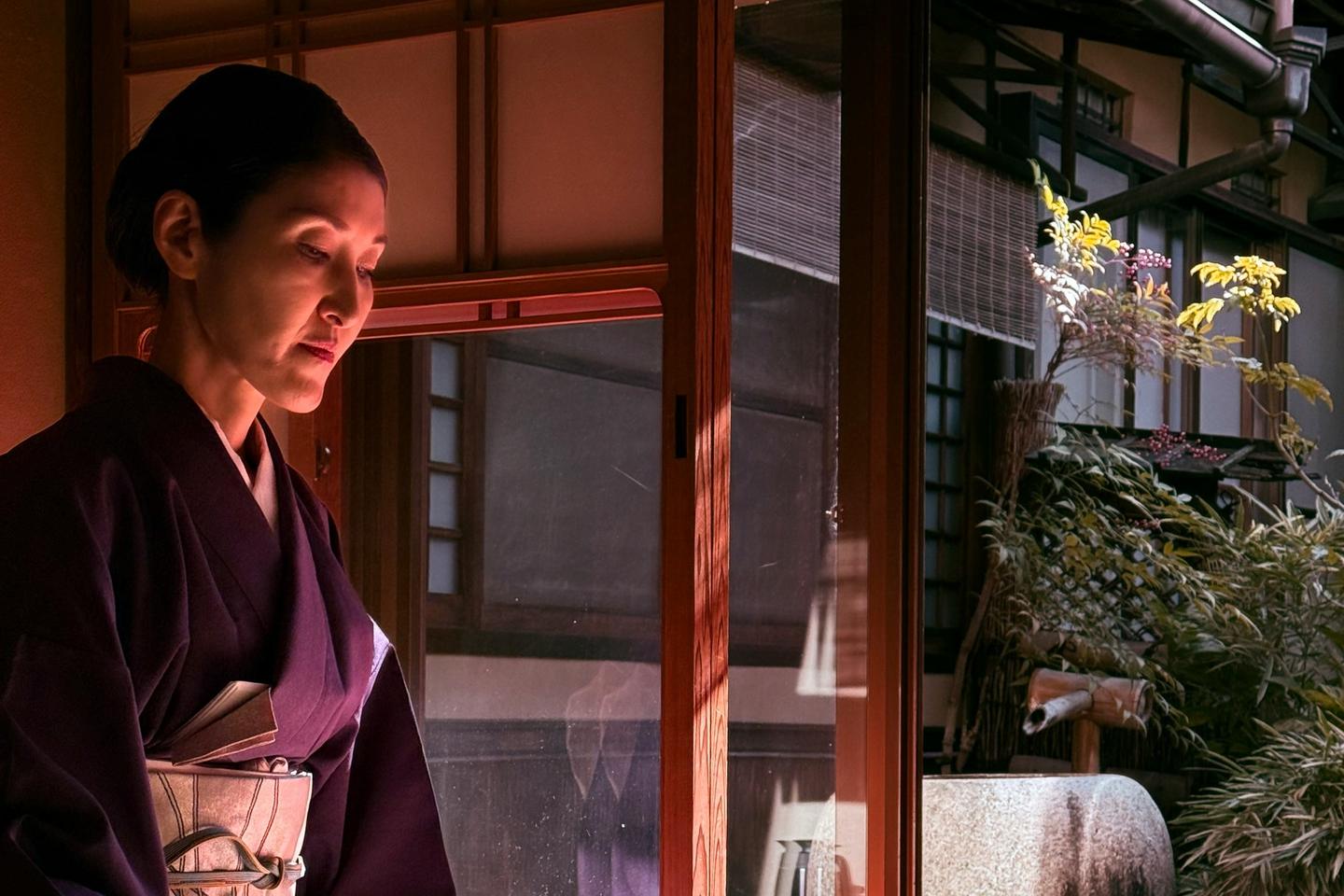
These are the places we would choose from, with the prices each publishes. Prices marked "from" are the lowest per-person rate on the booking page and can depend on the size of your party and the date.
| Where | What it is | Length | Price |
|---|---|---|---|
| Chado Research Center (Urasenke) | Matcha and a sweet at chairs, for museum visitors, up to 16 guests per seating | About 30 minutes | ¥1,000 plus ¥1,000 admission |
| Omotesenke Kitayama Kaikan | Tea included with exhibition admission | Not stated | ¥1,600 admission |
| Murin-an tea experience | Tea with a tour of the garden from the tea perspective | About 60 minutes | ¥30,000 plus ¥2,700 per guest, facility fee extra, English ¥40,000 |
| Tea room at a historic confectioner | Private tea with a confection made for the plan, then dessert | 90 minutes | From ¥26,216 per person |
| Enshu school tea room near the Imperial Palace | Private lesson and koicha | 130 minutes | From ¥27,900 per person |
| Seika-an at Towa Ryokan | Light seasonal meal, then tea in the tea room | 100 minutes | From ¥31,500 per person |
| Machiya near Shijo Karasuma | Ikebana lesson, then thin tea and a sweet | 120 minutes | From ¥38,850 per person |
| Tea house in Takagamine | Purification, meditation, thin tea, chakaiseki on request | 120 minutes | From ¥47,316 per person |
The two school museums
The Urasenke and Omotesenke schools are the two largest in Kyoto, and their family compounds sit side by side in the north of the city. For visitors, each school runs a museum that serves tea. The Urasenke Chado Research Center serves matcha and a seasonal sweet in the ryūrei style, at tables and chairs, at 10:00, 11:00, 13:00, 14:00 and 15:00. Reservations have priority and close at 15:00 the day before, and tea is only for museum visitors. Its current exhibition runs until December 6, 2026; the museum opens 9:30 to 16:30, with last entry at 16:00, and closes on Mondays, or on the Tuesday when Monday is a public holiday. Its pages are in Japanese only. The Omotesenke Kitayama Kaikan includes tea in its ¥1,600 admission, and its current exhibition on matcha runs until December 14, 2026. Both are good, quiet introductions, but they are short and shared with other visitors.
Murin-an
Murin-an, the Meiji-era villa garden near Nanzen-ji, offers a daytime tea experience of about an hour that looks at the garden through tea. It costs a basic ¥30,000 plus ¥2,700 per guest, which covers admission, tea and a dry sweet, with a facility fee on top whose amount the page does not give, and English support for ¥40,000. Requests must reach the garden at least ten days ahead, and the garden says it cannot accept every one. Its café also serves matcha with a sweet for ¥1,200 plus admission, with no ceremony. For an evening, tea can be added to the night private plan, when the garden is yours after closing; that is described on our Murin-an page.
The private tea rooms
The five private sessions in the table are arranged through the experience platform we use, and each includes English support. For a first ceremony with time to ask questions, the confectioner's tea room is the gentlest, though its page notes that the room faces a hotel shopping corridor and you may hear other guests. For someone who wants the real weight of the ceremony, the Enshu school session serves koicha after a lesson in the preparation. For a family that cannot kneel for long, the ryokan session seats you at chairs for the meal. If your party likes quieter rituals, the tea can sit well beside an incense ceremony in a Kyoto garden on another day.
HOW WE ARRANGE IT
We make the application in your names, in Japanese where the host needs it, and send you the time, the meeting point and the host's conditions on clothing. You pay each host its own published price directly. STAYGO's Signature plan is USD 3,500 for your group for a trip of 7 to 14 days, and we take no commission and add no markup on anything we arrange.
The hosts' own deadlines decide how early we need to know.
- The private sessions need booking between one and seven days ahead, and fill earlier in spring and autumn.
- Free cancellation ends 4, 6 or 11 days before the date, depending on the host, and the date cannot be changed after that.
- Arriving more than 15 minutes late cancels the session at these hosts.
- Murin-an's tea experience needs ten days. Its night private plan opens 180 days before the date and closes one month before, with payment three weeks ahead and the full fee charged from ten days before.
- Age rules differ: one host takes no children under 8, and adult rates start at ages from 5 to 13.
Tell us who is travelling, whether anyone finds kneeling hard, and what else you would like in the day. We will choose the room and the time, and place the tea where it suits the rest of your Kyoto itinerary.
SOURCES AND HOW WE CHECKED
We read each host's own page, and the booking pages on the experience platform we use, on October 14, 2026. We did not contact the hosts. Prices on the booking pages include tax and are the lowest per-person rate shown; they can change with the date and the size of your party. The cultural explanations are general knowledge and vary between schools.
- Urasenke Chado Research Center, tea room: price, seatings, chairs, reservation and rules
- Urasenke Chado Research Center, 2026 special exhibition: dates, hours, closing day and admission
- Omotesenke Kitayama Kaikan, exhibition: dates, hours and admission with tea
- Murin-an, tea ceremony: tea experience fees, length and deadline
- Murin-an, café: matcha set price
- Murin-an, night private plan: tea option, application window, payment and cancellation
- Tea room at a historic confectioner: price, guests, socks, cancellation
- Enshu school tea room: price, koicha, group fee, clothing, perfume
- Seika-an at Towa Ryokan: price, meal, minimum age, seiza cushions, white socks
- Ikebana and tea in a machiya: price, booking deadline, cancellation
- Tea house in Takagamine: price, itinerary, chakaiseki option, clothing
QUESTIONS ABOUT TEA IN KYOTO
How much does a private tea ceremony in Kyoto cost?
On the hosts' booking pages in October 2026, private sessions started at ¥26,216 per person for 90 minutes and reached ¥47,316 per person for 120 minutes, tax included. Most require at least two guests.
What should I wear to a tea ceremony in Kyoto?
Wear clean socks, white if you can, and a skirt or trousers that cover your knees. Remove rings and bracelets and skip perfume.
What is the difference between a chaji and a chakai?
A chakai is a gathering with sweets and tea, usually one to two hours. A chaji lasts about four hours and adds the laying of charcoal and a full chakaiseki meal before the thick and thin tea.
Do I have to kneel for the whole tea ceremony?
Not always. One private host says plainly that guests may relax their legs, and the Urasenke museum tea room seats guests at chairs throughout; tell your host beforehand if kneeling is hard.
A QUIET HOUR OF TEA IN YOUR KYOTO DAYS
Tell us your dates in Kyoto, who is travelling and whether anyone finds kneeling hard. We will choose the tea room, apply in your names and place the session where it suits the rest of your stay.
Begin planning →