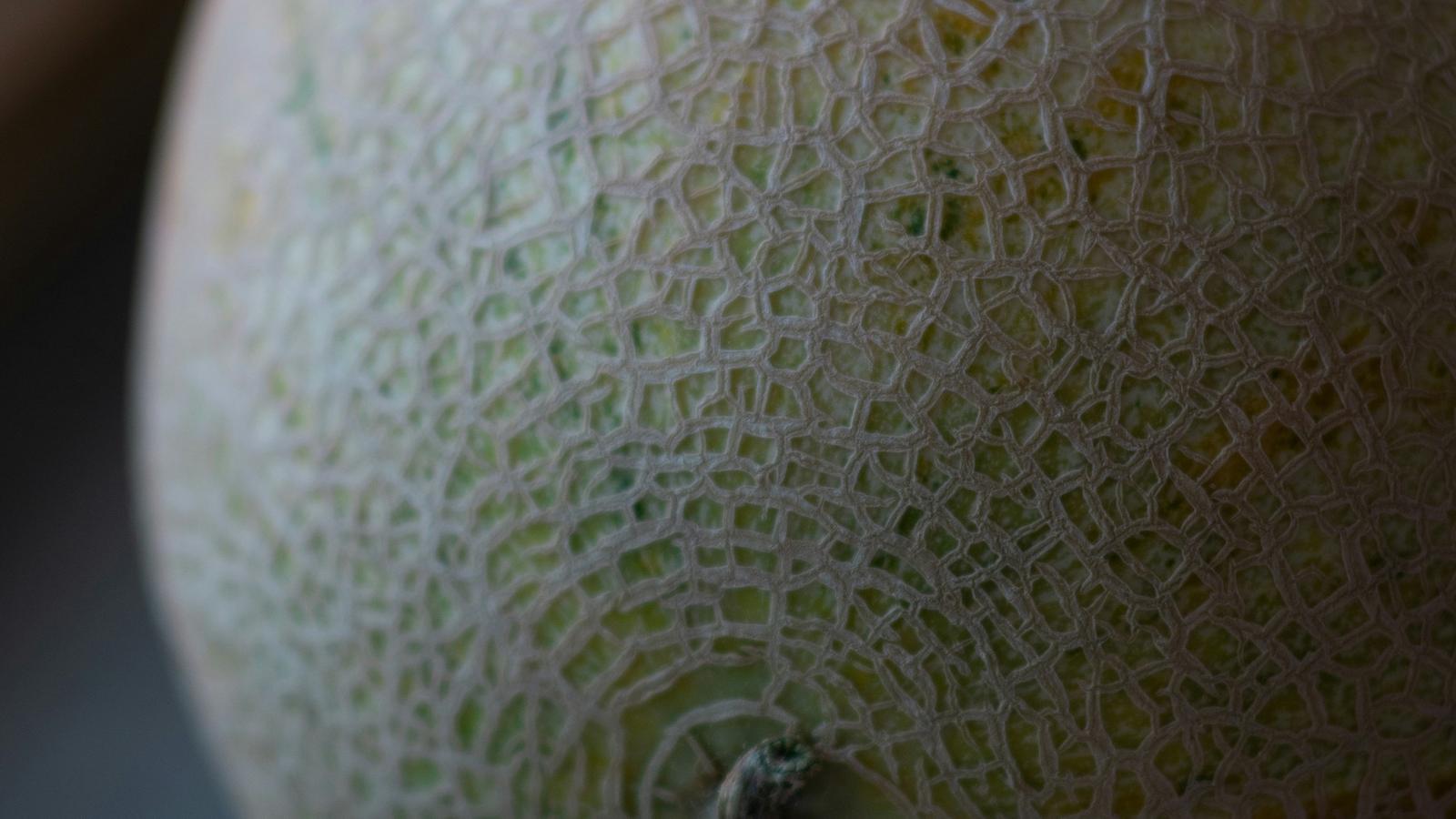
In Japan a single melon can be the most considered gift a family sends all year. It arrives boxed, cut from a vine that was allowed to carry only that one fruit. The fruit houses of Tokyo have sold fruit this way for close to two centuries, and the regions that grow it guard their names with registered trademarks and the national register of geographical indications.
This article is about the summit of Japanese fruit and where to meet it: the Nihonbashi house of Sembikiya, the melons of Yubari and Shizuoka, the white peach and muscat of Okayama, the Amaou strawberry of Fukuoka, and the fruit parlour. We read the pages of the fruit houses, the growers' cooperatives, the Ministry of Agriculture, Forestry and Fisheries, two cities, a prefecture, a tourism board and a news agency on November 5, 2026, and contacted none of them; the sources are listed at the end. For the department stores and flagship shops around Ginza and Nihonbashi, see The Luxury Shopping Guide to Tokyo and Kyoto; for the shape of a long day at table, see Dining in Japan When You Dine at Nine.
Key points
- Sembikiya Sohonten was founded in Edo in 1834 and keeps its main store and fruit parlour in Nihonbashi.
- Yubari melon was registered as geographical indication No. 4 in December 2015. Only the Yubari King variety, grown in the city of Yubari, carries the name, and its harvest runs from May to September.
- A Crown melon from Shizuoka is grown one fruit to a vine under glass for about 100 days, and only around one case in a thousand reaches the top grade, Fuji.
- Okayama's Shimizu Hakuto white peach comes in late July, and the city's market puts Okayama at about 94 percent of Japan's Muscat of Alexandria.
- Amaou is a registered name for a Fukuoka strawberry; the prefecture protects the variety and the farmers' federation holds the trademark.
ASK US TO PLACE THE FRUIT IN YOUR DAYS →
A HOUSE THAT HAS SOLD FRUIT SINCE 1834
Sembikiya Sohonten's history begins in 1834, when Benzo, a samurai from the village of Sembiki in Musashi Province, opened a stall in Edo selling fruit and vegetables. In 1867 the third generation moved the shop to Nihonbashi, imported fruit from abroad and worked to improve Japanese fruit, and the house describes the result as Japan's first shop given wholly to fruit. Its branches of 1881 and 1894 became Kyobashi Sembikiya and Ginza Sembikiya, separate houses today. The main store has stood in the Nihonbashi Mitsui Tower since 2005, with the shop on the ground floor and the fruit parlour above it.
Shinjuku Takano, founded in 1885 near where Shinjuku Station stands today, began selling muskmelon in 1920. Between them, these houses set the terms of fruit as a gift: the perfect specimen, chosen by eye, boxed and sent for the summer and year-end seasons of giving, or carried to a host. Okayama's market notes the large white peaches and the muscat are prized as gifts, and the Crown melon growers call their fruit a gift for the important people.
THE MELONS OF YUBARI AND SHIZUOKA
Yubari, in Hokkaido, grows one melon. The national register describes Yubari King as a first-generation cross of Spicy Cantaloupe and Earl's Favourite, with orange flesh, little fibre and a strong perfume, at 1.0 to 2.5 kilograms. A group of seventeen founded the Yubari melon association in 1960, and the cooperative says the seed has never left the city. The top grade must reach a sugar content of 13 degrees. The first shipment in mid-May is national news: at the first auction in Sapporo on May 22, 2026, a pair sold for 5.8 million yen, a record, Kyodo reported.
The Crown melon of Shizuoka is a muskmelon of another kind, grown in glass greenhouses around Fukuroi, Iwata, Kakegawa, Hamamatsu and Mori. Each vine is allowed to keep a single fruit, which is why the stem is cut in a T. It grows for about 100 days, around 20 varieties follow the seasons so that the melon is grown all year, and every fruit passes inspection before it carries the crown seal with its grower's number. The grades run Fuji, Yama, Shiro and Yuki; the growers say Fuji appears in perhaps one case in a thousand. We would choose Yubari for a summer guest who wants to taste a place, and a Crown melon of the Fuji grade for a gift that must be faultless in any month.
OKAYAMA AND THE WHITE PEACH AND MUSCAT
The white peach, Okayama City's wholesale market says, was born in Okayama, and Shimizu Hakuto is its most famous strain: pale skin, pale flesh, fine and full of juice, the large fruit sent as gifts. It arrives from late July, and the later Hon-hakuto takes over from mid-August. The prefecture's tourism board gives its harvest as late July to early August.
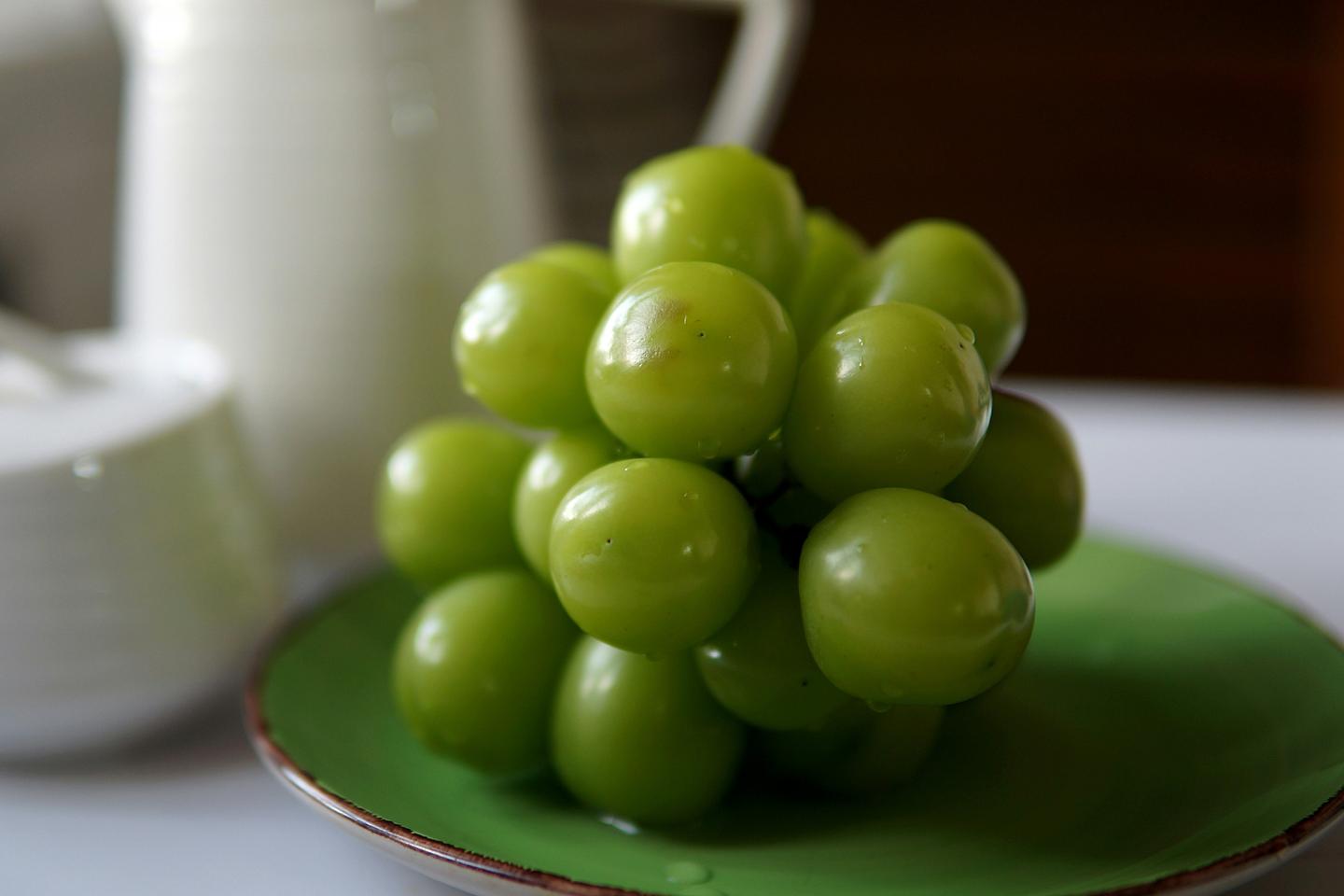
Muscat of Alexandria is Okayama's other fruit. Every bunch is grown under glass, the standard sugar content is 16 degrees or more, and the city's market puts Okayama at about 94 percent of the muscat sold in Japan. Shipping begins in early May, peaks in August for heated houses and September for unheated ones, and ends in mid-December. For a guest travelling west from Kyoto in summer, a morning in Okayama for the peach is worth the stop; for the Inland Sea beyond, see The Table in Hiroshima and the Inland Sea.
AMAOU AND THE STRAWBERRIES OF FUKUOKA
Amaou was bred in Fukuoka Prefecture, and its name is built from four words: akai, marui, ookii, umai, red, round, large and delicious. The farmers' federation, JA Zen-Noh Fukuren, describes a deep red, glossy berry with a rich balance of sweetness and acidity, sold as Hakata Amaou.
The name is protected twice. The prefecture holds the breeder's rights to the variety, Fukuoka S6, and the federation holds the trademark Amaou, so the name stays with Fukuoka's growers after the variety's own protection ends. A box of Hakata Amaou is the gift we would choose for a host in strawberry season.
THE FRUIT PARLOUR
The fruit parlour is where Japan eats this fruit at a table. Sembikiya's history places a fruit dining room in 1887, the forerunner of its parlour. Ginza Sembikiya, founded in Ginza in 1894, opened what it calls Japan's first fruit parlour in 1913, created its fruit punch in 1923 and began serving the fruit sandwich in 1938. Shinjuku Takano opened its fruit parlour in 1926.
A parfait in Nihonbashi is a quiet hour in a Tokyo day. We place the parlour after a morning in Nihonbashi or Ginza, and choose the house by what is at its height that week.
THE MONTHS, AS THE GROWERS GIVE THEM
- Yubari melon: harvested from May to September, first shipment in mid-May.
- Okayama Shimizu Hakuto: from late July into early August; Hon-hakuto from mid-August.
- Okayama Muscat of Alexandria: early May to mid-December, at its height in August and September.
- Crown melon: grown and harvested through the year.
- Amaou: the growers' pages we read do not give months, so we confirm the weeks against your dates.
Within Signature, our planning for journeys of 7 to 21 days, we can place a fruit parlour on your Tokyo days, arrange a visit to Okayama in peach season, and ask a fruit house to prepare a melon or a box for your host or your hotel room on the day you need it. Each is settled in the simplest way available, usually on your hotel bill or on the day.
SOURCES AND HOW WE CHECKED
We read the pages below on November 5, 2026. We did not contact any fruit house, cooperative, agency or other body. The auction price is as reported by Kyodo.
- Sembikiya Sohonten, history (Japanese): founding in 1834, Nihonbashi from 1867, the fruit dining room of 1887, the main store of 2005
- Ginza Sembikiya, history (Japanese): founded 1894, fruit parlour 1913, fruit punch 1923, fruit sandwich 1938
- Shinjuku Takano, history (Japanese): founded 1885, muskmelon from 1920, fruit parlour 1926
- Ministry of Agriculture, Forestry and Fisheries, GI register No. 4 (Japanese): Yubari melon registered December 22, 2015
- Yubari City Agricultural Cooperative, GI specification (Japanese): variety, weight, the association of 1960, harvest months, grades
- Kumamoto Nichinichi Shimbun, Kyodo News (Japanese): 5.8 million yen for two melons on May 22, 2026
- Shizuoka Greenhouse Agricultural Cooperative, Crown Melon branch (Japanese): one fruit per vine, about 100 days, year-round growing, grades and seal
- Crown Melon branch, about the branch (Japanese): the growing area and the crown seal
- Hamamatsu City, Crown melon (Japanese): one fruit per vine, about 100 days to harvest
- Okayama City Central Wholesale Market, fruit notes (Japanese): white peach and muscat, their months, the 94 percent share
- Okayama Prefecture tourism, Shimizu Hakuto (Japanese): harvest late July to early August
- JA Zen-Noh Fukuren, Fukuoka strawberries (Japanese): the name, the fruit, Hakata Amaou
- Fukuoka Prefecture, press release of April 11, 2025 (Japanese): breeder's rights and trademark
QUESTIONS TRAVELLERS ASK
Why is Japanese fruit so expensive?
A Crown melon vine keeps one fruit for about 100 days under glass, and only a small share of each harvest reaches the top grade.
When is the season for Yubari melon?
The growers' specification gives the harvest as May to September, with the first shipment in mid-May.
Where can we sit down to fruit in Tokyo?
In the fruit parlours of Sembikiya in Nihonbashi, Ginza Sembikiya and Takano in Shinjuku.
Can STAYGO arrange a fruit gift for our host?
Yes. We ask a fruit house to prepare a melon or a box for the day you need it; what is available depends on the season.
When should we visit Okayama for the white peach?
Late July into August. Shimizu Hakuto comes from late July and Hon-hakuto from mid-August.
ASK US TO PLACE THE FRUIT IN YOUR DAYS
Tell us when you are coming and who is travelling. We will set out the parlours, the regions and the gifts that suit your dates, with the reasons, so that you can choose.
Begin planning →We reply within 24 hours, in writing
Some of the restaurants and bars we arrange seat guests only by introduction or membership. We ask on your behalf; the table and the evening are the house's decision. We do not publish their names.