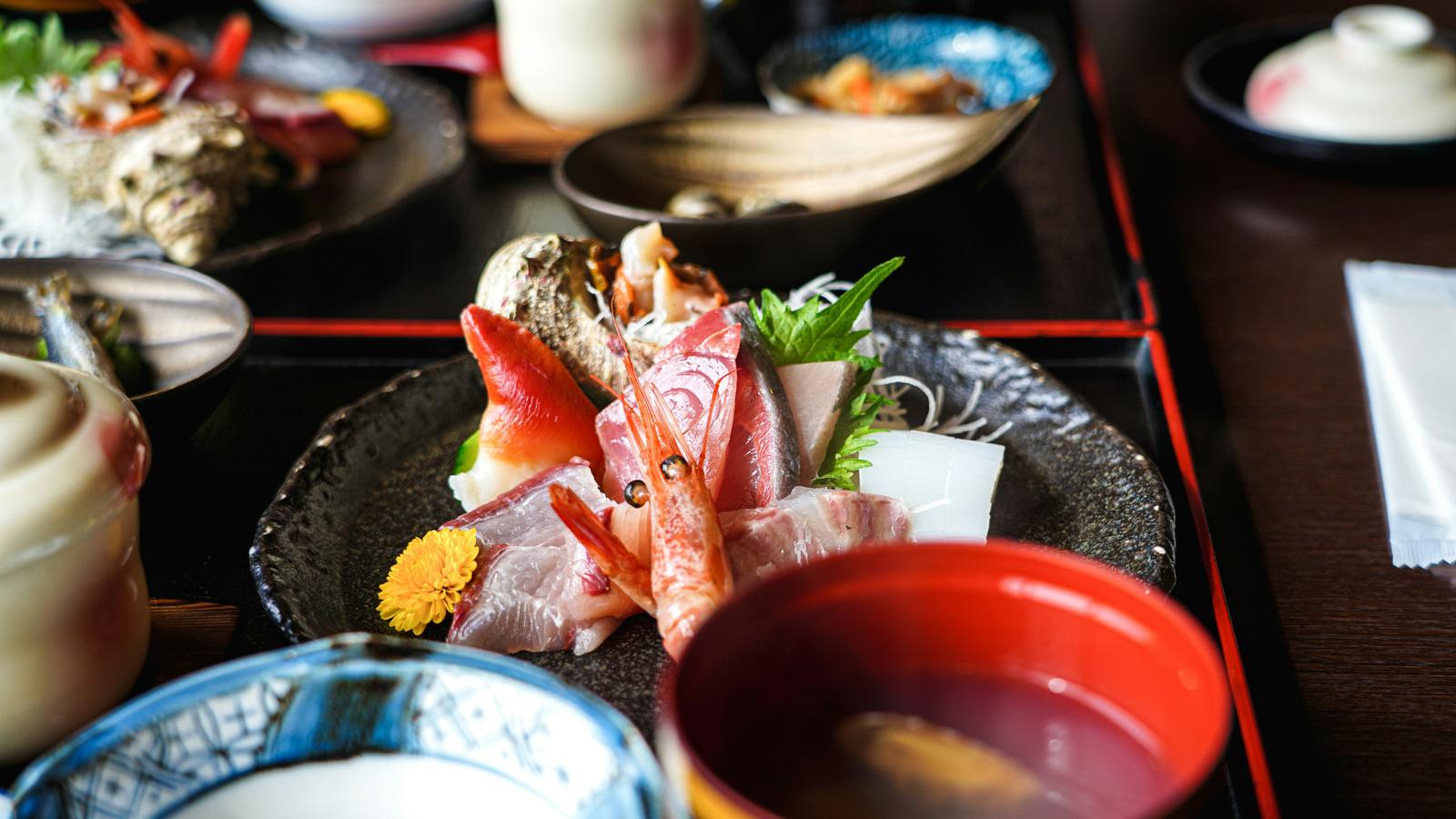
In Italy the table sets the shape of the day. Lunch comes after one, dinner after eight, and a good meal is allowed to run long. Japan's finest kitchens keep a different clock: a great kaiseki house such as Kitcho in Kyoto opens for lunch at half past eleven and takes its last dinner order at half past six. An Italian couple who simply carry their own hours to Japan can find the best tables already closed.
This article sets out how to bring the two rhythms together: the long lunch as the natural way into a great Kyoto kitchen, the kaiseki dinner that begins early and ends at an Italian hour, the hotel dining rooms where a table at half past eight is ordinary, the aperitivo before dinner and the ryokan night for those who dine late. We read JNTO's market handbook and its Italian-language pages, the statistics of the Japan Tourism Agency, UNESCO's listings and the official pages of a ryotei, two hotels and a ryokan-style resort, and contacted none of them; the sources are at the end. For what happens once the courses begin, see Kaiseki Etiquette: What to Expect at a Kaiseki Dinner →.
Key points
- JNTO's handbook for the Italian market advises Japanese hosts that lunch should start after 13:00 and dinner after 20:00, and that Italians prefer a sweet breakfast with espresso or cappuccino.
- Italians on holiday in Japan spent 84,517 yen a head on food and drink in 2025, according to the Japan Tourism Agency's preliminary figures, against 50,279 yen for all visitors.
- At Kyoto Kitcho's Arashiyama main house, the last lunch order is 12:30 and the house closes at 15:00; the last dinner order is 18:30 and the evening ends at 21:30.
- At Yamazato in The Okura Tokyo, dinner runs to 21:30 with a last order at 21:00, so a table at 20:30 is routine.
- At HOSHINOYA Kyoto, the à la carte dining hall takes last orders at 21:00, and the in-room shabu-shabu has a second seating at 19:15.
LET US SET YOUR TABLES IN JAPAN →
TWO COUNTRIES THAT EAT BY THE SEASON
Italians come to Japan in growing numbers and they come to eat. JNTO counted 309,400 visitors from Italy in 2025, 34.6% more than the year before. The Japan Tourism Agency's preliminary survey for 2025 puts the spending of Italians on holiday at 358,333 yen a head over an average of 13.7 nights, and 84,517 yen of that went on food and drink. The figure for all visitors was 50,279 yen. JNTO's handbook lists food and drink, with local cuisine and cooking, as the first interest of Italy's highest-income households.
The two cultures share more than an appetite. At the same session in 2013, UNESCO's committee inscribed washoku, the traditional dietary culture of the Japanese, and the Mediterranean diet in its enlarged form with Italy among the countries. UNESCO describes washoku as built on respect for nature and on rice, fish, vegetables and wild plants from close by, and the Mediterranean diet as a table shared in step with the seasons. An Italian guest at a kaiseki counter recognises the logic at once: the menu is written by the month, and the best ingredient of the week is served with as little done to it as possible.
THE LONG LUNCH IS THE ITALIAN HOUR
The surest way into a great Kyoto kitchen at an Italian hour is lunch. At Kyoto Kitcho's main house in Arashiyama, lunch runs from 11:30 to 15:00 with the last order at 12:30. A party that sits down at half past twelve is still at the table in the middle of the afternoon, course after course. It is the closest Japan comes to the Sunday lunch at home, and the light is better than at night.
Seasonal dishes follow the calendar here too. This autumn the house announced that from the middle of September it grills matsutake mushrooms in its tatami rooms. Kitcho seats only guests of primary school age and over, takes reservations by TableCheck or telephone, and may charge a cancellation fee from five days before the date. We place the long lunch on a day with nothing else fixed before evening, and a light supper or a bar after it.
KAISEKI KEEPS ITS OWN CLOCK
A kaiseki dinner is one composed sequence, cooked to the moment each course is served, and the kitchen sets the hour at which it begins. At the same Arashiyama house, dinner runs from 17:00 to 21:30, with the last order at 18:30. Read against Italian habits, the hours look early. Yet the house's evening closes at 21:30, the hour at which, by JNTO's own advice, an Italian dinner is well under way.
The ryokan follows the same logic. JNTO's Italian-language guide describes the kaiseki ryori as a formal dinner of many courses, served in a dining room or in the guest's own room, and treats dinner as an essential part of a ryokan stay. The time is set when you arrive, and it is rarely late.
Jet lag works in an Italian's favour here, with one caution. Japan is seven or eight hours ahead of Italy, depending on the season, so in the first days 18:00 in Kyoto feels like late morning at home, and the body is wide awake at midnight. Our reading is that the early kaiseki sits better from the third or fourth day, once hunger has caught up with the clock, and that the first evenings belong to tables that take orders late.
HOTEL TABLES FOR A NINE O'CLOCK DINNER
The great hotel dining rooms keep the hours an Italian expects. At The Okura Tokyo, the Japanese restaurant Yamazato serves dinner from 17:30 to 21:30, with the last order at 21:00. Its sushi counter, Sushi Kanesaka at Yamazato, keeps the same dinner hours, so omakase at 20:30 is ordinary there. The kappo counter, where the chef cooks in front of you, takes its last guests at 19:00, so it suits the early evening.
The season reaches the hotel table as well. From November 1 to December 29, Yamazato serves a fugu kaiseki at 52,000 yen, with tax and a 15% service charge included. On Wednesdays outside holidays the restaurant serves breakfast only, which is worth knowing before you plan the evening.
AN APERITIVO BEFORE AN EARLY DINNER
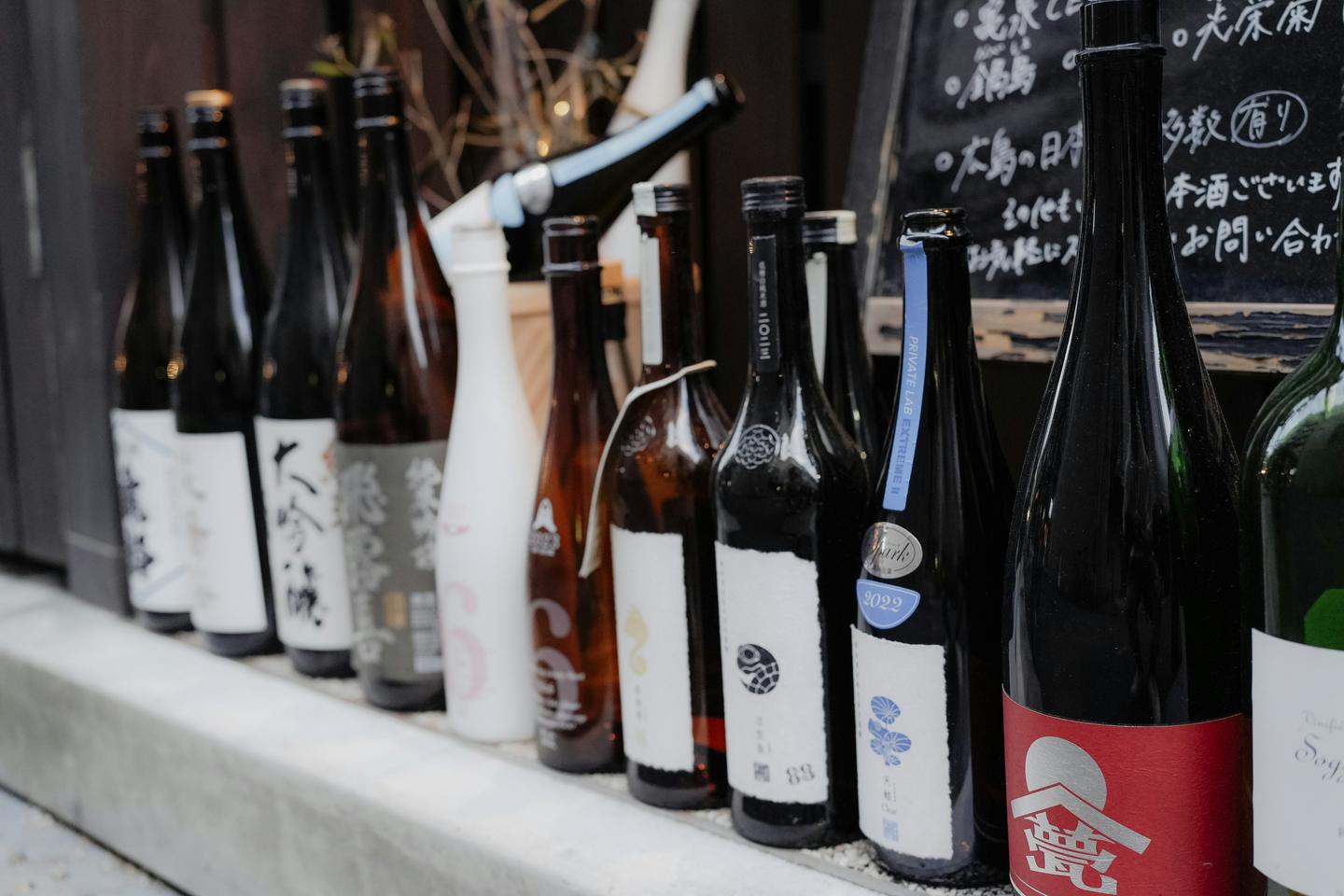
With dinner at six, the aperitivo moves to five, and the best hotels have made room for it. Aman Kyoto pours a complimentary aperitif every evening, before dinner at Taka-An, where the chef serves a seasonal set menu, or at The Living Pavilion with its Kyoto-inspired Western cooking. Both require a reservation in advance.
At the table, the glass changes. JNTO's Italian site makes the point an Italian will understand without explanation: as with wine, a sake well matched to the food lifts the flavour of Japanese cooking, some suit meat and others sushi, and the chef or the brewer is the one to ask. For a day among the brewers, see Sake, Whisky and Japan's Private Tastings →; for the country's own grape, see Japanese Wine in Yamanashi: Koshu and the Wineries of Katsunuma →.
RYOKAN NIGHTS FOR LATE DINERS
Some inns bend the classic ryokan schedule. HOSHINOYA Kyoto, in Arashiyama, serves its course dinner in the dining hall from 17:30, and an à la carte menu there from 17:30 to 22:00 with the last order at 21:00, reserved on the day. From August 1, 2026, a shabu-shabu dinner of beef or of yuba, the latter suited to vegetarians, is served in the room at 18:00 or 19:15, at 20,000 yen a head before tax and a 10% service charge.
Breakfast deserves the same care. JNTO's handbook notes that Italians tend to prefer a sweet breakfast, with espresso or, in the morning, cappuccino, and that grilled fish at a ryokan breakfast does not suit everyone. HOSHINOYA Kyoto serves its Japanese breakfast in the room between 7:30 and 9:45. At other houses we ask in advance what the morning can hold, and, where the house agrees, a lighter table is set.
HOW WE SHAPE THE DAY
In a Signature journey of 7 to 21 days, we set the meals before we set the sights. The long kaiseki lunch goes on a free afternoon in Kyoto, the early kaiseki dinner after the first days, and the 20:30 table in the hotel restaurants on the evenings after travel. Where you stay in a ryokan, we choose a house whose dinner hours suit you and settle the times before you arrive.
Some of the most sought-after counters seat guests only by introduction. We ask on your behalf, and the table remains the house's decision; how that works is set out in How to Get Into Introduction-Only Restaurants in Japan →.
SOURCES AND HOW WE CHECKED
We read the pages below on November 5, 2026. Spending figures are the Japan Tourism Agency's preliminary 2025 results for visitors on holiday and may be revised. Hours and prices change with the season; we confirm them with each house when we arrange your table. We did not contact any restaurant, hotel or other body.
- JNTO, Inbound travel handbook 2024, Italy (Japanese): lunch after 13:00 and dinner after 20:00, sweet breakfast with espresso or cappuccino, grilled fish at ryokan breakfast, food and drink as the first interest of the top 20% of households
- JNTO, Visitor arrivals for December 2025 and the year (Japanese): 309,400 visitors from Italy in 2025, up 34.6%
- Japan Tourism Agency, Inbound consumption survey 2025, preliminary (Japanese): Italians on holiday spent 358,333 yen a head, 84,517 yen on food and drink, 13.7 nights; all visitors 50,279 yen on food and drink
- UNESCO, Washoku, traditional dietary cultures of the Japanese: inscribed in 2013 (8.COM), respect for nature, locally sourced ingredients
- UNESCO, Mediterranean diet: inscribed in its enlarged form in 2013 (8.COM) with Italy, eating together, seasonal rhythms
- JNTO Italia, Guida ai ryokan giapponesi (Italian): kaiseki ryori as a formal dinner of many courses, served in a dining room or in the room, dinner as an essential part of the stay
- JNTO Italia, Sakè e fabbriche di sakè (Italian): sake matched to food as with wine, sakes for meat and for sushi, ask the chef or the brewer
- Kyoto Kitcho, Arashiyama main house (Japanese): lunch 11:30 to 15:00 with last order 12:30, dinner 17:00 to 21:30 with last order 18:30, closed Wednesdays, guests of primary school age and over, TableCheck or telephone, cancellation fee from five days before
- Kyoto Kitcho, official site (Japanese): grilled matsutake in the tatami rooms of the Arashiyama house from mid-September
- The Okura Tokyo, Yamazato (Japanese): dinner 17:30 to 21:30 with last order 21:00, kappo counter last entry 19:00, Sushi Kanesaka hours, fugu kaiseki 52,000 yen from November 1 to December 29, breakfast only on Wednesdays outside holidays
- HOSHINOYA Kyoto, dining: course dinner from 17:30, à la carte 17:30 to 22:00 with last order 21:00, in-room shabu-shabu at 18:00 or 19:15 from August 1, 2026, prices, in-room breakfast 7:30 to 9:45
- Aman Kyoto, dining: complimentary evening aperitif, Taka-An seasonal set menu, The Living Pavilion, advance reservations
QUESTIONS TRAVELLERS ASK
What time should dinner be set in Japan if we usually dine at nine?
At a kaiseki house the evening starts early: at Kyoto Kitcho in Arashiyama the last dinner order is 18:30. Hotel Japanese restaurants keep later hours; at Yamazato in The Okura Tokyo the last order is 21:00, so a table at 20:30 works. We mix both across the journey.
Is a kaiseki lunch worth it?
For Italian hours it is often the best way in. At Kyoto Kitcho in Arashiyama the last lunch order is 12:30 and the house stays open until 15:00, so the meal becomes a long seasonal lunch at an hour close to the one you keep at home.
Can a ryokan serve dinner late?
A classic ryokan serves dinner at a time set when you arrive, and it is rarely late. Some houses are more flexible: HOSHINOYA Kyoto takes à la carte orders until 21:00 in its dining hall and serves its in-room shabu-shabu at 18:00 or 19:15.
Should we drink sake or wine with kaiseki?
Either can work. JNTO's Italian site puts it simply: as with wine, a sake well matched to the food lifts the flavour of Japanese cooking, and the chef or the brewer is the one to ask. We can also arrange a day with the brewers or in the vineyards of Yamanashi.
Can you arrange tables at introduction-only restaurants?
Some counters seat guests only by introduction. We ask on your behalf, and the table remains the house's decision. We do not publish the names of those places.
LET US SET YOUR TABLES IN JAPAN
Tell us when you would like to travel and how you like to eat. We will set out the lunches, the dinners, the hotels and the inns side by side with their hours and the reasons for each, so that every day keeps its Italian shape.
Begin planning →We reply within 24 hours, in writing
Some of the restaurants and bars we arrange seat guests only by introduction or membership. We ask on your behalf; the table and the evening are the house's decision. We do not publish their names.