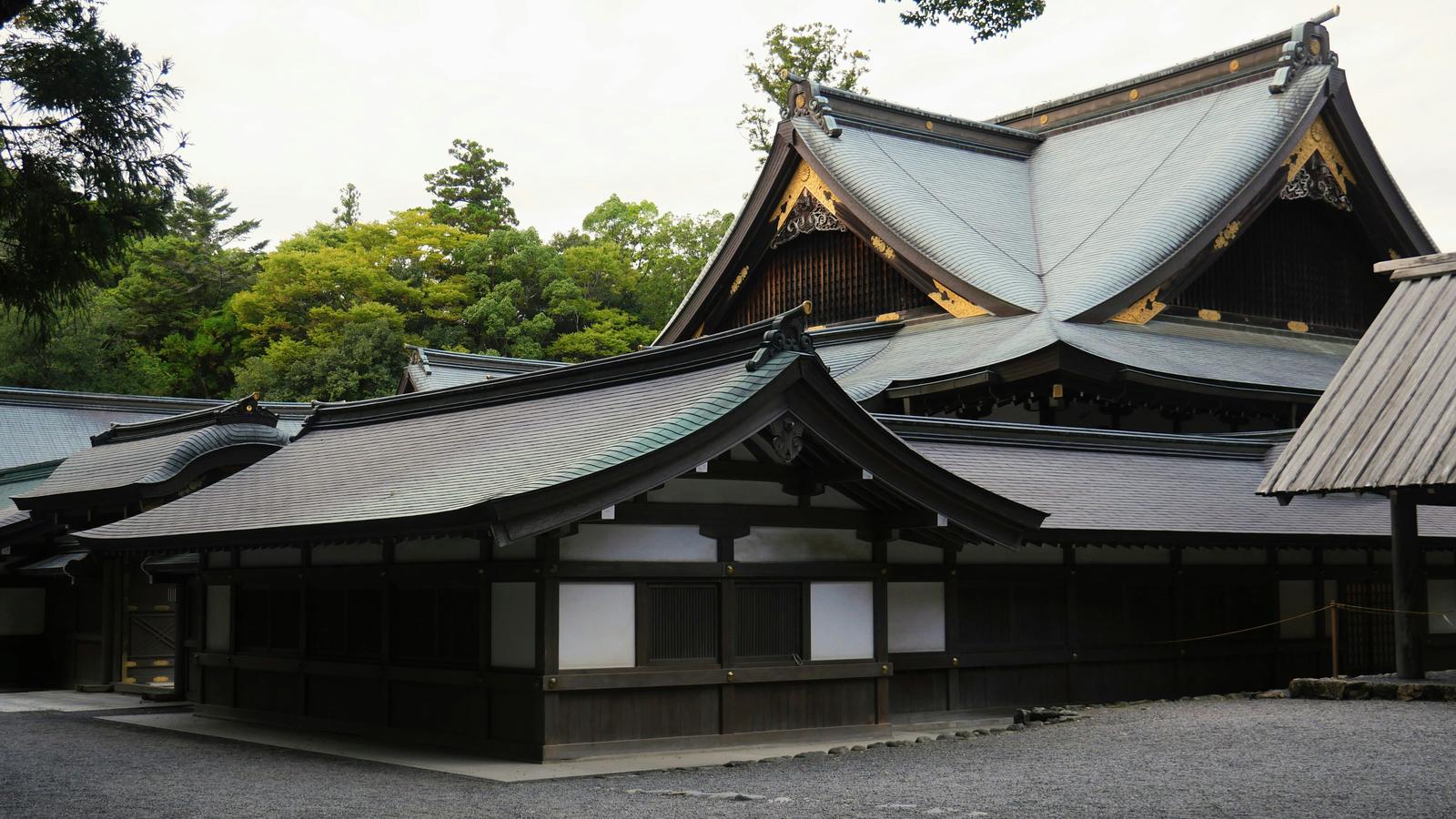
Ise Jingu is open every day from 5:00, and the custom is to pray at the Geku, the Outer Shrine, before the Naiku, the Inner Shrine. From Kyoto, Osaka or Nagoya, Kintetsu's Shimakaze reaches Iseshi Station in 1 hour 15 minutes to just over 2 hours and continues to Kashikojima on Ago Bay, where Amanemu and the Shima Kanko Hotel look over the pearl rafts. From Tokyo, the usual route is the Tokaido Shinkansen to Nagoya and Kintetsu from there.
The years around 2026 and 2027 are a meaningful time to go. The shrine is preparing for its 63rd Shikinen Sengu in autumn 2033, the rebuilding it has carried out every 20 years since 690, and the town is pulling the timber for it through the streets and up the Isuzu River. The first Okihiki ran from May to August 2026; the second is set for May to August 2027. This guide covers the trains, the order and hours of a visit, the Okihiki dates, Okage Yokocho, the pearls and ama divers of the coast, and the stays around Ago Bay. We read every time, fare and rate on the official or listing pages on October 31, 2026, and the sources are at the end. If you are still deciding where to go after Tokyo and Kyoto, Beyond Tokyo and Kyoto sets out the other options.
Key points
- Ise Jingu opens at 5:00 all year. It closes at 17:00 from October to December, 18:00 from January to April and in September, and 19:00 from May to August.
- Kintetsu's Shimakaze runs one round trip a day on each route: Osaka-Namba 10:40 to Iseshi 12:16, Kyoto 10:00 to Iseshi 12:03, Kintetsu-Nagoya 10:25 to Iseshi 11:40. The adult fare to Kashikojima is ¥5,460 from Namba, ¥6,150 from Kyoto and ¥5,060 from Nagoya.
- The second Okihiki, the timber pulling for the 2033 Sengu, is scheduled for May 8 to June 12, 2027 on land and July 24 to August 1, 2027 on the Isuzu River.
- At Mikimoto Pearl Island in Toba, ¥1,650 includes the ama diving demonstration, shown up to seven times a day.
- Amanemu has 24 suites and 8 two-bedroom villas, each with its own onsen, and holds three Michelin Keys. Ikyu showed it from ¥270,640 a night for two with breakfast when we read it.
LET US ARRANGE YOUR DAYS IN ISE-SHIMA →
GETTING THERE FROM TOKYO, KYOTO AND OSAKA
Ise-Shima is a peninsula in Mie Prefecture. Iseshi and Ujiyamada stations serve the shrines; Toba is the harbour town for Mikimoto Pearl Island; Kashikojima, at the end of the Kintetsu line, sits on Ago Bay.
Shimakaze from Osaka, Kyoto or Nagoya
The timetable. Shimakaze is Kintetsu's sightseeing limited express, with premium seats, group salons, private rooms and a two-level café car. It runs one round trip a day from each of three cities. On the timetable dated March 14, 2026:
| Route | Outbound | Return | Adult fare to Kashikojima |
|---|---|---|---|
| Osaka-Namba | 10:40, Iseshi 12:16, Kashikojima 13:03 | Kashikojima 16:00, Iseshi 16:43, Namba 18:21 | ¥5,460 |
| Kyoto | 10:00, Iseshi 12:03, Kashikojima 12:46 | Kashikojima 14:50, Iseshi 15:34, Kyoto 17:34 | ¥6,150 |
| Kintetsu-Nagoya | 10:25, Iseshi 11:40, Kashikojima 12:27 | Kashikojima 15:40, Iseshi 16:24, Nagoya 17:44 | ¥5,060 |
Days it does not run. As a rule, the Osaka-Namba trains do not run on Tuesdays, the Kyoto trains on Wednesdays and the Nagoya trains on Thursdays. Weekend times differ by a few minutes on some routes.
The fare and the rooms. The fares above include the basic fare, the limited express charge and the Shimakaze fee. A Japanese-style or Western-style private room is ¥1,050 extra per room for three or four people; the salon seats, for four to six, carry no extra charge. The KINTETSU RAIL PASS covers the basic fare only, so pass holders still pay the limited express charge and the Shimakaze fee. Tickets are sold on Kintetsu's site and at limited express counters at major Kintetsu stations.
Other trains. On days without Shimakaze, the Ise-Shima Liner connects Osaka-Namba, Kyoto and Kintetsu-Nagoya with Ise-Shima. Kintetsu's Hinotori runs between Osaka-Namba and Kintetsu-Nagoya in about 2 hours, so it is the train for the Osaka to Nagoya leg and does not go to Ise.
From Tokyo
Take the Tokaido Shinkansen to Nagoya, which Aman gives as 1 hour 40 minutes from Tokyo Station, and change to Kintetsu at Kintetsu-Nagoya. On a Shimakaze day, the 10:25 departure reaches Iseshi at 11:40, so an early shinkansen puts you at the Geku before lunch.
By car
Mikimoto Pearl Island gives about 2 hours to Toba by car from Nagoya, about 2 hours from Kyoto and about 3 hours from Osaka. Amanemu's fact sheet gives 150 minutes from Nagoya Station and about 210 minutes from Osaka or Kyoto stations, and one hour by car from the resort to Ise Jingu. A car also links the shrines, Toba and the bay in one day without changes. What a driver costs is set out in Private driver in Japan cost.
ISE JINGU, GEKU THEN NAIKU
Ise Jingu is the collective name for 125 shrines, centred on the Naiku and the Geku, according to Mie Prefecture's tourism site. The shrine's own pages put it plainly: the Ise pilgrimage begins at the Geku.
- The Geku. It enshrines Toyouke no Omikami, revered as the deity who provides food to Amaterasu Omikami. It stands in central Ise with Mount Takakura behind it, about five minutes by bus from Iseshi Station. The approach is a gravel path under trees.
- The Naiku. It enshrines Amaterasu Omikami, the ancestral deity of the imperial family, and has stood by the Isuzu River since the reign of Emperor Suinin, about 2,000 years ago, the shrine writes. The Uji Bridge over the river is its entrance. The nearest station is Isuzugawa, about six minutes away by bus.
- How long to allow. The shrine's model courses take 30 or 60 minutes at the Geku and 60 or 90 minutes at the Naiku.
- Prayers. Formal prayers, including Okagura, a sacred dance, are offered at the kagura halls of both shrines.
Hours. The Naiku, the Geku and their associated shrines share one schedule: 5:00 to 18:00 in January to April and September, 5:00 to 19:00 from May to August, and 5:00 to 17:00 from October to December. Hours change over the New Year. The shrine expects congestion on the roads around it during the New Year, Golden Week and long weekends, when a park-and-ride bus runs from temporary car parks.
The early opening is the useful fact here. At 6:00 the light comes low through the trees and the gravel paths and the river at the Naiku are quiet. On November 23, 2026 the Niiname-sai harvest festival is held at the Geku at 7:00 and at the Naiku at 14:00.
THE SENGU AND THE OKIHIKI
Every 20 years, Ise Jingu rebuilds its shrine buildings and renews the sacred garments and treasures, and the deity is moved to the new shrine. Each of the Naiku and the Geku has two sites of the same size side by side, so the rebuilding alternates between them. The shrine traces the custom to 690, the fourth year of Empress Jito, and the 62nd took place in 2013. The 63rd Sengu is set for autumn 2033, and the ceremonies leading to it began in 2025.
The Okihiki
The Okihiki is the town's part in the Sengu: residents pull the timber for the new buildings into the shrines, on carts through the streets to the Geku (the rikubiki) and on wooden sleds up the Isuzu River to the Naiku (the kawabiki). It begins seven years before the Sengu and runs over two years. Time Out called it one of the few moments when the usually private ritual becomes openly festive.
- 2026, done. Kyodo reported the start of the land pulling on May 9, 2026, with residents in happi coats calling out "enya" as they pulled carts from Nakajima to the Geku; from May 10, people who had applied from across Japan pulled on a separate route. The river pulling ran from July 25 to August 2, 2026, from around Urata Bridge to the Naiku grounds, with each day given to a different district.
- 2027, the second round. The Ise Sengu committee lists the land pulling from May 8 to June 12, 2027 and the river pulling from July 24 to August 1, 2027, and notes the dates may change.
- Watching. Mie Prefecture's tourism site invites visitors to come and watch the second Okihiki. On the committee's site we did not find whether places will be open to visitors from outside Ise in 2027, so we do not promise it.
For a visit in 2027, the practical choice is between the land pulling on weekends in May and June, which moves through the town towards the Geku, and the river pulling in late July, which ends at the Uji Bridge. In 2026 the river groups left between 10:00 and 11:40 and reached the bridge between 13:40 and 15:20.
OHARAIMACHI AND OKAGE YOKOCHO
Oharaimachi is the approach street that leads to the Uji Bridge at the Naiku. Okage Yokocho, opened in 1993, sits in the middle of it, about five minutes on foot from the bridge. It recreates the streets of the late Edo to early Meiji period, when the Ise pilgrimage was at its busiest, and holds more than 50 shops in one small town of its own.
Hours. Okage Yokocho opens at 9:30. It closes at 17:00 in November, December, January and February, at 17:30 in October, and at 18:00 in August and September, with longer hours on some weekends and changes over Golden Week and Obon. The shrine opens at 5:00, so an early visit to the Naiku and a late breakfast in Oharaimachi as the shutters go up fits the day well.
PEARLS AND THE AMA OF THE COAST
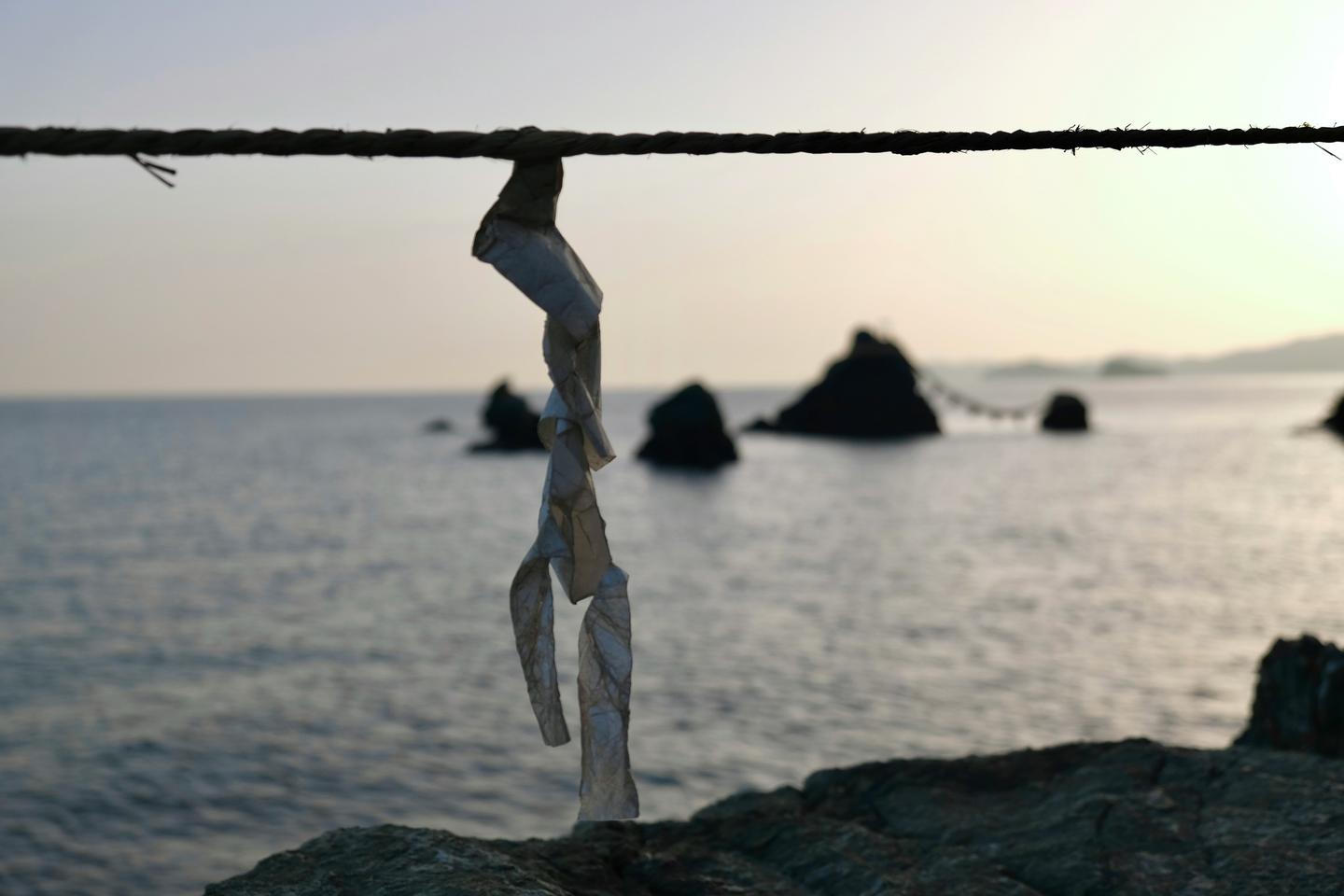
Between Ise and Toba the road meets the sea at Futami, where the paired Meoto Iwa rocks stand offshore, joined by a rope. South of Toba the coast breaks into inlets, and Ago Bay, which Aman calls the Bay of Pearls, is dotted with islets and pearl rafts.
Mikimoto Pearl Island
The island in Toba harbour is named for Kokichi Mikimoto, the eldest son of an udon shop family in Toba, who worked through years of trial and error to culture pearls. It is five minutes on foot from Toba Station.
- Hours. 9:00 to 17:00 from October 13 to November 26, 2026, and 9:00 to 16:30 from November 27 to December 22. Ticket sales stop 60 minutes before closing. The island closes for three days from the second Tuesday of December.
- Admission. ¥1,650 for adults, including the ama demonstration.
- The ama demonstration. At 9:30, 10:30, 11:30, 13:30, 14:30, 15:30 and 16:30; on days that close at 16:30, the last one is at 15:30.
The ama and an ama hut lunch
The ama are women who free-dive for abalone, turban shells and seaweed. Mie Prefecture's tourism site says nearly 800 still dive in Toba and Shima, the most in Japan and about a third of their peak, and that the practice goes back more than 2,000 years; the diving techniques of Toba and Shima were designated an Important Intangible Folk Cultural Property in March 2017. The amagoya, the hut by the shore, is their base for changing, eating and warming up.
At Hachiman Kamado in Osatsu, about 25 minutes by car from Toba Station, ama grill the catch over charcoal in a hut and talk with guests. It is open 10:00 to 17:00 by reservation only and closes January 1 to 5, August 13 to 15 and December 30 to 31, with some irregular days.
| Course | Time | Price |
|---|---|---|
| Tea time with an ama: a turban shell, a tokobushi abalone, dried horse mackerel | 50 minutes | ¥3,000 |
| Ama hut lunch: two charcoal-grilled turban shells, squid, fish, Ise lobster soup, rice | 1 hour 15 minutes | ¥4,700 |
| The same with an Ise lobster, or with an abalone | 1 hour 15 minutes | ¥9,500 or ¥9,000 |
| The same with both Ise lobster and abalone | 1 hour 15 minutes | ¥13,800 |
| Ama shinsen course: a shrine-style food offering, then coffee by the sea, 2 to 6 guests | 2 hours 25 minutes | ¥50,000 |
WHERE TO STAY AROUND AGO BAY
Most travellers who come for the shrines and the coast stay on Ago Bay and drive to Ise for the morning. Rates below are what Ikyu's English site showed for two people for one night when we read it on October 31, 2026; they change by date and room.
- Amanemu. On a hillside on the Osaki Peninsula above Ago Bay, in Ise-Shima National Park: 24 suites and 8 two-bedroom villas, each with a private onsen, a 2,000 m² spa and a 33 m pool. The Mori Suites are 99 m². Michelin's first hotel selection for Japan, in July 2024, gave it three Keys, one of six hotels in Japan at that level. A shuttle runs from Kashikojima Station, 20 minutes by car. Ikyu: from ¥270,640 for a Mori Suite with breakfast.
- Shima Kanko Hotel. On Kashikojima, two minutes by car from the station, with a free shuttle. The Bay Suites is all suites facing Ago Bay; The Classic is the classically styled building, with a lobby and lounge facing the bay and the French restaurant La Mer. Ikyu: The Bay Suites from ¥91,020 and The Classic from ¥40,714, both without meals.
- THE HIRAMATSU HOTELS & RESORTS Kashikojima. Eight rooms over Ago Bay in Ugata, with French cooking from local produce and Okushima Hamashima Onsen in the annex rooms. Ikyu: from ¥173,800 with dinner and breakfast.
A night in a ryokan suits travellers who want the meal served in the room; how to choose one is in How to choose a ryokan in Japan.
HOW WE ARRANGE ISE-SHIMA
We build the days around the shrine hours, the Shimakaze days and, in 2027, the Okihiki dates, and arrange each part in your name.
- The train. We tell you which Shimakaze or limited express fits the plan and which seats to choose. You buy the tickets yourself or through our travel partner.
- A car and driver. From your hotel on Ago Bay to the Geku at opening, the Naiku, Toba and back, or the whole way from Nagoya or Kyoto.
- A guide. A licensed guide who can explain the Sengu, the two shrines and the order of prayer as you walk.
- The coast. A table at an ama hut and the timing of the demonstration at Pearl Island.
- The stay. We arrange the hotel or ryokan in your name and you pay it directly.
SOURCES AND HOW WE CHECKED
Read on October 31, 2026. Prices include tax and are for one adult unless stated. Hotel rates are as shown on the listing page on that day.
- Ise Jingu, visiting information and model courses: hours by month, kagura halls, Geku first, time to allow
- Ise Jingu, Naiku and Geku: deities, Isuzu River, Uji Bridge, Mount Takakura
- Ise Jingu, Shikinen Sengu, home page and access: 690, 2013, autumn 2033, ceremonies from 2025, Niiname-sai times, congestion and park-and-ride
- Ise Sengu committee (伊勢市御遷宮委員会): 2027 land and river pulling dates
- Mie Prefecture tourism, Okihiki river pulling 2026 and Reiwa Okihiki: 2026 river dates, route, times, 2027 schedule
- Mie Prefecture tourism, about Ise Jingu: 125 shrines, visiting order, bus times from Iseshi and Isuzugawa
- Mie Prefecture tourism, the ama: numbers, history, 2017 designation, the amagoya
- Kyodo News via Kumamoto Nichinichi Shimbun, お木曳始まる (May 9, 2026): start of the 2026 land pulling, route, participants
- Time Out, Why Japan's most sacred shrine is rebuilt every 20 years (May 7, 2026): the Okihiki as a public procession
- Kintetsu Railway, Shimakaze: timetable of March 14, 2026, days not operated, fares, rooms, rail pass
- Kintetsu Railway, Hinotori and types of limited express: Hinotori route, Ise-Shima Liner
- Okage Yokocho and its opening hours: 1993, era, distance from the Uji Bridge, shops, hours
- Mikimoto Pearl Island, hours and admission, ama demonstration times and access: hours, fee, closures, times, walk from Toba Station, driving times
- Ama hut Hachiman Kamado and its courses: location, hours, closing days, courses and prices
- Aman, Amanemu and Amanemu fact sheet: rooms, sizes, spa, pool, driving times, the Bay of Pearls, Tokyo to Nagoya time
- Michelin, Michelin Key selection Japan 2024: Amanemu among six Three-Key hotels
- Ikyu, Shima City hotels and Amanemu listing: rates for two, room count, shuttle
- Shima Kanko Hotel and THE HIRAMATSU HOTELS & RESORTS Kashikojima: buildings, restaurants, shuttle, rooms, onsen
QUESTIONS GUESTS ASK
Should I visit the Geku or the Naiku first?
The Geku. Ise Jingu's own pages say the pilgrimage customarily begins at the Geku, the Outer Shrine, and then continues to the Naiku. Both open at 5:00.
When can I see the Okihiki timber pulling?
The second round is scheduled for May 8 to June 12, 2027 for the land pulling through the town to the Geku, and July 24 to August 1, 2027 for the river pulling up the Isuzu River to the Naiku. The committee notes the dates may change. The first round took place from May to August 2026.
How long is the train from Kyoto or Osaka to Ise?
On Kintetsu's Shimakaze, Kyoto 10:00 reaches Iseshi at 12:03 and Osaka-Namba 10:40 reaches Iseshi at 12:16. The fare to Kashikojima is ¥6,150 from Kyoto and ¥5,460 from Namba. Shimakaze does not run from Kyoto on Wednesdays or from Namba on Tuesdays, as a rule.
Can I visit Ise from Tokyo in a day?
It is possible but long. Aman gives 1 hour 40 minutes by shinkansen from Tokyo to Nagoya, and Shimakaze takes 1 hour 15 minutes from Kintetsu-Nagoya to Iseshi. One night on Ago Bay lets you be at the Geku early and see the coast the next day.
Where can I see the ama divers?
Mikimoto Pearl Island in Toba holds demonstrations up to seven times a day, included in the ¥1,650 admission. For a meal with them, Hachiman Kamado in Osatsu serves lunch in an ama hut by reservation, from ¥3,000 for a 50-minute tea time.
LET US ARRANGE YOUR DAYS IN ISE-SHIMA
Send us your dates and where you are coming from. We will come back with a plan for Ise and Ago Bay around the shrine hours and the Shimakaze days, the 2027 Okihiki dates if you are travelling then, and two or three stays with their published rates, and we arrange the car, the guide, the ama hut and the stay you choose. Tell us roughly when you hope to be at the Geku, and we will start from there.
Begin planning →We reply within 24 hours, in writing
Some of the restaurants, bars and private places we arrange take guests only by introduction or membership. We do not publish their names.