The Tokyo Fire Department recommends three steps in order: keep tall furniture out of the rooms where you sleep and sit, arrange what remains so it cannot block doors or fall onto people, and then fix each piece, with screws and L-shaped brackets into a strong wall being the most effective method. Where you cannot drill, the department says pairing a tension pole with a stopper or adhesive mat can be expected to work about as well as an L-bracket. In a condominium, ask the management company before fixing anything into structural walls.
Why furniture matters in a Tokyo earthquake
The Tokyo Fire Department's furniture handbook reports that in recent earthquakes in Japan, about 30 to 50 percent of injuries were caused by furniture falling, toppling or moving. The Tokyo Metropolitan Government repeated the figure in its July 2026 campaign on staying safely at home after a disaster.
The handbook names three dangers: injury, fire (a falling object can switch on a heater, for example) and blocked escape, when a fallen cabinet or a drawer flung open stops you reaching the door.
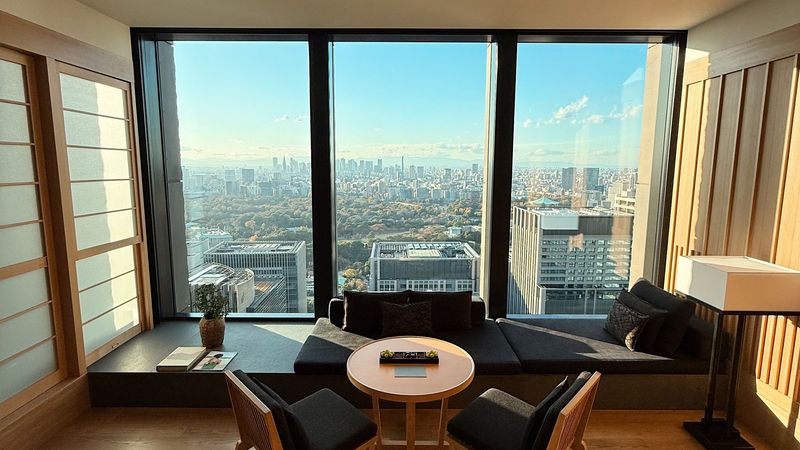
Height in the building matters. In a Tokyo Fire Department survey after the 2011 Great East Japan Earthquake, furniture fell or moved in 16.8 percent of homes on the first or second floor and in 47.2 percent of homes on the 11th floor or higher. The department links this partly to long-period ground motion, which makes high floors sway widely and slowly, and advises residents of roughly the 10th floor and above to prevent sliding as well as toppling.
Layout first: bedrooms, doors and escape routes
Before any bracket, the Tokyo Fire Department starts with where things go. Its handbook asks residents to keep furniture out of living space as far as possible by using closets and built-in storage, and to place nothing tall where people sleep or sit. If something must stand there, choose a low piece or turn it so that it cannot fall onto the bed.
Keep corridors and the space around doors clear, and think about which way a piece would fall; a toppled cabinet should not be able to jam a door shut. Heavy items belong on lower shelves. Near windows, avoid heavy or unstable objects that could fall outward.
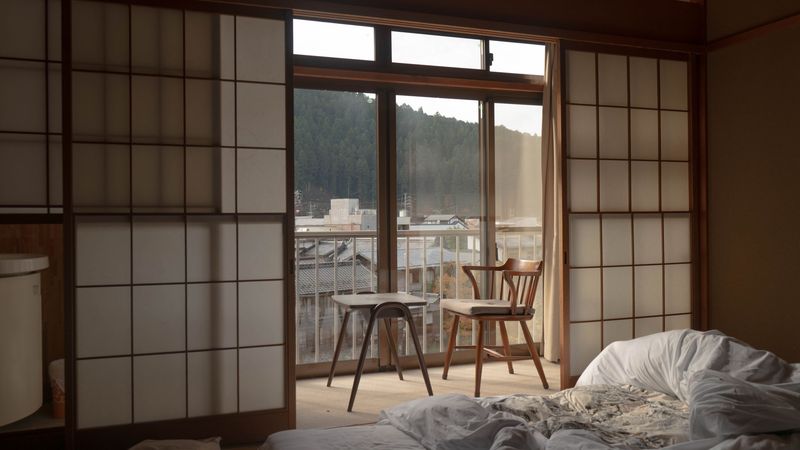
This is where ma (the space left empty, room to breathe) becomes practical. A bedroom with a low bed, a low chest and nothing above head height is calm to look at and has very little that can fall. The handbook also suggests choosing a safe spot in the home, often the bedroom or corridor, and keeping thick gloves and sturdy footwear there.
What the Tokyo Fire Department recommends for fixing
The department tested fixing devices on furniture under shaking equivalent to seismic intensity 6 upper. Its conclusions:
- Fixing furniture directly to the wall with screws and L-shaped brackets is the most effective method. The wall must be strong enough to hold the screws.
- Plate-type and belt or chain-type fixings, screwed to both furniture and wall, are also effective.
- Tension poles, wedged between the top of the furniture and the ceiling, need a ceiling strong enough to take the pressure.
- A stopper wedged under the front edge, or an adhesive mat, is not very effective alone on tall furniture. Combined with a tension pole, it can be expected to work about as well as an L-bracket.
- Two-part units, such as a cabinet on a chest, should be joined with a connecting fitting.
- Furniture on castors that is not moved day to day should have castor cups or a detachable belt, and open shelves benefit from a bar or strap that keeps objects in.
Fixing without drilling in a condominium
In many condominium bylaws based on the national standard model, the parts of walls, floors and ceilings that form the building's structural framework are common elements, while the interior finish belongs to the unit. Article 17 of the standard bylaws (English provisional translation, April 2026) asks owners to apply to the association and obtain approval in advance for work that may affect common elements. Before screwing into a concrete wall, ask the management company what your building's bylaws allow.
Many interior walls are plasterboard over a frame. The Tokyo Fire Department's handbook says an L-bracket must be screwed into the studs or other framing behind the board, using long wood screws, and suggests finding them with a stud sensor, a test pin or by tapping. Ask the management company or the installer where the framing is before fixing anything.
If drilling is not possible, the Tokyo Fire Department's own answer is to combine two no-drill devices, such as a tension pole with a stopper or adhesive mat. Furniture design helps: a solid top for the pole to press against, a broad base, and two-part units that can be joined.
The department also notes that seismic isolation reduces shaking but does not remove it. In its survey after the 2016 Kumamoto earthquakes, furniture fell or moved in seismically isolated condominiums at about half the rate of others, yet still in about 30 percent of households.
Glass, lighting and objects on shelves
The Fire and Disaster Management Agency (FDMA) recommends stoppers on drawers and hinged doors so contents stay inside, and anti-shatter film on glass doors. The Tokyo Fire Department adds that hanging lights can swing widely in long-period motion, so a pendant above a bed or a dining table deserves a second thought.
For ceramics, glass and craft on display, choose shelves with a lip or a discreet bar, and keep heavier pieces low. A cabinet with latching doors protects a collection better than open shelves at eye level.
Free devices from Tokyo's wards
The FDMA suggests asking your local municipality about free devices or installation subsidies. Minato City, for example, provides devices such as tension poles, belts, adhesive mats and glass film free of charge to households living in the ward and registered as residents, with installation help for some households, such as older residents. An owner who lives abroad and is not registered in the ward may not qualify, so check the conditions with your ward office.
The Tokyo Fire Department notes that devices cost from a few hundred to a few thousand yen and are sold at furniture shops, home centres and the disaster-supplies sections of department stores. Some local builders and the Silver Human Resources Centers offer installation.
How STAYGO ATELIER can help
STAYGO ATELIER can choose furniture with earthquakes in mind: lower pieces for bedrooms, cabinets with latching doors, two-part units that can be joined, and forms that work with a tension pole. We arrange the order and shipping. Fixing the furniture, and any approval from your building, is for you to arrange with your management company and an installer.
Questions owners ask
Do I need to anchor furniture in Japan?
The Tokyo Metropolitan Earthquake Disaster Prevention Ordinance asks residents to make efforts to prevent furniture from toppling; it is a duty to try, with no fixed height threshold. The Tokyo Fire Department advises treating tall and heavy pieces first.
Can I fix furniture to the wall in a condo?
Structural walls are usually common elements under condominium bylaws, so ask the management company before drilling into them. If you cannot drill, the Tokyo Fire Department suggests combining a tension pole with a stopper or adhesive mat.
Is a seismically isolated building safe without anchoring?
No. In the Tokyo Fire Department's Kumamoto survey, furniture still fell or moved in about 30 percent of households in seismically isolated condominiums.
Who installs fixing devices if I live abroad?
The Tokyo Fire Department notes that some local builders and Silver Human Resources Centers offer installation. Arrange this with someone you trust in Japan and agree in advance on how it will be fixed.
This article is general information only. For your specific case, ask your building's management company, a licensed architect, or the relevant ward or fire department office.
Sources
- Tokyo Fire Department, Handbook on preventing furniture from toppling, falling and moving (家具類の転倒・落下・移動防止対策ハンドブック) (2023)
- Tokyo Fire Department, Furniture fall prevention: frequently asked questions (よくあるご質問) (n.d.)
- Fire and Disaster Management Agency, Disaster preparedness manual: Furniture from toppling over (n.d.)
- Tokyo Metropolitan Government, Implementation of the Stay-at-Home Evacuation Campaign (2026)
- Minato City, Subsidy for furniture fall prevention devices (家具転倒防止器具等助成のご案内) (2026)
- Condominium Management Center, Standard Condominium Management Bylaws (Single Building Type), English provisional translation (2026)