Japandi in a Tokyo apartment works best when it starts from the home itself: compact rooms whose size is quoted in mats, an entry where shoes come off, a ceiling socket for the main light, and humid summers. Keep the calm palette, low furniture and few objects the style is known for, then choose pieces sized for Japanese rooms and materials made in Japan, such as hinoki (Japanese cypress) and washi (handmade Japanese paper).
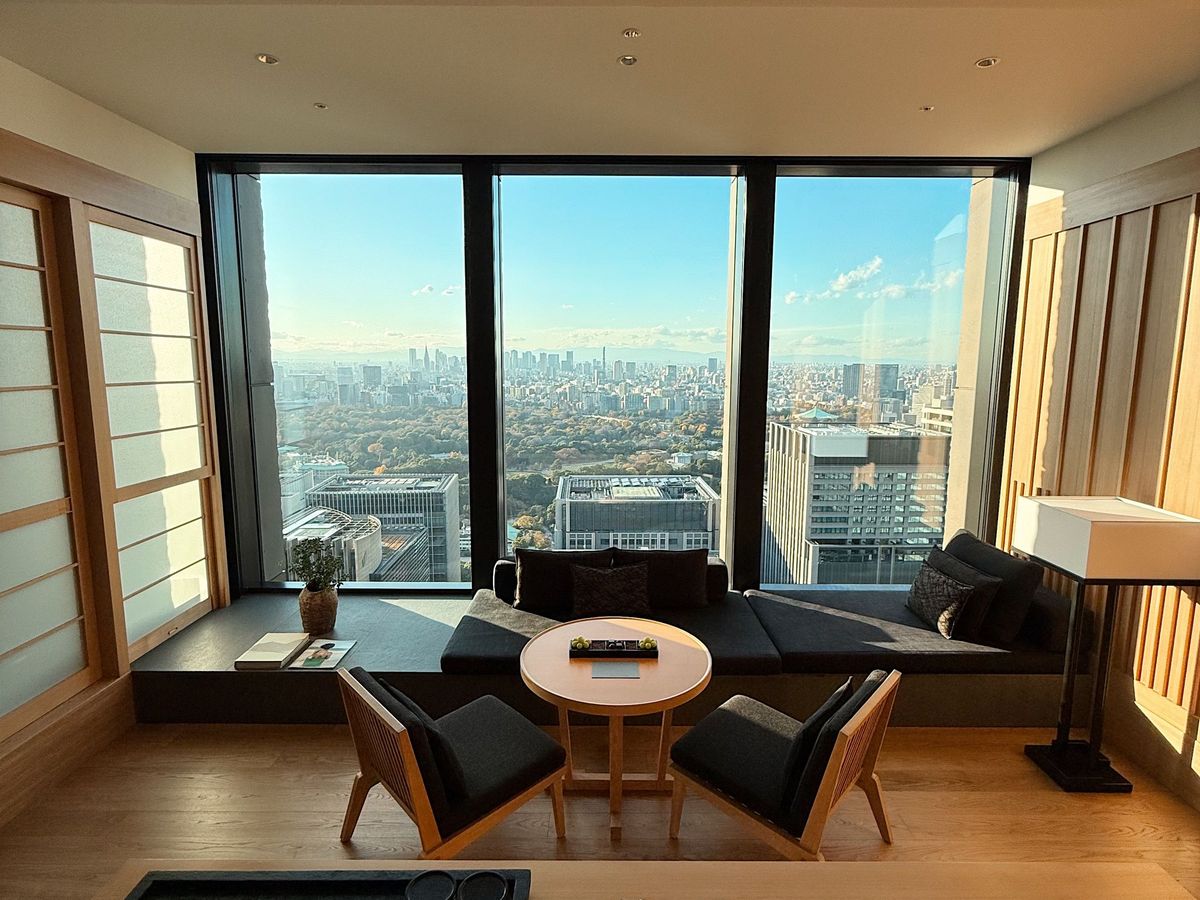
What Japandi means, briefly
Japandi is the name for interiors that combine Japanese and Scandinavian design: natural wood, soft neutral colours, low furniture, few objects and good craft. It has been one of the fastest-growing interior styles in English-language searches. RentCafe's analysis of Google searches, published in December 2022, put Japandi at the top of its list for the second year in a row, with a 108% one-year rise in search volume and an average of 7,850 monthly searches (January to October 2022 compared with the same months of 2021).
Interest in Japanese rooms themselves is growing too. Pinterest's Fall 2024 Trend Report listed searches for "Japanese living room design" up 135% and "Japanese furniture" up 60%.
Most Japandi guides are written for homes in London, Sydney or New York, where the Japanese side is borrowed. In Tokyo it is the starting point. A Dezeen feature from 2022 on an apartment in central Tokyo shows what that can look like: a rammed-earth wall at the entry, columns of Oya stone (a Japanese building stone), smoked oak and wool. The Scandinavian side arrives as furniture and textiles; the Japanese side is already in the walls, the floor plan and the climate.
Room sizes in Japan: LDK and mat counts
Japanese listings describe a home by its rooms: 2LDK means two bedrooms plus a living, dining and kitchen room. Room sizes are often given in mats (jo). Under the real estate advertising rules administered by the Fair Trade Council, a size given in mats must mean at least 1.62 square metres per mat, calculated from the room's area measured to the centre of the walls. A room advertised as 6 mats is therefore at least 9.72 square metres.
Actual mats differ by region and by building, and wall-centre measurements include the wall thickness, so the usable floor is smaller than the advertised figure. Ask for the floor plan with dimensions in millimetres, or measure the rooms yourself.
This matters for Japandi because much of the furniture sold under that name is sized for larger rooms. A three-seat sofa 100 cm deep or a 220 cm dining table can fill a Tokyo LDK. Measure the doors, the corridor turns and the lift as well, since a piece that fits the room may still not reach it.
Ma: leaving space on purpose
Ma is the Japanese idea of the interval between things, the room to breathe. In a compact apartment it is the most useful tool you have. Leave one wall without furniture, keep a clear path from the entry to the window, and let the floor show.
Low furniture keeps the view across the room open, which makes a small space feel calm. Choose fewer pieces of better quality, and keep everyday objects in closed storage so surfaces stay clear. This is also practical in a home you visit a few times a year: fewer objects means less dust and fewer places for damp air to sit.
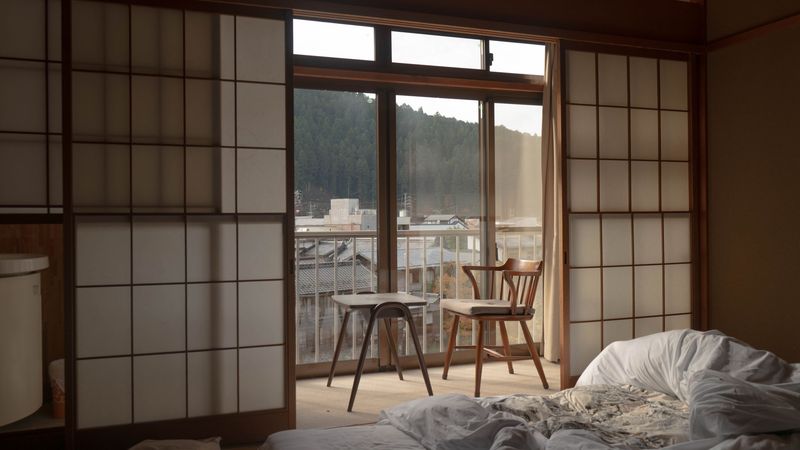
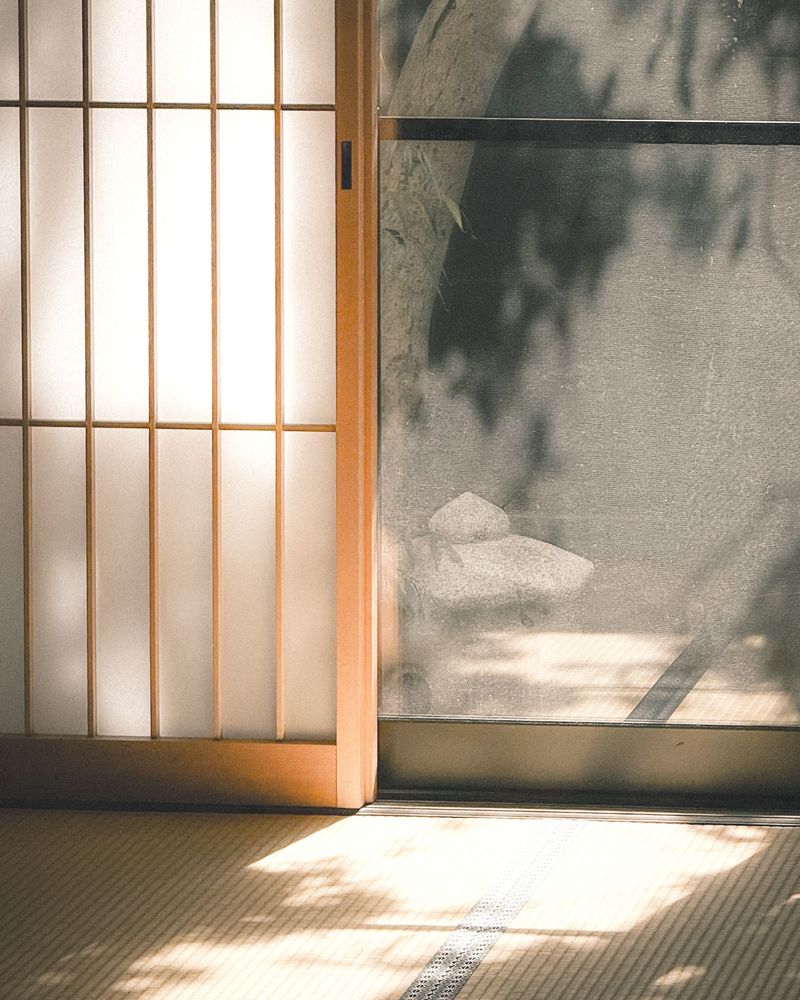
If the apartment has a tatami (woven rush mat) room, the All Japan Tatami Business Cooperative advises putting a board under heavy furniture with legs, such as a desk or piano, and not pushing furniture flat against the walls, which can encourage mould.
- Keep one wall or corner deliberately empty
- Choose low seating and a low table for the main room
- Put storage behind doors and keep surfaces clear
- Leave a gap between large furniture and the wall
Materials that belong in Japan
Japandi rooms abroad often use oak and ash. In Tokyo you can also choose woods grown in Japan. Hinoki is valued for its colour, lustre and scent, and suits bedroom furniture, shelves and bath stools.
For a dining table, keyaki (zelkova) and nara (Japanese oak) are hard, heavy woods that resist wear.
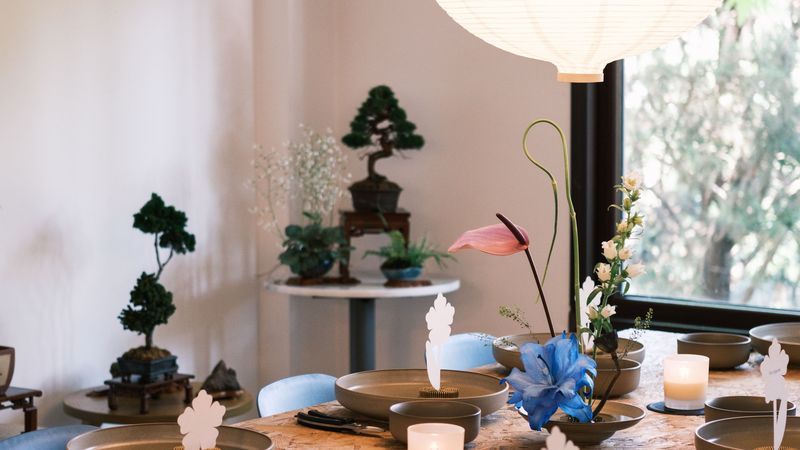
Washi lighting gives the soft, diffused light that warm minimalism depends on. Paper shades are light to ship and easy to replace, which suits a home you are furnishing from abroad.
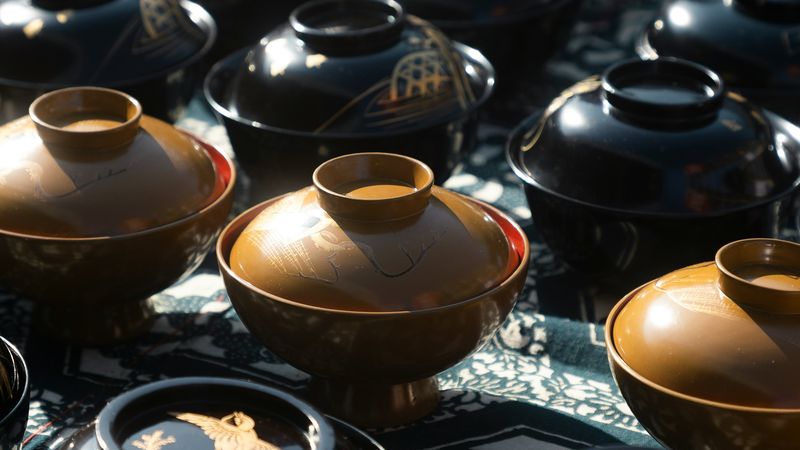
Urushi lacquer, made from the sap of the lacquer tree, is used for trays, bowls and small furniture. Real urushi needs some care, and it is worth confirming with the maker that a piece is urushi and not a synthetic coating.
Japanese summers are humid. Solid wood moves with the seasons, so ask the maker how the wood was dried and what finish was used, especially if the apartment will be closed for weeks at a time.
Light: ceiling sockets and warm bulbs
Most Japanese apartments have a standard socket in the ceiling of each room, called a hikkake ceiling, into which a ceiling light clips and twists without tools. Many apartments are handed over with a bright, flat ceiling disc. For a Japandi room, a pendant or a paper shade on that socket, plus one or two table or floor lamps at low height, gives a warmer and quieter light.
Japanese bulbs and fittings are labelled by colour. Denkyu-iro (light-bulb colour) is the warm setting and is the one to look for in living rooms and bedrooms. A heavier pendant may need more than the socket can hold, so ask an electrician before you choose one. If you plan to bring lamps from abroad, check their voltage rating and plug before you ship them.
The genkan and the shoe-off home
Japanese homes have a genkan (the entry hall), usually a small area one step lower than the rest of the floor, where shoes come off. Everything beyond it is walked on in socks or slippers, which is why floor cushions, low seating and rugs work so well in a Japanese home.
The genkan is small and seen first, so treat it as a room. A closed shoe cabinet, a narrow bench or stool to sit on, one hook for coats and a single object, such as a vase or a small print, are usually enough. Keep a few pairs of slippers for guests in the cabinet.
Floors in a shoe-off home stay cleaner, so lighter woods and natural fibre rugs are easier to keep than they would be in a home where shoes are worn indoors.
How STAYGO ATELIER can help
STAYGO ATELIER chooses the furniture, lighting and craft for a Japandi home in Tokyo with a designer's eye, checking each piece against your floor plan and the route into the building, then arranges the purchase and shipping. You pay the makers and shops directly. We do not visit the home, install pieces or carry out building work.
Questions owners ask
What is the difference between Japandi and Japanese minimalism?
Japanese minimalism usually refers to the restraint of Japanese homes: tatami, sliding doors and very few objects. Japandi combines that restraint with Scandinavian comfort, such as upholstered seating, wool textiles and pale woods like oak and ash.
Does Japandi work in a small Tokyo apartment?
Yes, if furniture is chosen for Japanese room sizes. Room sizes are advertised at a minimum of 1.62 square metres per mat, so measure the real rooms, doors and lift before choosing a sofa or table, and keep one area of floor clear.
Can I use Scandinavian furniture I already own?
Often yes, if it fits the rooms and the route into the building. Check the depth of sofas and the length of tables against the floor plan, and check the voltage rating of any lamps before shipping them to Japan.
What lighting suits a Japandi room in Japan?
A pendant or paper shade on the ceiling socket with warm denkyu-iro bulbs, plus one or two low lamps. Ask an electrician before hanging a heavy fitting.
Sources
- RentCafe, 2023 Trendiest Interior Design Styles on Google: Japandi Tops the List for Second Year in a Row (2022)
- Pinterest Newsroom, The Pinterest Fall 2024 Trend Report (2024)
- Dezeen, Japandi apartment in Tokyo with Nordic influences (2022)
- Real Estate Fair Trade Council of the Tokyo Metropolitan Area, 不動産の表示に関する公正競争規約・同施行規則 (Fair Competition Code for Real Estate Advertising and its Enforcement Rules, Japanese) (2024)
- All Japan Tatami Business Cooperative, 畳のお手入れ (Tatami care, Japanese) (2026)