Many Americans came to Japanese history through SHOGUN, and arrive wanting to stand where its story happened. The first thing to know is that the series was filmed in Canada. Its first season was shot around Metro Vancouver and British Columbia, and the second season returned to British Columbia. No place in Japan can show you a set from the series. What Japan can show is the history the drama draws on: the struggle among the warlords that ended at Sekigahara in 1600, the castles of the men who won it, and the English pilot William Adams, who reached Japan that same year.
This article follows that history from the battlefield to the castles of Himeji, Kyoto and Osaka, and to the places that remember Adams. On November 5, 2026 we read the pages of the battlefield museum, the castles, the city and prefectural governments, a shrine, Japan's national tourism organisation and the press, and contacted none of them; the sources are listed at the end. Nikko, where Tokugawa Ieyasu is enshrined, has its own article: Nikko from Tokyo: Toshogu, Lake Chuzenji and Whether to Stay the Night →.
Key points
- SHOGUN was filmed in British Columbia, Canada, and its second season returned there. The places below are where the history itself happened.
- The Gifu Sekigahara Battlefield Memorial Museum stands on the field of the 1600 battle, about 10 minutes on foot from JR Sekigahara Station, and closes on Mondays.
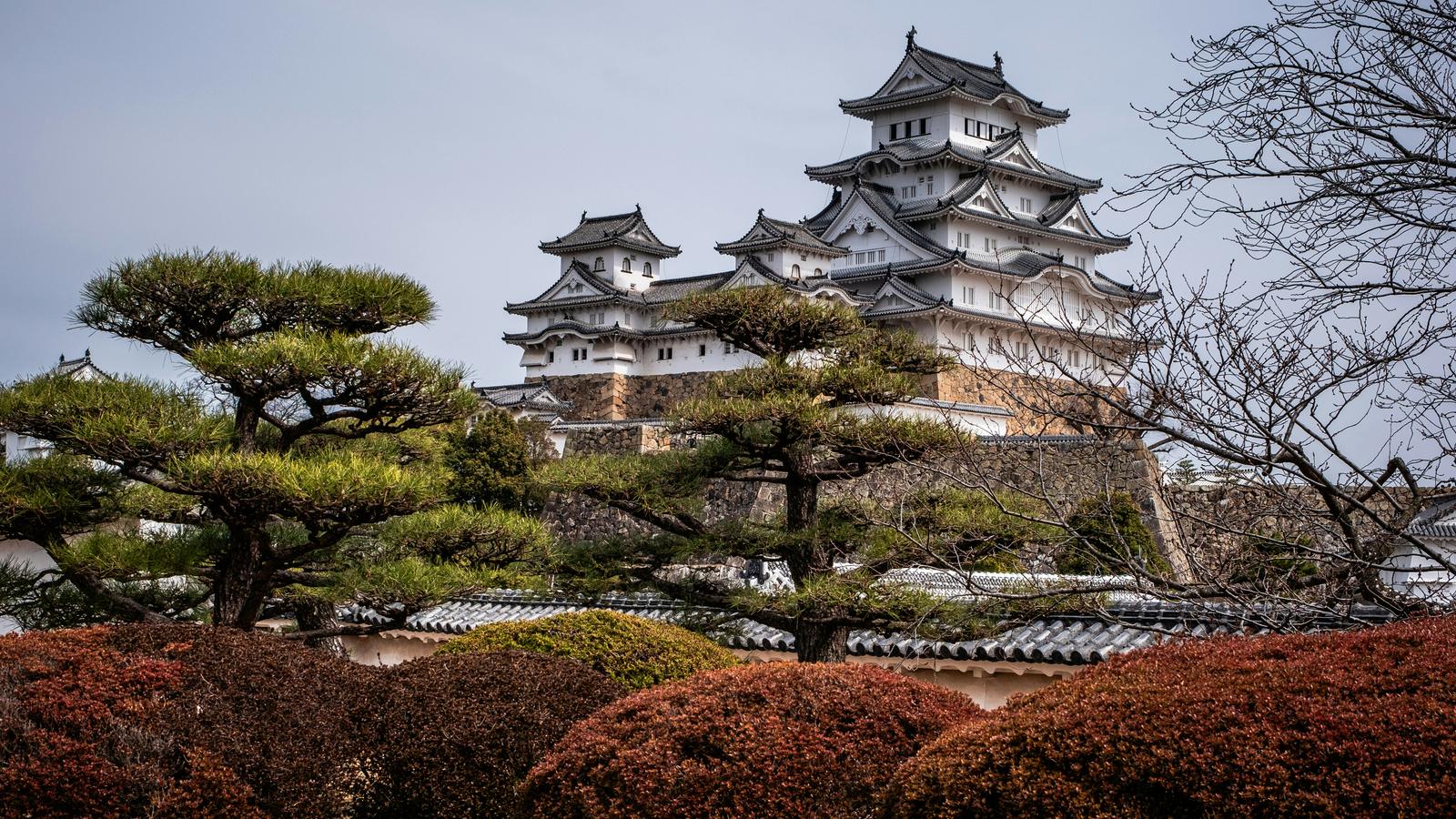
- Himeji Castle's keep of five tiers and seven floors was completed in 1609 by Ikeda Terumasa, lord of Himeji from 1600. The great keep takes no reservations, so the first hour from 9:00 is the one to take.
- At Nijo Castle in Kyoto, completed for Ieyasu in 1603, the official English tours at 10:00 and 12:00 include areas otherwise closed to visitors.
- William Adams, known in Japan as Miura Anjin, received an estate of 250 koku from Ieyasu. His memorial in Yokosuka is a national historic site.
ASK US ABOUT A JOURNEY THROUGH THE YEAR 1600 →
A DRAMA FILMED IN CANADA
Daily Hive, the Vancouver news site, describes the first season as filmed around Metro Vancouver and British Columbia, with Port Moody prominent among its locations. In October 2025 it reported a production listing for the second season in British Columbia, with filming planned from January 2026 and a wrap expected in September 2026. We have found no official source naming a filming location in Japan, and we suggest none.
For an American traveller this is good news. The real places are older and larger than any set, and they are rarely crowded with people looking for them. Interest is rising: JNTO counted 3,306,820 visitors from the United States in 2025, 21.4 percent more than the year before. The route below runs along the old road west from Tokyo, through the valley of Sekigahara to Kyoto, Osaka and Himeji.
SEKIGAHARA AND THE FIELD OF 1600
The decisive battle of Sekigahara was fought in 1600 in a narrow valley of Gifu Prefecture, between an eastern army led by Tokugawa Ieyasu and a western army raised against him. Its outcome opened the way to the Tokugawa shogunate, which ruled Japan until 1867, the year its last shogun gave up power at Nijo Castle in Kyoto.
The Gifu Sekigahara Battlefield Memorial Museum stands on the field itself, about 10 minutes on foot from JR Sekigahara Station. On the ground floor, Ground Vision, a large screen set in the floor, shows the eastern and western camps from above, and a theater recreates the clash of the two armies. The permanent exhibition is on the second floor, and an observation room on the fifth floor looks out over the ground. The museum opens from 9:30 to 17:00, last entry 16:30, and closes on Mondays and from December 29 to January 3.
The value lies in walking the field afterwards with someone who knows it. The museum's own historic site guides lead visitors around the sites of the battle; they are requested by fax at least ten days ahead, and the service is described in Japanese only. We pair the walk with an interpreter, or arrange an English-speaking guide versed in the period. Sekigahara is about 45 minutes from Nagoya on the JR Tokaido Line, and about 1 hour 40 minutes by car from Osaka on the Meishin Expressway, so a private car between Kyoto and the battlefield makes the easier day.
HIMEJI AND ITS ORIGINAL KEEP
Himeji Castle is where the result of Sekigahara can be seen in white plaster. The city's history records that Hashiba Hideyoshi, the future Toyotomi Hideyoshi, built a keep of three tiers on the hill in 1580, and that Ikeda Terumasa became lord of Himeji after the battle of 1600. Terumasa began rebuilding in 1601 and completed the linked keep of five tiers and seven floors in 1609; the castle took its full present form under Honda Tadamasa in 1617. Across 13 families and 48 lords, the city notes, it never saw war.
The keep you climb is the one Terumasa built. In the great Showa repair, between 1956 and 1964, it was taken apart and assembled again, and a further repair ran from 2009 to 2015. In December 1993 Himeji became, together with Horyu-ji in Nara, Japan's first World Heritage site. The castle opens at 9:00, with last entry at 16:00, and the city explains that the great keep has no reservation system. The first hour, before the day's visitors arrive, is the one to take.
NIJO CASTLE IN KYOTO
In Kyoto, Nijo Castle frames the whole Tokugawa age. Its chronology, published by Kyoto City, records that Ieyasu ordered the lords of western Japan to build it in 1601 and first entered it on its completion in 1603. In 1611 he met Toyotomi Hideyori, Hideyoshi's son, within its walls, and in 1614 the councils of war for the Osaka campaigns were held here, and the army set out from its gates. In October 1867 the fifteenth shogun, Tokugawa Yoshinobu, declared in the Ninomaru Palace his intention to return power to the court.
The six buildings of the Ninomaru Palace are National Treasures, and their wall paintings are by the Kano school, the official painters to the shogunate. The castle admits visitors from 8:45, last entry 16:00. The official English guided tours start at 10:00 and 12:00 and last about an hour; they include areas otherwise closed to the public, though not the Honmaru Palace. The Ninomaru Palace closes on Tuesdays in January, July, August and December, which is worth setting the Kyoto days around.
OSAKA CASTLE AND THE FALL OF THE TOYOTOMI
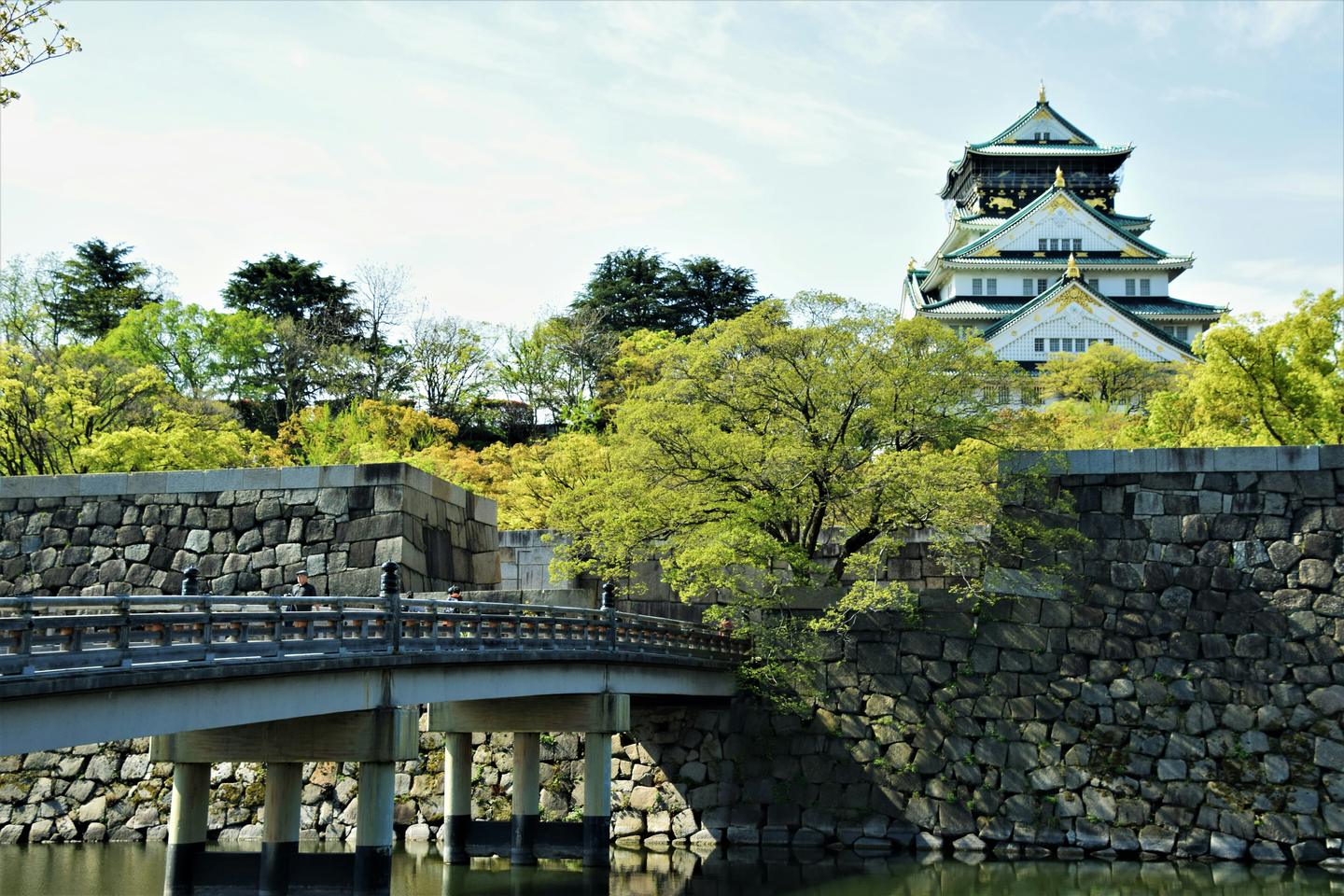
Osaka Castle tells the other side of the story. Its museum describes the site as the former Osaka Hongan-ji temple, then the castle Hideyoshi built, which fell in the Osaka campaigns and was rebuilt by the Tokugawa shogunate. The stone walls and moats you see today, with the Otemon gate and the Tamon and Sengan turrets, all date from the Tokugawa period or later. The grounds are a Special Historic Site, and most of the old buildings are Important Cultural Properties.
The main tower is the third, after those of the Toyotomi and the Tokugawa. It was rebuilt in 1931 with donations from the people of Osaka and has been a museum from the start, showing objects from Hideyoshi's time and the age of the warring states in changing displays. Tickets can be bought in advance online. For where Osaka eats in the evening, see Osaka Beyond Dotonbori: Where It Eats →.
WILLIAM ADAMS OF THE LIEFDE
The English pilot at the centre of SHOGUN has a real counterpart in William Adams. The Japanese travel magazine Nippon Tabi Magazine records that his ship, the Liefde, drifted ashore at Kuroshima, off Usuki in the old province of Bungo, now Oita Prefecture, on April 29, 1600, and that he died in Hirado in 1620 without seeing England again.
Kanagawa Prefecture describes how Adams, known in Japan as Miura Anjin, won Ieyasu's trust and served him as an adviser on foreign affairs, receiving an estate of 250 koku, a measure of rice yield, in Hemi village in the Miura district. In Tsukayama Park in Yokosuka, a monument called Anjin-zuka marks the graves of Adams and his wife, with two memorial towers said to have been raised according to his will; it is a national historic site, within a day's reach of Tokyo. In Hirado, the grave long held to be his was excavated by the city's board of education in 2017.
NIKKO WHERE IEYASU IS ENSHRINED
The story ends in the mountains north of Tokyo. Nikko Toshogu has enshrined Ieyasu since 1617, when he was moved there from Kunozan according to his will, and its present splendour dates from the rebuilding by the third shogun, Iemitsu, in 1636. We cover Nikko in full, with the carvings, the inner precinct and the case for staying the night, in Nikko from Tokyo: Toshogu, Lake Chuzenji and Whether to Stay the Night →.
WHERE STAYGO COMES IN
A journey through this history fits naturally into Signature, our planning for journeys of 7 to 21 days. It usually begins in Tokyo, with Nikko and Yokosuka as days out, then travels west: a day at Sekigahara on the way from Nagoya to Kyoto, Nijo Castle in the Kyoto days, Osaka Castle, and Himeji at the end of the line.
The finest form of each place is easy to describe. At Sekigahara it is a historian's walk across the field after the museum's theater, with a private car waiting at each stop. At Himeji and Nijo it is the first hour, from 9:00 and 8:45. Between the sites, a private car carries you and your luggage without changes of train. We arrange the guides, interpreters, cars and stays, and each is settled with the provider in the simplest way available, usually on your bill or on the day.
SOURCES AND HOW WE CHECKED
We read the pages below on November 5, 2026. Travel times are rounded. We did not contact any museum, castle, shrine, government office or guide.
- Daily Hive, October 20, 2025: first season filmed around Metro Vancouver and British Columbia, Port Moody; second season planned in British Columbia from January 2026, wrap expected September 2026
- JNTO, visitor arrivals by nationality (Japanese): 3,306,820 visitors from the United States in 2025, up 21.4 percent
- Gifu Sekigahara Battlefield Memorial Museum: the 1600 battle, Ground Vision, theater, hours, closing days, 10 minutes on foot from JR Sekigahara Station
- Gifu Sekigahara Battlefield Memorial Museum, top page (Japanese): floors, fifth-floor observation room, historic site guides
- Gifu Sekigahara Battlefield Memorial Museum, access (Japanese): about 45 minutes from Nagoya by JR, about 1 hour 40 minutes by car from Osaka
- Gifu Sekigahara Battlefield Memorial Museum, tours (Japanese): historic site guides requested by fax at least ten days ahead
- Himeji City, History of Himeji Castle (Japanese): 1580, 1600, 1601, 1609, 1617, 13 families and 48 lords, repairs, World Heritage 1993
- Himeji City, the Showa repair (Japanese): keep dismantled and assembled again, 1956 to 1964
- Himeji City, FAQ (Japanese): no reservation system for the great keep
- Himeji Castle handbook (Japanese): opening hours, last entry 16:00
- Nijo-jo Castle, chronology (Japanese): 1601, 1603, 1611, 1614, 1867, National Treasures 1952, World Heritage 1994
- Nijo-jo Castle, history: Kano school wall paintings
- Nijo-jo Castle, visitors' guide: hours, Ninomaru Palace closing days
- Nijo-jo Castle, official guided tours (Japanese): English tours at 10:00 and 12:00, about 60 minutes, non-public areas
- Osaka Castle Main Tower (Japanese): history of the site, Tokugawa-era walls and buildings, 1931 rebuilding, museum, advance tickets
- Kanagawa Prefecture, Tsukayama Park (Japanese): Miura Anjin, adviser to Ieyasu, 250 koku in Hemi village, Anjin-zuka, national historic site
- Nippon Tabi Magazine, October 17, 2024 (Japanese): the Liefde at Usuki in 1600, death in Hirado in 1620, excavation in 2017
- Nikko Toshogu (Japanese): 1617, Kunozan, rebuilding of 1636, World Heritage 1999
QUESTIONS TRAVELLERS ASK
Was SHOGUN filmed in Japan?
No. Its first season was filmed around Metro Vancouver and British Columbia in Canada, and the second season returned to British Columbia. The real places of the history it draws on, such as Sekigahara, Himeji and Nijo Castle, are in Japan.
How do you get to the Sekigahara battlefield?
Sekigahara is about 45 minutes from Nagoya on the JR Tokaido Line, and the Gifu Sekigahara Battlefield Memorial Museum is about 10 minutes on foot from the station. By car from Osaka it is about 1 hour 40 minutes. The museum closes on Mondays.
Do I need to reserve the keep of Himeji Castle?
No. The city explains that the great keep has no reservation system. The castle opens at 9:00 with last entry at 16:00, so arriving at opening gives the quietest hour.
Is there an English tour of Nijo Castle?
Yes. The castle's official English guided tours start at 10:00 and 12:00 and last about an hour. They include areas otherwise closed to visitors, though not the Honmaru Palace.
Where can I see places linked to William Adams?
His memorial, Anjin-zuka, stands in Tsukayama Park in Yokosuka and is a national historic site. He died in Hirado in 1620, where the grave long held to be his was excavated in 2017.
ASK US ABOUT A JOURNEY THROUGH THE YEAR 1600
Send us your dates and the places of this history you most want to see. We will draw the route with the closing days, the guides and the cars, so that each castle falls in its first hour and the battlefield on a day the museum is open.
Begin planning →We reply within 24 hours, in writing
Some of the restaurants and bars we arrange seat guests only by introduction or membership. We ask on your behalf; the table and the evening are the house's decision. We do not publish their names.