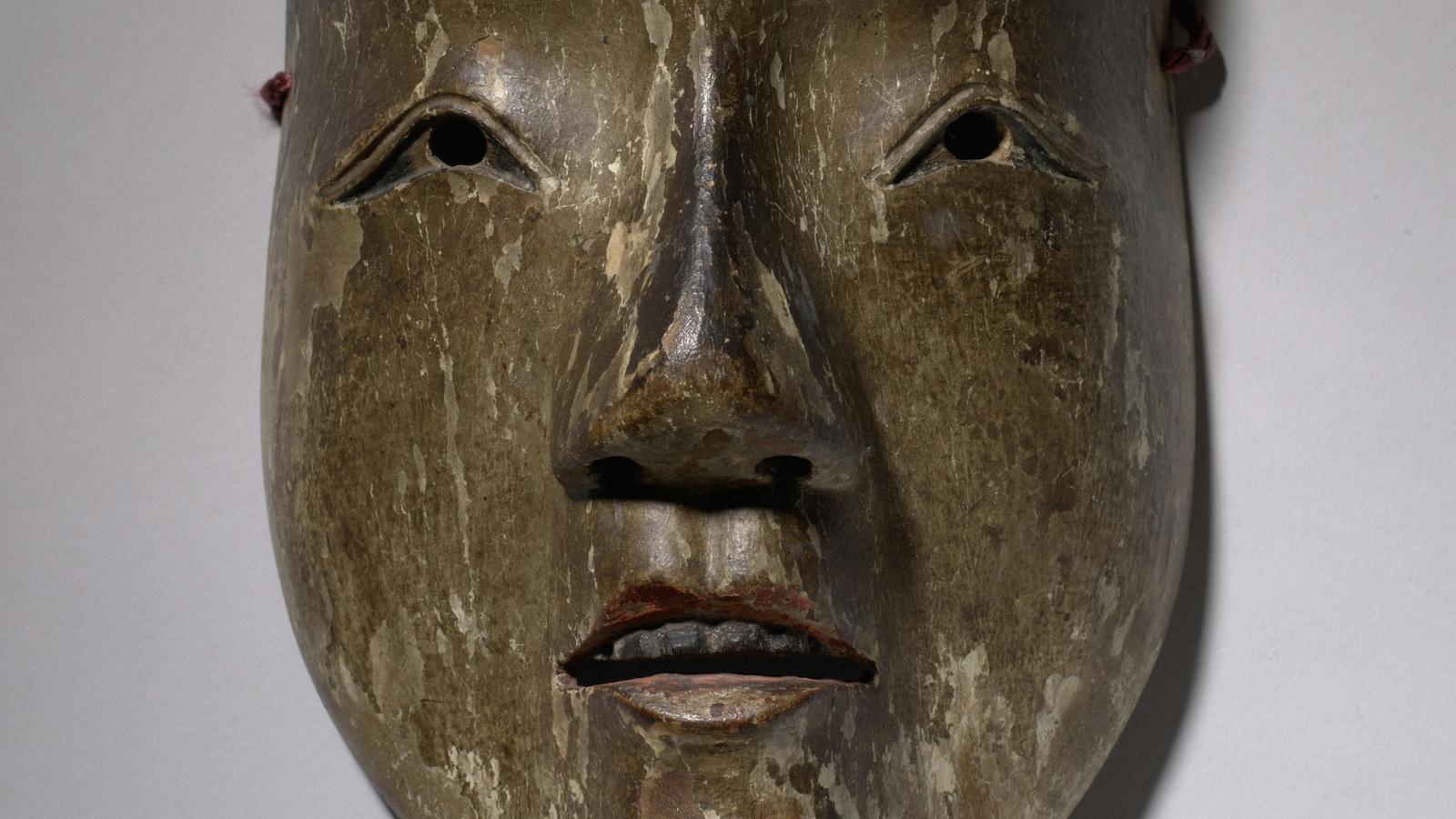
Noh is the oldest of Japan's living stage arts, and it asks more of an audience than kabuki does. The pace is slow, the voices are chanted, and much of the drama sits behind a carved wooden face. Come ready for that, and an evening of noh is one of the most concentrated hours Japan offers.
This article sets out where to see noh in Tokyo and Kyoto, how to read the masks and robes, and when the firelit performances take place. We read the pages of UNESCO, the National Noh Theatre, the Kanze, Kongo and Kyoto Kanze stages, the Nohgaku Performers' Association, Kyoto City, two national agencies and a specialist noh reference on November 5, 2026, and contacted none of them; the sources are listed at the end. For the louder stage of the Edo townspeople, see Kabuki in Tokyo.
Key points
- UNESCO proclaimed nogaku, the art of noh and kyogen, in 2001 and inscribed it on its Representative List in 2008.
- The National Noh Theatre in Sendagaya, Tokyo, seats 627, and since 2006 a small screen on the seat in front shows the text in Japanese or English for nearly all of its own productions.
- The Kanze Noh Theatre opened in the third basement of GINZA SIX on April 20, 2017, with the stage it brought from Shibuya.
- In Kyoto, the Kongo school is the only one of the five schools of noh whose head family lives in the Kansai region.
- Kyoto Takigi Noh, performed by firelight at Heian Shrine since 1950, moves to the first Friday and Saturday of June from 2027.
ASK US TO PLACE AN EVENING OF NOH IN YOUR DAYS →
WHAT NOH ASKS OF AN AUDIENCE
UNESCO places the heyday of noh in the fourteenth and fifteenth centuries, on a stage that projects into the audience and is joined by a walkway to a mirror room behind. The Nohgaku Performers' Association tells how Kan'ami, backed by the shogun Ashikaga Yoshimitsu, raised the form, and how his son Zeami perfected the dream play, in which a ghost returns to relive a moment from the past around a single principal actor, the shite.
That structure is the reason to go. The first half is quiet, a traveller meeting a stranger at a famous place; in the second, the stranger returns in true form, masked and robed, and dances the memory. For a first evening we suggest one noh and one kyogen, the comic interlude that shares the stage.
MASKS AND ROBES
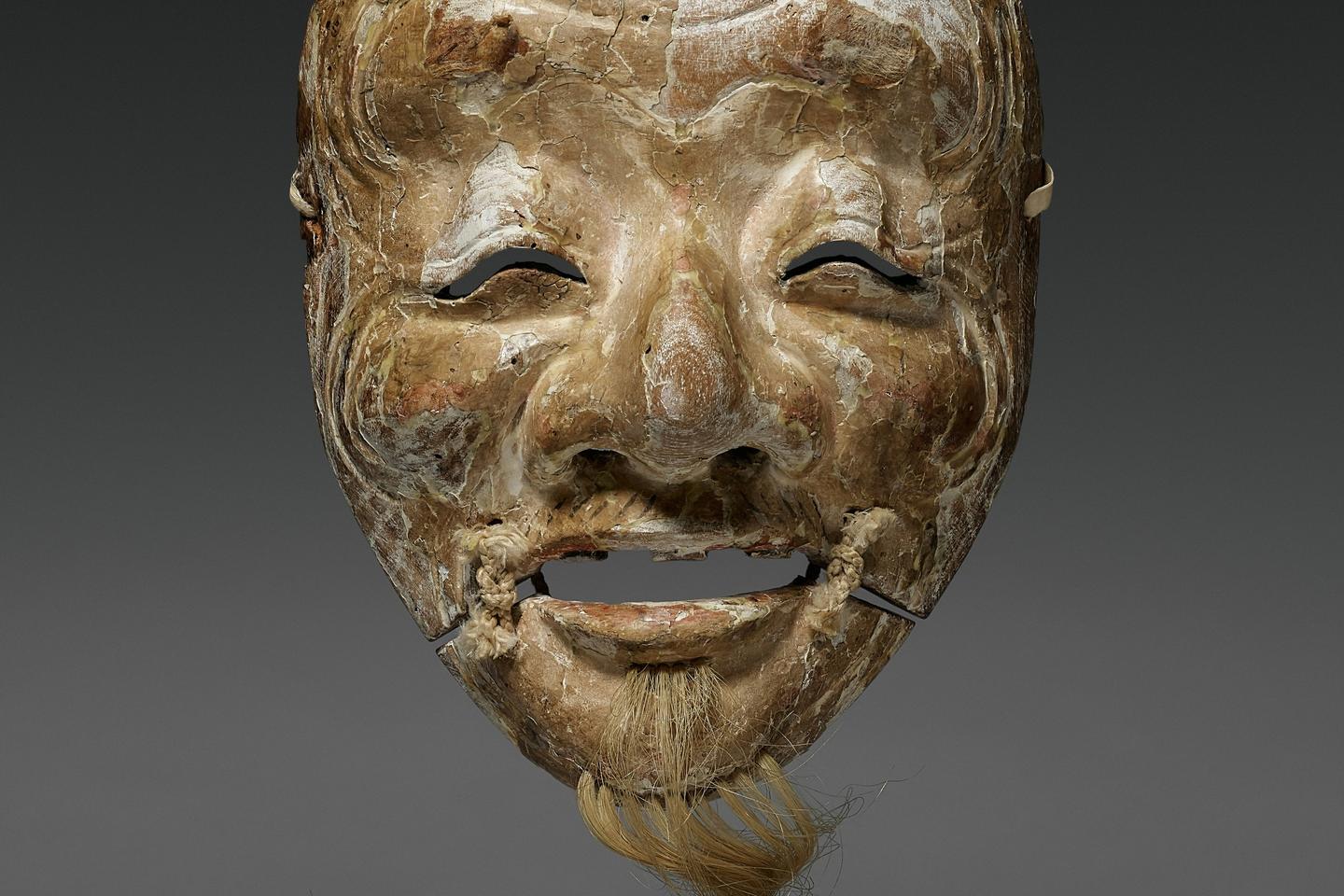
UNESCO notes that masks are worn for the roles of ghosts, women, children and old people. The reference the-noh.com counts about 60 basic types at the start and well over 200 kinds in use today. Each is carved with a neutral expression: tilted slightly up, it seems to smile; tilted down, it seems to grieve. The Nohgaku Performers' Association names the koomote, the young woman, as the mask most people picture, and the horned hannya as the face of a woman consumed by jealousy.
The karaori, woven with gold, silver and coloured threads in patterns of flowers, is described by the association as the most splendid of noh costumes, worn mainly as the outer robe for women's roles. Masks and robes are handed down within the families and still worn on stage.
TOKYO: SENDAGAYA AND GINZA
The National Noh Theatre, five minutes on foot from JR Sendagaya Station, opened in 1983 and seats 627. In November 2006 it introduced the first personal caption system at a Japanese theatre. A screen on the back of the seat in front shows the sung text in Japanese, or a free English translation with notes on the conventions of the stage, and it can be switched off. For a first noh, we would choose a front seat here for this reason alone.
The Kanze Noh Theatre is the home of the Kanze school, which counts almost 70 percent of Japan's noh performers, according to the Japan Tourism Agency's multilingual guide. Built in 1900, it moved to Shoto in Shibuya in 1972 and returned to Ginza in 2017, when the stage was brought into GINZA SIX. The stage keeps its own roof indoors, a reminder that noh was first played in the open air.
KYOTO: THE KONGO AND KANZE STAGES
The Kongo Noh Theatre opened in 2003 on Karasuma Street, across from the west side of the Kyoto Imperial Palace and near where the Ashikaga shoguns' Flower Palace once stood. Its stage was moved intact from the old Kongo theatre in Muromachi, where it had stood for more than 130 years, so a nineteenth-century stage sits inside a modern hall of 412 seats. The school is known for a bold, graceful style of dance and for masks that include the Yuki no Koomote, received from Toyotomi Hideyoshi.
The Kyoto Kanze Kaikan in Okazaki opened on March 25, 1958, after the earlier Kanze stage near Kawaramachi Marutamachi was pulled down in the forced clearances of April 1945. The stage is built entirely of Japanese cypress, and the pine behind it was painted by Domoto Insho. The Kyoto Kanze Association performs there most months, next on November 22 and December 20, 2026.
TAKIGI NOH BY FIRELIGHT
Kyoto Takigi Noh began in 1950. Kyoto City and the Kyoto Nohgaku Association raise an open-air stage in front of Heian Shrine, with the main hall behind it, and the Kanze, Kongo and Okura schools perform as the bonfires burn. The 75th performance, on June 1 and 2, 2026, opened with Okina, the most ceremonial piece in the repertoire, on both evenings. From 2027 the dates move to the first Friday and Saturday of June, which will be June 4 and 5. In rain it moves indoors to ROHM Theatre Kyoto.
On the afternoon of each performance, the performers give a public lecture at ROHM Theatre Kyoto, with a chance to try the chant and the drums and to watch a short noh. For a guest new to noh, it is the right introduction.
HOW WE SHAPE AN EVENING OF NOH
Noh opens most fully with a little context from the people who perform it. Where a family or theatre is willing, we ask on your behalf for a short talk before the performance or a closer look at a mask or robe; what can be offered is their decision, and we do not promise it. We choose the programme and the seat, arrange a guide to sit beside you when there are no captions, and time dinner around a performance that may run for hours.
Within a Signature journey (USD 3,500 for your group, journeys of 7 to 21 days), noh usually takes one evening in Tokyo or Kyoto, often near a private tea ceremony. Tickets are settled on the day or in the simplest way available.
SOURCES AND HOW WE CHECKED
We read the pages below on November 5, 2026. We did not contact any theatre, school, association or agency. Programmes and caption languages change by performance.
- UNESCO, Nogaku theatre: 2001 and 2008, the heyday, the stage, the roles that wear masks
- National Noh Theatre, caption system (Japanese): November 2006, the first personal seat captions in Japan, Japanese or English
- National Noh Theatre, facilities (Japanese): 627 seats and how they divide
- the-noh.com, National Noh Theatre: opened in 1983
- the-noh.com, noh masks: about 60 basic types and over 200 in use, the neutral expression
- Agency for Cultural Affairs, National Noh Theatre (Japanese): real-time captions at each seat, five minutes from JR Sendagaya
- Kanze Noh Theatre (Japanese): GINZA SIX, April 20, 2017, built 1900
- Japan Tourism Agency, multilingual guide to the Kanze Noh Theatre: almost 70 percent of performers, Shoto in 1972, the roofed stage
- Kongo Noh Theatre (Japanese): opened 2003, the stage from Muromachi, 412 seats
- Kongo school (Japanese): the only head family in Kansai, the Yuki no Koomote
- Kyoto Kanze Kaikan (Japanese): March 25, 1958, the cypress stage, Domoto Insho, regular performances
- Kyoto City, 75th Kyoto Takigi Noh (Japanese): since 1950, the 2026 dates and programme, the 2027 change, the lecture, the rain venue
- Nohgaku Performers' Association, history (Japanese): Kan'ami, Zeami and the dream play
- Nohgaku Performers' Association, masks (Japanese): the koomote and the hannya
- Nohgaku Performers' Association, costumes (Japanese): the karaori
- Japan National Tourism Organization, Takigi Noh at Heian-jingu: an evening by torch and bonfire
QUESTIONS TRAVELLERS ASK
Can we follow noh without speaking Japanese?
At the National Noh Theatre, for most of its own productions, a screen on the seat in front shows an English translation with notes. Elsewhere captions vary, and a guide beside you helps.
When is Takigi Noh in Kyoto?
It was held on June 1 and 2 through 2026. From 2027 it moves to the first Friday and Saturday of June, June 4 and 5 in 2027, at Heian Shrine.
Can we meet a noh performer?
Sometimes. We ask on your behalf for a short talk or a closer look at a mask, and the performer or theatre decides. Before Takigi Noh, the performers give a public lecture in the afternoon.
Is noh suitable for children?
For older children with some patience, a short programme with a kyogen comedy works well, and the afternoon lecture before Takigi Noh is a good introduction.
ASK US TO PLACE AN EVENING OF NOH IN YOUR DAYS
Tell us when you are coming and which city you will be in. We will set out the performances, the theatres and the seats, with the reasons, so that you can choose.
Begin planning →We reply within 24 hours, in writing
Some of the restaurants and bars we arrange seat guests only by introduction or membership. We ask on your behalf; the table and the evening are the house's decision. We do not publish their names.