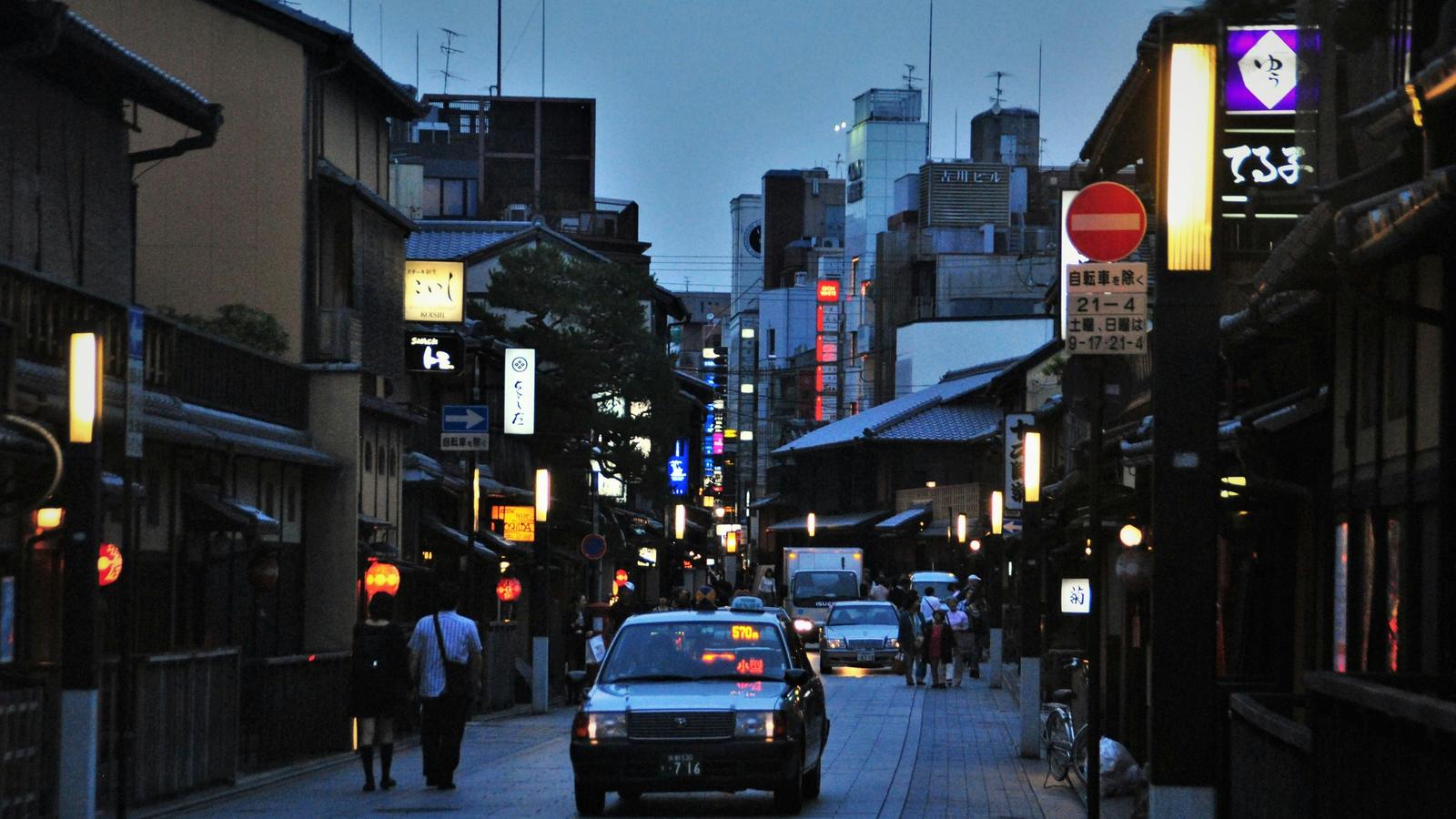
A maiko dinner in Kyoto is an evening called ozashiki, held in a private room at an ochaya (a teahouse) or a ryotei, where maiko and geiko dance, pour, talk and play parlour games with your table. Teahouses traditionally receive new guests only through an introduction, a custom called ichigen-san okotowari, so the evening is arranged through someone the house already trusts. If you would like to see maiko in public, the five geisha districts each stage a dance season with published dates and prices, and the Miyako Odori 2027 runs from April 1 to April 30, 2027, with tickets on sale from January 6, 2027.
This guide covers the private evening, the public dances and the rules on the streets of Gion. We checked every date, price and ticket rule on the official site of each district's dance, and the visitor guidance on the official Kyoto City travel site run by the Kyoto City Tourism Association, on October 14, 2026. Where a 2027 date has not been published, we say so. For how ozashiki sits among the other experiences in the city this year, see what has changed in Kyoto in 2026.
Key points
- An ozashiki is a private evening with maiko and geiko in a teahouse or ryotei. Teahouses traditionally accept first-time guests only through an introduction.
- Miyako Odori 2027 by Gion Kobu: April 1 to April 30, 2027, three shows a day at 12:30, 14:30 and 16:30, ¥8,000 with tea, ¥7,000 or ¥5,000 without. Sales open at 10:00 on January 6, 2027, and tickets cannot be cancelled, changed or refunded.
- Kamogawa Odori, Kitano Odori and Kyo Odori had not announced 2027 dates when we checked. Their 2026 seasons ran in March to May at ¥4,000 to ¥7,000.
- Gion Odori by Gion Higashi runs November 1 to November 10, 2026, at ¥6,000 or ¥7,000 with tea. Online sales close on October 28, 2026.
- In Gion, do not stop, touch, follow or photograph maiko and geiko without permission. Around Hanamikoji, entering private alleys and taking photos there without permission is prohibited.
WHAT A MAIKO DINNER IS
Maiko are apprentices in Kyoto's geisha districts, known in Kyoto as kagai. Geiko is the Kyoto word for a fully trained geisha. Both are professional performers of dance, music and conversation, trained for years in one district and attached to houses within it. The private evening at which they entertain guests is called ozashiki, after the tatami room where it takes place.
WHERE IT TAKES PLACE
The classic setting is an ochaya, a teahouse in one of the five kagai: Gion Kobu, Pontocho, Kamishichiken, Miyagawacho and Gion Higashi. An ochaya is a house of private rooms. The meal itself usually comes in from a caterer or a restaurant the house works with, and the teahouse arranges which maiko and geiko attend. Maiko and geiko can also be engaged for a dinner at a ryotei, a traditional restaurant with private rooms, which suits guests who would like a full kaiseki menu as the centre of the evening.
WHY AN INTRODUCTION MATTERS
Teahouses work on trust. The custom of ichigen-san okotowari means a house does not take a booking from someone it does not know. A new guest arrives through an existing patron, a ryotei, a hotel or a planner the house already works with, and that person stands behind the guest. The reasons are practical as well as social: the evening is personal, the house is responsible for its maiko and geiko, and the account is settled through a relationship. We write about this wider logic of trust in Japan in our piece on jo, the feeling that decides which doors open to you.
For you, this means two things. You cannot reserve a genuine ozashiki through a booking site, and the introduction itself is part of what makes the evening possible. When a house agrees to receive you, it is extending its reputation to you for one night.
WHAT THE EVENING INCLUDES
No two evenings are the same, because the house shapes each one around the guests. A typical private dinner with maiko follows a loose pattern.
- Greeting. The maiko and geiko enter, kneel and introduce themselves, and the first round of drinks is poured.
- Dinner and conversation. They sit among the guests while you eat, keep the cups filled and talk. Many conversations turn to their training, the seasons and the district.
- Dance. One or two short Kyoto-style dances, known as Kyomai, accompanied by a geiko on the shamisen.
- Parlour games. Simple, fast games played to music, such as konpira fune fune, where the loser drinks. They are where the evening usually becomes relaxed.
- Farewell. The maiko and geiko see the guests off at the door.
English is limited in most teahouses. An interpreter who understands the customs of the room makes the conversation flow, and we include one when your group would like it.
HOW STAYGO ARRANGES A PRIVATE EVENING
STAYGO plans and arranges private trips across Japan from Tokyo, and an ozashiki is one of the evenings we arrange for guests who ask for it. We make the request in your name through the introductions available to us, and the house decides whether it can receive you on your date. Teahouse evenings are not priced on any public page, so we confirm the cost with the house before you agree to anything.
What we ask from you, early:
- Your date in Kyoto and one or two alternatives, since maiko and geiko keep busy calendars and the dance seasons fill their spring.
- The number of guests, ages and any children.
- Whether you would like a teahouse room or a ryotei with a full kaiseki dinner.
- Allergies and anything you do not eat.
- Whether you would like an interpreter at the table.
Our Signature plan is USD 3,500 for your group, for trips of 7 to 14 days. We take no markup and no commission on anything we arrange: you pay the teahouse, restaurant and hosts directly at their own rates. Other evenings that work through introductions, from private garden visits to craft studios, are described in our guide to private Japan.
THE FIVE KAGAI AND THEIR DANCES
Each district stages a public dance once a year. These are the most accessible way to see maiko and geiko perform, and every seat is bookable. Four take place in spring and one in November. The table shows the latest season each district had published when we checked on October 14, 2026.
| Dance and district | Latest published season | Shows | Tickets |
|---|---|---|---|
| Miyako Odori, Gion Kobu | 2027: April 1 to April 30, 2027 | 12:30, 14:30 and 16:30 | ¥8,000 first class with tea, ¥7,000 first class, ¥5,000 second class, ¥3,000 second class for students. On sale from 10:00 on January 6, 2027 |
| Kitano Odori, Kamishichiken | 2026: March 20 to April 2, 2026. 2027 not yet announced | 14:00 and 16:30 in 2026 | ¥6,000 to ¥7,000 in 2026 |
| Kyo Odori, Miyagawacho | 2026: April 4 to April 19, 2026, no show on April 13. 2027 not yet announced | 13:00 and 16:00 in 2026 | ¥7,000 first class with tea, ground floor, ¥6,000 second class with tea, upper floor, in 2026 |
| Kamogawa Odori, Pontocho | 2026: May 5 to May 22, 2026. 2027 not yet announced | 12:30, 14:20 and 16:10 in 2026 | ¥7,000 special seat with tea, ¥6,000 special seat, ¥4,000 regular seat in 2026 |
| Gion Odori, Gion Higashi | 2026: November 1 to November 10, 2026 | 13:30 and 16:00 | ¥7,000 with tea, ¥6,000 viewing only |
WHAT THE TEA TICKET MEANS
Most of the dances offer a ticket with tea. Before the performance, you are seated at a tea ceremony where a geiko prepares tea and maiko serve it with a sweet. It is the closest a public ticket comes to seeing maiko and geiko at work at close range, and we arrange it whenever it is offered. For the Miyako Odori, tea is served from one hour before each show, guests are asked to arrive at least 40 minutes before the start, and there is no tea after the performance.
THE RULES THAT CATCH VISITORS
- Miyako Odori tickets cannot be cancelled, changed or refunded. Kyo Odori and Kamogawa Odori tickets bought online also cannot be cancelled or changed after purchase.
- Kyo Odori did not admit children under 10 in 2026. Gion Odori does not admit children under 3.
- Seats are assigned by the box office. You cannot choose a seat number for Kamogawa Odori or Gion Odori.
- For Kamogawa Odori in 2026, only the special seats were sold online. Regular seats were handled by the Pontocho association in Japanese only, which we handle for you.
MIYAKO ODORI 2027 TICKETS
The Miyako Odori by Gion Kobu is the largest of the five and the only one with 2027 details already published. The official site posted the outline on October 1, 2026, and it may still change.
- Dates: Thursday April 1 to Friday April 30, 2027, at the Gion Kobu Kaburenjo theatre.
- Shows: three a day, at 12:30, 14:30 and 16:30.
- Prices, tax included: first class with tea ¥8,000, first class ¥7,000, second class ¥5,000, second class student ¥3,000. The programme is ¥1,000.
- Students: the student ticket covers junior high school to university and vocational students, and children of primary school age or younger with a guardian. Students of junior high school age and above must bring a student card on the day.
- Sale: from 10:00 on Wednesday January 6, 2027, on the official online ticket site or in Japanese through the theatre's office. The site recommends registering an account in advance.
For 2026, the Miyako Odori ran from April 1 to April 30, 2026, with tickets from ¥4,000 to ¥7,000, so the 2027 prices are higher. April is also cherry blossom season, when Kyoto hotels fill early. If your trip falls in April 2027, we would apply for the first-class tea tickets in your names on January 6 and settle the rest of the Kyoto plan around the show time.
SEEING MAIKO OUTSIDE THE DANCE SEASONS
If your trip does not fall in spring or early November, there are still public ways to see maiko and geiko dance.
GION ODORI THIS NOVEMBER
Gion Higashi holds the only autumn dance of the five. In 2026 it runs from Sunday November 1 to Tuesday November 10 at the Gion Kaikan theatre, two shows a day at 13:30 and 16:00, each about one hour. Doors open around 40 minutes before the curtain. Online sales run until October 28, 2026, and you receive a booking number by email in place of a printed ticket. From October 30 to November 10, the Gion Kaikan box office sells tickets from 11:00 to 16:00, including for the same day.
AUTUMN RECITALS
Each district also holds a recital in autumn, where geiko perform longer and more demanding pieces. In 2026, the Kyoto City official travel site lists Suimeikai by Pontocho from October 15 to October 20 at ¥5,000 to ¥10,000, and Kotobukikai by Kamishichiken from November 12 to November 18 at ¥10,000. These suit guests who already know the dances and would like to see the senior geiko.
GION CORNER
Gion Corner is a theatre in Gion that stages a short introduction to traditional performing arts every evening at 18:00 and 19:00, lasting about 50 minutes. Its official site states that the Kyomai is generally performed by maiko from Gion Kobu. Published prices are ¥5,500 for adults, ¥6,050 for a seat with Japanese tea and sweets, and ¥6,600 for a premium seat. From December 1 to March 11 it runs Tuesday to Friday only, excluding public holidays, and it closes on July 16, August 16 and from December 26 to January 4.
GION ETIQUETTE AND THE PRIVATE ALLEYS
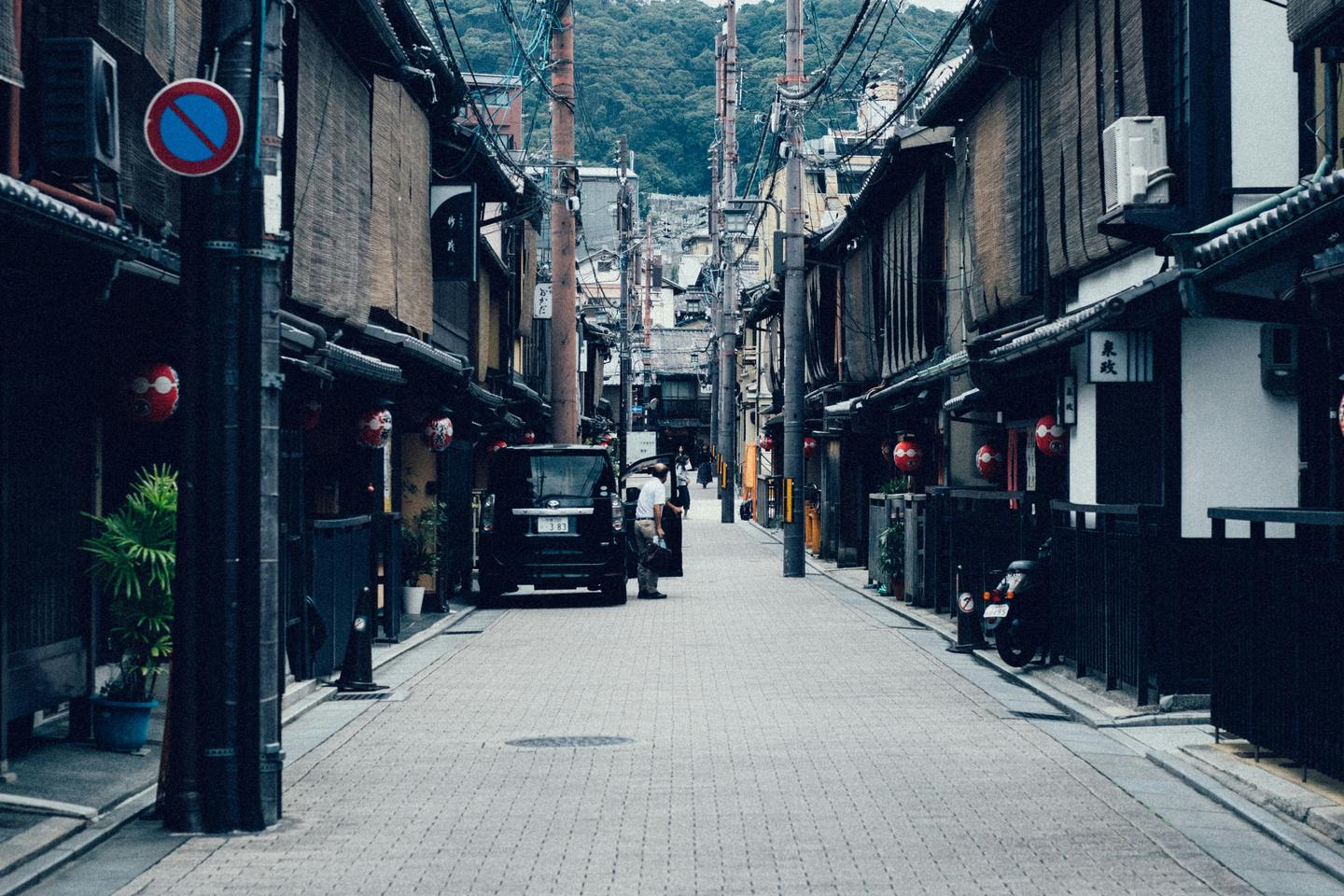
Gion is a working neighbourhood. The maiko you see on the street in the early evening are on their way to an engagement, and the lanes behind Hanamikoji are where people live and work. Residents and the teahouse and geiko associations of southern Gion have asked visitors, more than once, to change how they behave there.
THE MESSAGE FROM SOUTHERN GION
On January 9, 2024, the Southern Gionmachi Council published a message with Kyoto Women's University, signed by the residents of southern Gion, the Gion Kobu teahouse association, the Gion geiko association and Kenninji Temple. The Kyoto City official travel site carries it in English. Its requests:
- Do not stop, touch, follow, or take photos or videos of geiko and maiko without permission.
- Do not enter temples, shrines or private property without permission. The message defines private property as places other than shops and roads.
- Do not block the road or pavement by waiting, stopping to take photos or stepping into the road.
- Do not leave rubbish and do not make loud noise.
The message also sets out the penalties under Japanese law and local ordinance. Obstructing someone's path or following them can bring detention of under 30 days or a fine of under ¥10,000. Pulling someone's hand or clothes can bring up to six months of imprisonment or a fine of up to ¥500,000. Obstructing traffic can bring a fine of up to ¥50,000, and littering a fine of up to ¥30,000. It adds that residents may ask the police to attend.
PRIVATE ALLEYS AROUND HANAMIKOJI
Hanamikoji Street itself is a public road. The Kyoto City Tourism Association's visitor pledge states that in the Hanamikoji area of Gion, entering private alleys and taking photos without permission is prohibited, to prevent nuisance. Signs posted in the district have been reported to state a fine for photography on these lanes; we could not find an official page that states the amount, so we do not give one here. Our advice is simpler: if a lane has a sign, do not walk in and do not raise your camera.
KYOTO CITY GUIDANCE FOR VISITORS
The official Kyoto City travel site states plainly that geiko and maiko are not tourist attractions, and that photography is prohibited in many parts of Gion, in parts of shrines and temples and in some restaurants. Its visitor guidance for Gion adds a few points that are easy to miss:
- Do not stop maiko to ask for a photo. A maiko in full dress is on her way to an engagement.
- Do not post photos of identifiable people on social media without their permission.
- Do not use a tripod in the street, touch the lanterns outside teahouses or lean on fences.
- On Hanamikoji there is no separate pavement, so keep to the sides and let cars pass.
The same site points visitors who want to see maiko and geiko to the public Kyomai performances held through the year, which is why we plan around the dances above. General points of behaviour in Japan, such as shoes, temples and gifts, are in our guide to Japanese etiquette.
SOURCES AND HOW WE CHECKED
We read each district's official dance site, the Gion Corner site and the Kyoto City official travel site run by the Kyoto City Tourism Association on October 14, 2026. Where a district's own site no longer showed its 2026 programme, we used the dates and prices published for 2026 on the Kyoto City official travel site. We did not contact the teahouses or the associations, and we did not use figures from booking sites or press coverage.
- Miyako Odori, 2027 outline: dates, show times, prices, tea, sale date, refunds and student tickets
- Miyako Odori, English page: 2027 dates, times and ticket classes
- Kamogawa Odori, Pontocho: 2026 dates, times and prices
- Kamogawa Odori, ticket information: online sales, seats and cancellation
- Kyo Odori, Miyagawacho: 2026 dates, times, prices, age limit and sales
- Gion Odori, Gion Higashi: 2026 dates, times, prices, age limit and sales
- Kamishichiken Kabukai: Kitano Odori season and Kotobukikai dates
- Kyoto City official travel site, spring dances: 2026 dates, times and prices for the four spring dances
- Kyoto City official travel site, autumn dances: Gion Odori and the 2026 autumn recitals
- Gion Corner: show times, prices and closing days
- Gion manner, message from Southern Gionmachi: requests and penalties
- Kyoto City Tourism Association, Kyoto Traveler's Promise: private alleys around Hanamikoji
- Kyoto City official travel site, responsible travel: geiko and maiko, photography and Kyomai
- Kyoto City official travel site, Kiyomizu, Arashiyama and Gion: rules in Gion and on Hanamikoji
QUESTIONS GUESTS ASK
Can I book a maiko dinner in Kyoto as a first-time visitor?
Not directly with a teahouse, because teahouses traditionally receive new guests only through an introduction from someone they already know. A planner, ryotei or hotel with an existing relationship can make the request in your name, and the house decides whether it can receive you.
When do Miyako Odori 2027 tickets go on sale?
At 10:00 Japan time on January 6, 2027. The 2027 season runs from April 1 to April 30, 2027, and tickets cost ¥5,000 to ¥8,000, with a ¥3,000 student ticket.
Can I see maiko perform in autumn?
Yes. Gion Odori by Gion Higashi runs from November 1 to November 10, 2026, and Gion Corner stages a short Kyomai performance most evenings of the year.
Can I take photos of maiko in Gion?
Only with their permission, and you should not stop them on the street to ask. In the Hanamikoji area, entering private alleys and taking photos there without permission is prohibited.
AN EVENING WITH MAIKO PLANNED AROUND YOUR TRIP
Tell us your dates in Kyoto and who is travelling with you. We will tell you what we can request for those nights, from a private dinner to the best seats at the dance, and what each of them costs.
Begin planning →