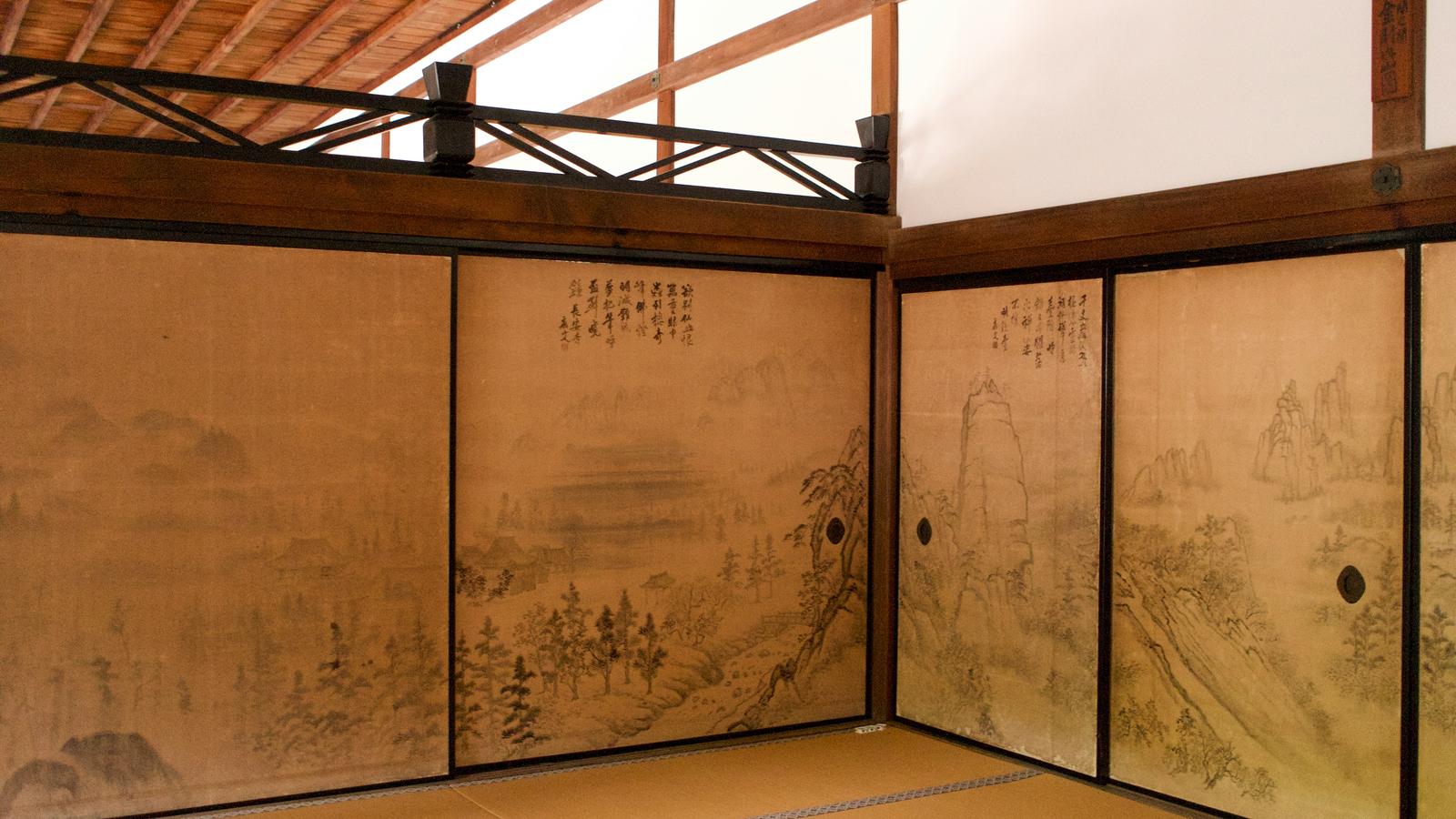
Of the Americans who came to Japan on holiday in 2025, about half went to Kyoto, and seven in ten were in Japan for the first time. A first visit to Kyoto follows the temples that open every day. The second begins with the doors that stayed shut: a Lecture Hall seen only from the threshold, a sub-temple gate with a small sign saying it does not receive visitors, a painted ceiling known only from a catalogue. Many of these places do open, on days the city and its preservation bodies set each year, and a few more open when a temple agrees to a request made in the proper way.
This article sets out the official ways Kyoto's closed places open: the special openings in autumn and spring, the winter campaign, the sub-temples of the great Zen temples, the night viewings, and what can be asked of a temple directly. On November 5, 2026 we read the pages of the preservation association, the city's tourism bodies, the temples, the Japan Tourism Agency and the press, and contacted none of them; the sources are listed at the end. For Katsura, Shugakuin, the Sento Palace and Saiho-ji, which work by application, see Katsura Imperial Villa Reservation and the Moss Temple →.
Key points
- In 2025, 51 percent of American holiday visitors to Japan went to Kyoto, and 30 percent were on a second or later visit to Japan, according to the Japan Tourism Agency.
- The Kyoto Heritage Preservation Association has opened normally closed cultural properties since 1965. Its 62nd opening, in autumn 2026, runs from October 30 to December 6 at 32 places across Kyoto Prefecture.
- The winter campaign, Kyo no Fuyu no Tabi, opened 15 places from January 9 to March 18, 2026. As of November 5, 2026, the programme for winter 2027 has not been published.
- Sub-temples of Myoshin-ji and Tofuku-ji open for short seasons, some into the evening, and charge their own admission.
- Some openings are by reservation only; for any request beyond the published openings, we ask on your behalf and the temple decides.
ASK US ABOUT KYOTO'S SPECIAL OPENINGS →
WHY THE SECOND VISIT LOOKS DIFFERENT
The Japan Tourism Agency's survey of 2025 counts 69.6 percent of American holiday visitors as first-timers and 30.4 percent as returning, and puts Kyoto's visit rate among them at 51.2 percent, after Tokyo. The returning traveller has usually seen the Golden Pavilion, Kiyomizu-dera and the gates of Fushimi Inari. What remains is the interior: the hall behind the hall, the room where the abbot receives guests, the Buddha shown once in a generation.
Kyoto has built a calendar around that wish. Preservation bodies, the city and the temples themselves decide which places open, when and on what terms, and the fees of the preservation association go back into the buildings. Planning a second visit around this calendar, and around the season it falls in, is the most reliable way to see what the first visit could not.
THE AUTUMN AND SPRING OPENINGS
The Kyoto Heritage Preservation Association was founded in 1948 to help temples, shrines and families keep their cultural properties, and has run its special openings of non-public cultural properties since 1965. Admission fees go to repair and upkeep. It published a visitors' guide for its spring 2026 opening in April, and its 62nd opening, this autumn, runs from October 30 to December 6 at 32 places, each with its own dates.
The list rewards a precise eye. At Shingyo-ji, the ceiling of the main hall carries flower paintings by Ito Jakuchu; Hozo-ji shows his rooster in bamboo and his painting of a skull. At To-ji, visitors enter the first storey of the Five-Storey Pagoda, a National Treasure, and stand among the sculptural mandala of the Lecture Hall. At Kamigamo Shrine, priests guide visitors through the main sanctuary at intervals. In Yawata, south of the city, Iwashimizu Hachimangu opens its main sanctuary, a National Treasure, with the golden rain gutter given by Oda Nobunaga. The Kyoto City places and their dates for this autumn are listed in Katsura Imperial Villa Reservation and the Moss Temple →. The association has not yet announced its spring 2027 opening.
HIDDEN BUDDHAS BEYOND THE CITY
More than half of this autumn's list lies outside Kyoto City, and this is where the openings feel most private. Many of these temples keep a hidden Buddha, a hibutsu, shown only at set times. In Kameoka, Jinso-ji opens its seated Yakushi, an Important Cultural Property, and Anao-ji admits visitors to its inner sanctuary; both run from November 14 to 29. Hojo-ji, linked with Emperor Go-Mizunoo, shows his calligraphy from November 21 to 29. Izumo Daijingu, also in Kameoka, has its priests lead visitors to its sacred rock, the iwakura, at fixed hours.
Further north, on the Sea of Japan side, Nariai-ji opens the first storey of its five-storey pagoda on three days, with entry at 10:00 and 14:00. In Maizuru, Matsuo-ji shows its Fugen Bodhisattva, a National Treasure, from November 14 to 23, and this is the one place on the list that must be reserved with the temple in advance. Visits in this northern region are best given a full day by car, and they suit a guest who wants a morning with a temple almost to themselves.
KYOTO IN WINTER
From January to March, Kyoto City and the Kyoto City Tourism Association, with the JR Group, run Kyo no Fuyu no Tabi, the winter journey to Kyoto. The 60th edition, from January 9 to March 18, 2026, opened 15 places on the theme of Toyotomi Hidenaga and his brother Hideyoshi, including Daitoku-ji's sub-temple Daiko-in. Admission was ¥800 per place, and individuals needed no reservation.
The most interesting part of the winter programme was its visits guided by monks, held once a day and reserved online only. At Nishi Hongwanji, a monk led about 50 people through the shoin reception rooms in about 75 minutes, with a view of the Hiunkaku pavilion from outside; at Higashi Hongwanji, groups of about 30 toured the halls and the bell tower in 80 to 90 minutes. The organisers note that photography may be declined and ask visitors to wear socks inside. As of November 5, 2026, the official page still shows the 60th edition as ended, and the places and dates for winter 2027 have not been published.
THE SUB-TEMPLES OF THE GREAT ZEN TEMPLES
A great Zen temple in Kyoto is a walled precinct of smaller temples, the tatchu, each with its own abbot, garden and treasures. Myoshin-ji, the head temple of its school, notes that each sub-temple charges its own admission. Some open for only a few weeks a year. This autumn, Torin-in, a sub-temple of Myoshin-ji, holds an evening of lanterns by its temple bell from October 30 to November 8, with a tea seat. At Tofuku-ji, the sub-temple Tentoku-in opens from November 14 to December 6, staying open until 20:00 with the garden lit from about 16:00.
The head temples open their own closed buildings too. Myoshin-ji opened its Sanmon gate for one morning in June 2026, from 9:00 to about 10:30, on the day of a ceremony. Myoshin-ji is also in the 650th memorial year of its second abbot, which runs until March 31, 2027, with its main ceremonies on March 27 and 28, 2027. These are the moments when the precincts are most alive, and when the most is open.
KYOTO AFTER DARK
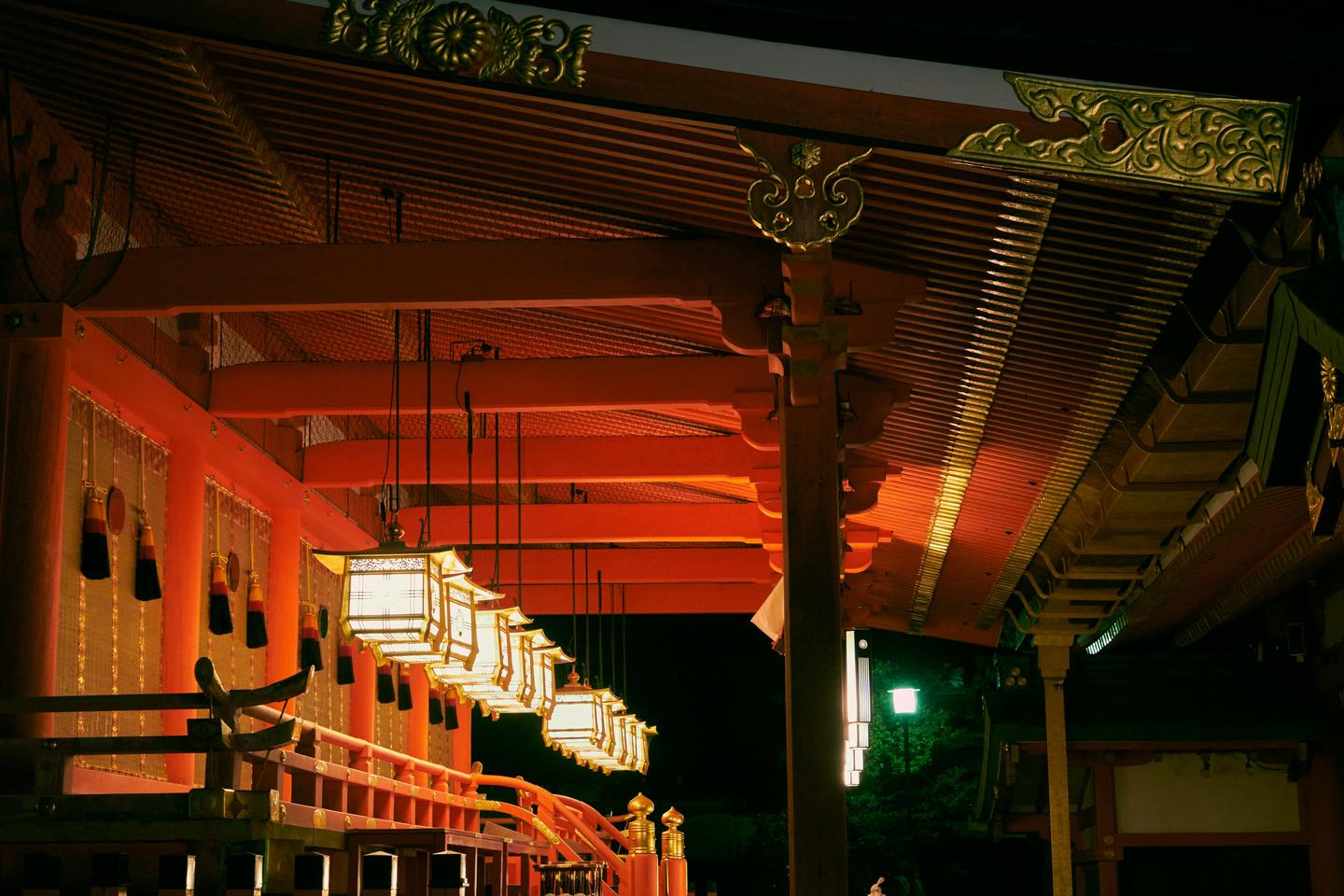
Night openings show another Kyoto: the gardens lit, the day visitors gone. The city's night tourism site lists this autumn's programme, published on October 19, 2026. Kodai-ji lights its garden from 17:00 to 22:00 between October 23 and December 13. Shoren-in opens at night from November 6 to December 6, from 18:00 to 22:00, with the day and evening visitors kept separate. At To-ji, the Golden Hall and the Lecture Hall with its mandala open from 18:00 to 21:30 between October 31 and December 13.
The rarest evenings are the smallest. Kennin-ji, the oldest Zen temple in Kyoto, holds a single autumn evening viewing on November 8, 2026, by advance reservation through a form only. The night viewings for 2027 have not yet been published.
ASKING A TEMPLE THROUGH THE RIGHT DOOR
Outside the published openings, a temple can sometimes receive a visitor by arrangement: a viewing of a room usually kept closed, a word with a priest, a quiet hour before the gates open. We write to the temple office in Japanese, well ahead, with the purpose of the visit, the number of guests and the dates. Myoshin-ji, for one, asks groups of ten or more to apply by fax a week ahead and gives its explanations in Japanese. A ceremony, a funeral or a visit by a head priest takes precedence over any guest, and the answer can be no.
For the guest houses of the state, the rules are published. The Kyoto State Guest House runs premium tours in January and February 2027 that add two rooms normally closed; the dates and terms are in Katsura Imperial Villa Reservation and the Moss Temple →.
WHERE STAYGO COMES IN
Within Signature, our planning for journeys of 7 to 21 days, we read the year's openings as they are announced, set the Kyoto days around them, and arrange the reservations the openings require, the cars to the temples outside the city and a guide who can explain what is being shown. Admission and visit fees are settled with each temple in the simplest way available, usually on the day.
Where a guest hopes for something beyond the published openings, we ask on your behalf, in the form the temple expects. The decision is the temple's, and we do not promise access. For a quieter morning in a Zen temple, see Zen Meditation in Kyoto: Where to Sit Zazen in English →, and for tea in a private room, A Private Tea Ceremony in Kyoto, Step by Step →.
SOURCES AND HOW WE CHECKED
We read the pages below on November 5, 2026. We did not contact any temple, shrine, association or operator.
- Japan Tourism Agency, Consumption Trend Survey for Foreigners Visiting Japan, 2025 tables (Japanese): American holiday visitors, first and repeat visits, Kyoto visit rate
- Kyoto Heritage Preservation Association, official site (Japanese): founded 1948, special openings since 1965, fees to repair and upkeep
- Kyoto Heritage Preservation Association, list of special openings (Japanese): the 32 places, their dates, what is shown, entry times, Matsuo-ji reservation
- Kyoto Heritage Preservation Association, plans for the 62nd opening (Japanese, October 23, 2026): the 62nd opening in 2026, bus and tour plans
- National Diet Library, catalogue record of the association's visitors' guide (Japanese): guide for the spring 2026 opening, published April 2026
- tabiwa Travel, Kameoka hidden Buddhas day tour (Japanese): readings of Hojo-ji, Jinso-ji and Anao-ji, guidance by monks
- Kyoto City Tourism Association, Kyo no Fuyu no Tabi (Japanese): 60th edition dates, 15 places, fees, guided visits by monks, organisers, notes on photography
- LIVE JAPAN, on the 60th Kyo no Fuyu no Tabi (Japanese): the Toyotomi theme, Daiko-in of Daitoku-ji among the places
- Kyoto night tourism YOI-YOI, autumn night viewings 2026 (Japanese, October 19, 2026): Kodai-ji, Shoren-in, To-ji, Kennin-ji, Torin-in, Tentoku-in dates and hours
- Kodai-ji, visiting information (Japanese): night viewing hours, autumn 2026 dates
- Myoshin-ji, visiting information (Japanese): Sanmon opening in June 2026, sub-temple admission, group applications, Japanese explanations
- Myoshin-ji, 650th memorial of its second abbot (Japanese): memorial year to March 31, 2027, ceremonies on March 27 and 28, 2027
- Kyoto State Guest House, premium guided tours (Japanese): tours in January and February 2027 with two rooms normally closed
QUESTIONS TRAVELLERS ASK
When are Kyoto's closed temples opened to visitors?
Mainly in three seasons. The Kyoto Heritage Preservation Association holds openings in spring and autumn; its 62nd, in autumn 2026, runs from October 30 to December 6. The city's winter campaign, Kyo no Fuyu no Tabi, ran from January 9 to March 18 in 2026. Night viewings and sub-temple openings add short seasons of their own.
Have the 2027 special openings been announced?
Not yet. As of November 5, 2026, neither the winter 2027 campaign nor the spring 2027 opening has been published. The Kyoto State Guest House has published premium tours for January and February 2027.
Do I need a reservation for the special openings?
Usually not for individual visitors. Some places require one: Matsuo-ji in Maizuru this autumn, and the winter visits guided by monks at Nishi Hongwanji and Higashi Hongwanji, which were reserved online only.
Can STAYGO arrange a private viewing at a temple?
We can ask. We write to the temple office in Japanese with the purpose, the number of guests and the dates. The decision is the temple's, ceremonies come first, and we never promise access.
Which night viewings are worth planning around?
In autumn 2026, Kodai-ji is lit from 17:00 to 22:00 between October 23 and December 13, Shoren-in opens from 18:00 to 22:00 between November 6 and December 6, and To-ji opens its Golden Hall and Lecture Hall in the evening. Kennin-ji holds one reserved evening on November 8.
ASK US ABOUT KYOTO'S SPECIAL OPENINGS
Send us your dates and what you hope to see in Kyoto this time. We will match them to the openings announced for your season, arrange what needs reserving, and ask the temples where a request is possible.
Begin planning →We reply within 24 hours, in writing
Some of the restaurants and bars we arrange seat guests only by introduction or membership. We ask on your behalf; the table and the evening are the house's decision. We do not publish their names.