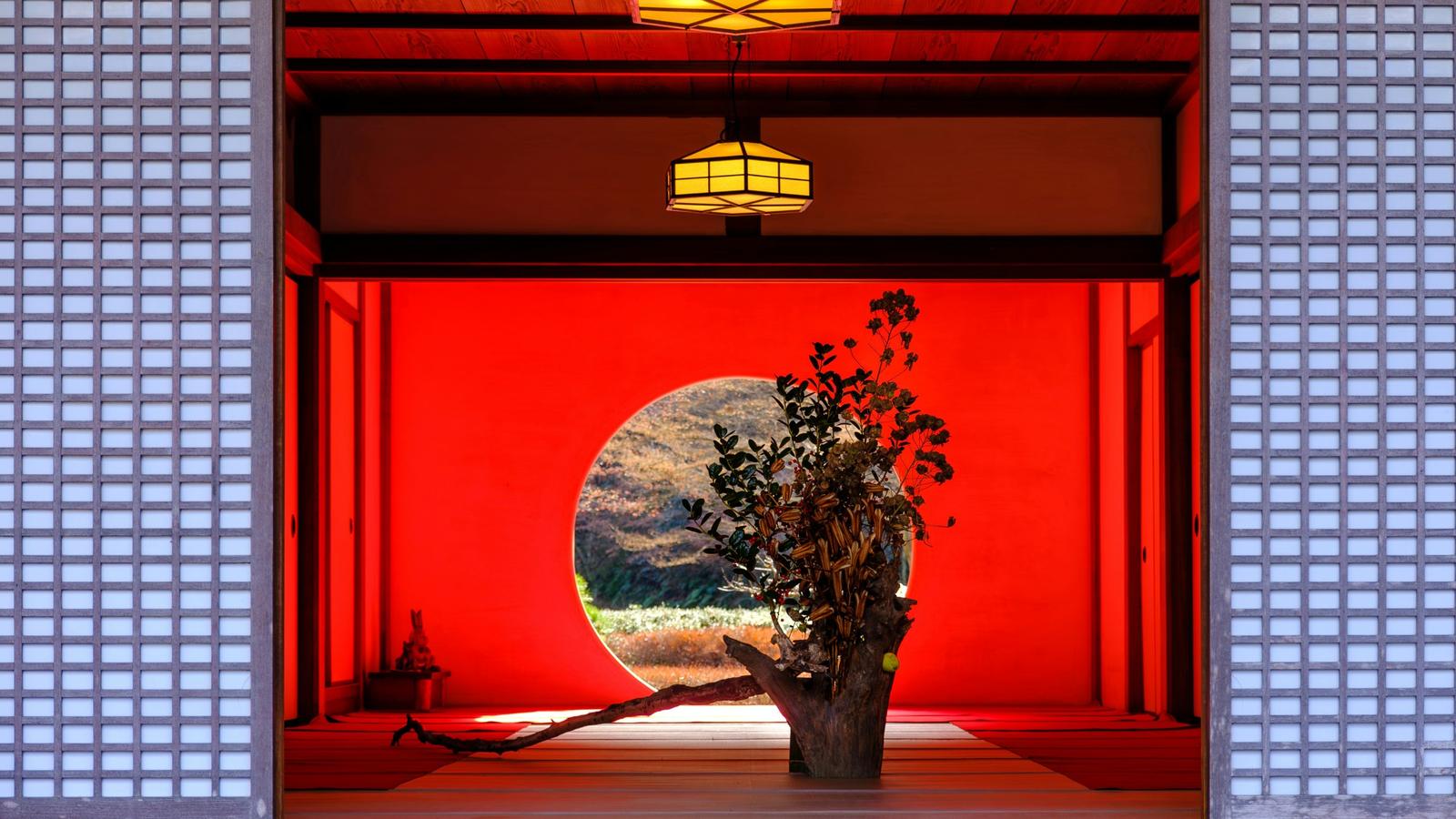
In the middle of Kyoto a small hexagonal temple stands among office buildings. This is Rokkakudo, formally Chohoji, and the Ikenobo school, whose heads serve as its priests, calls it the birthplace of ikebana. A diary kept by a monk of Tofukuji records that in 1462 Senkei Ikenobo, a priest of the temple, was invited by a warrior to arrange flowers, and that the people of Kyoto praised them.
This article covers the temple, the three schools a visitor is most likely to meet, the flowers of each season, the alcove in a ryokan room, and the lessons open to guests from abroad. We read the pages of the three schools, the City of Kyoto's tourism and museum sites, a university dictionary of Japanese art and Nippon.com on November 5, 2026, and contacted none of them; the sources are listed at the end. For the tea room that shaped so much of ikebana, see A Private Tea Ceremony in Kyoto, Step by Step; for a morning of zazen in the same city, see Zen Meditation in Kyoto.
Key points
- Rokkakudo in central Kyoto is called the birthplace of ikebana. A monk's diary records Senkei Ikenobo arranging flowers there in 1462.
- Ikenobo, the oldest school, is led by its 45th headmaster. Ohara, founded in 1895, created the low, wide moribana; Sogetsu, founded in 1927, treats ikebana as a free, creative art.
- Ikenobo holds a lesson for visitors from abroad at Rokkakudo on Thursday afternoons, 13:30 to 15:30, guided in English or Chinese, for 2 to 10 people at 7,000 yen each.
- The tokonoma, the alcove of a Japanese room, became the usual home of ikebana, and the older Kyoto inns still change its flowers with the season.
- A lesson for your party alone with a senior teacher can sometimes be arranged. We ask on your behalf; the answer is the teacher's.
ASK US FOR AN AFTERNOON WITH THE FLOWERS OF KYOTO →
WHERE IKEBANA BEGAN
Rokkakudo takes its name from its six-sided hall. Ikenobo's account says Prince Shotoku built it after a dream. A six-sided stone south of the main hall is said to mark the centre of Kyoto and is known as the navel stone. The priests who made the flower offerings lived in a hut beside a pond, and people came to call them Ikenobo, the priests by the pond.
JAANUS, the dictionary of Japanese art terms hosted by Columbia University, traces ikebana to the Buddhist flower offerings made from the 6th century, and names Senkei of the Ikenobo school as the originator of rikka, the standing arrangement that became the basis for later styles. In the 16th century Senno Ikenobo set down a theory that joined philosophy to technique, in a written transmission, one version of which is dated 1537. The temple is open from 6:00 to 17:00 without an entrance fee. On its grounds the Ikebana History Museum keeps an early 17th-century record of arrangements the first Senko Ikenobo made in the imperial palace, an Important Cultural Property.
IKENOBO, OHARA AND SOGETSU
Nippon.com names three schools as the most prominent today, and each suits a different traveller. Ikenobo teaches three forms: rikka, the oldest, which composes a whole landscape from many plants; shoka, from the Edo period, which uses one to three materials to show a plant growing from the earth; and jiyuka, the free style of the postwar years. Its headmaster, Sen'ei Ikenobo, born in Kyoto in 1933, succeeded in 1945 at the age of 11; Senko Ikenobo is headmaster designate. For a guest drawn to history and to Kyoto, Ikenobo is the natural choice.
Ohara was founded in 1895 by Unshin Ohara, a sculptor, who created moribana, flowers spread across the surface of a low, wide vessel. The school is based in Minami-Aoyama, Tokyo, under its fifth headmaster. Sogetsu was founded in 1927 by Sofu Teshigahara, who saw ikebana as a creative art; the school's own phrase is that anyone can enjoy it anytime, anywhere, with any material. Its headquarters, Sogetsu Kaikan, is in Akasaka. For a guest who comes to ikebana from sculpture or design, Sogetsu is often the more natural door.
THE FLOWERS OF THE SEASON
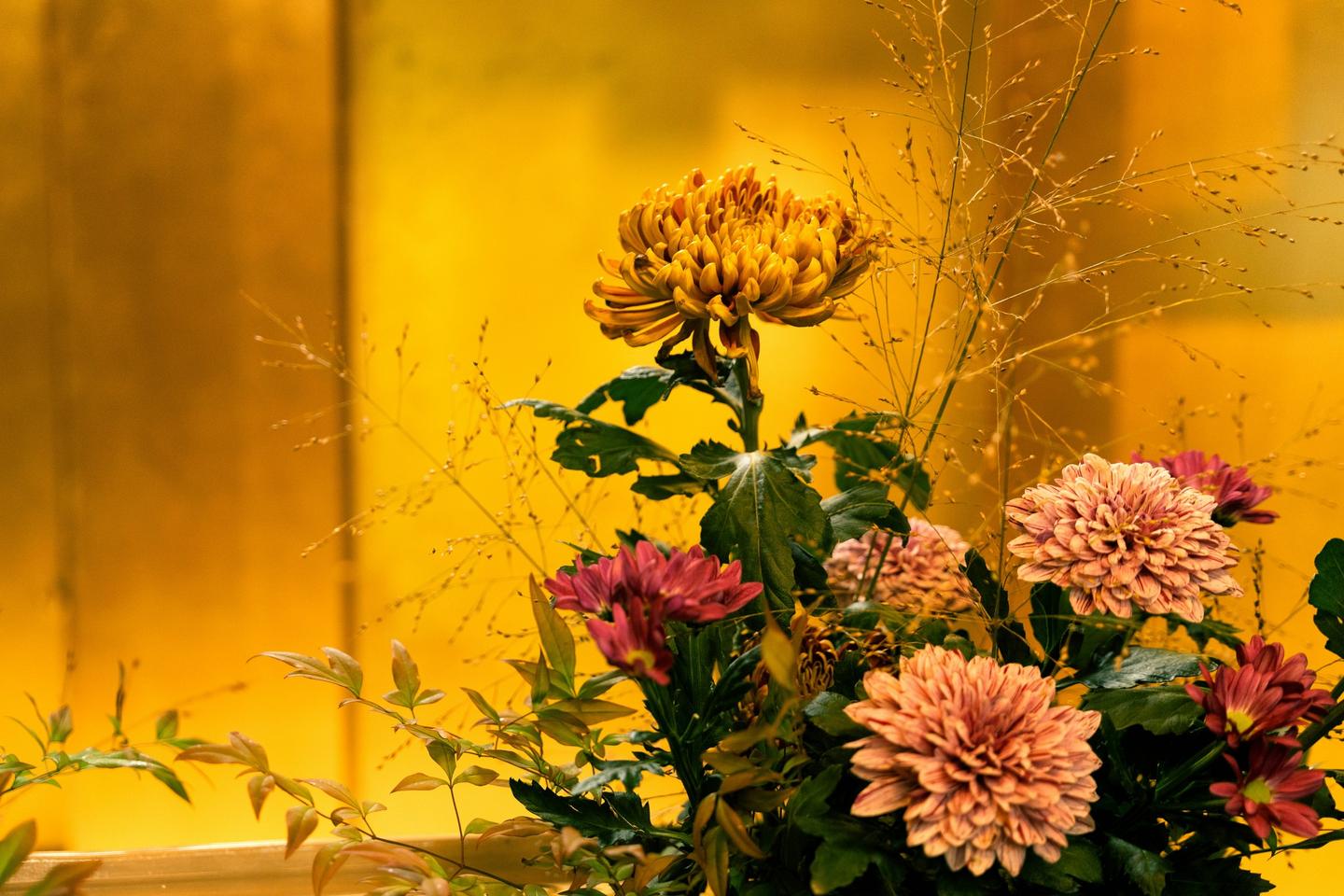
JAANUS describes shoka as showing the essence of a plant in its natural form, so the materials change through the year: young pine and plum at the New Year, iris and fresh leaves in early summer, grasses and chrysanthemums in autumn, bare branches and camellia in winter. One Ikenobo teacher notes that pine, bamboo and plum together can be arranged only while the plum is in flower, so it is practised once a year.
The schools' exhibitions follow the same calendar. The City of Kyoto's tourism site lists Ikenobo's spring exhibition and the Kyu-Tanabatakai national exhibition each November, both open to visitors without reservations. The spring exhibition of 2026 ran from March 13 to 16 with about 800 works. When dates allow, we place an exhibition before a lesson; it shows quickly what the schools value.
THE ALCOVE IN YOUR ROOM
The tokonoma, the raised alcove of a Japanese room, is where most travellers first meet ikebana without knowing it. JAANUS notes that this alcove, made to display works of art, became the usual setting for ikebana in the home. The tea room added nageire, sometimes a single flower.
The city's tourism site describes Sumiya, a Kyoto inn shaped by the tea ceremony, where the flowers in the guest rooms change with the seasons along with the scrolls. On arrival, it is worth a moment before the alcove; the scroll and the flower are usually chosen to answer each other and the week outside. For how we choose an inn, see How to Choose a Ryokan in Japan.
A LESSON IN KYOTO, AND A QUIETER ONE
Ikenobo's lesson for visitors from abroad meets at the front gate of Rokkakudo on Thursdays, except national holidays, from 13:30 to 15:30. It includes a guided visit to the temple and a lesson in English or Chinese, for 2 to 10 people, at 7,000 yen each. For a first encounter, in the place where the art began, it is a fine choice. In Tokyo, Sogetsu holds an International Class in English at Sogetsu Kaikan on Mondays, except national holidays, from 10:30 to 12:30, lends the tools and lets you take the flowers home.
The fullest form is a lesson for your party alone, with a senior teacher in the line of one of the schools, at an hour that suits your day. Such teachers keep their own students; we ask on your behalf, explain what you hope to learn, and leave the answer to the teacher. Within Signature, our planning for journeys of 7 to 21 days at USD 3,500 for your group, we arrange the lesson with the inn and the car, and settle each cost on your hotel bill or on the day, in the simplest way available. For requests that reach further, see Bespoke and Kyoto Again.
SOURCES AND HOW WE CHECKED
We read the pages below on November 5, 2026. We did not contact any school, teacher, temple, inn or other body. The seasonal materials named are typical examples.
- Ikenobo, About Ikenobo (Japanese): 45th headmaster, headmaster designate, rikka, shoka, jiyuka
- Ikenobo, History: 1462 diary entry, Senno Ikenobo, the transmission of 1537
- Ikenobo, Rokkakudo Temple: founding legend, hexagonal hall, navel stone, the name Ikenobo
- Ikenobo, Headmaster Sen'ei Ikenobo: born 1933, succeeded 1945
- Rokkakudo Chohoji (Japanese): hours, no entrance fee, birthplace of ikebana
- Ikenobo, Ikebana lesson for visitors: day, hours, fee, group size, languages
- Ikenobo lesson site, a teacher's note on pine, bamboo and plum (Japanese): arranged only in the plum season
- Ohara School of Ikebana, About (Japanese): founded 1895, moribana, fifth headmaster, Minami-Aoyama
- Sogetsu, About Sogetsu: founded 1927, any material, anytime, anywhere
- Sogetsu, Ikebana trial lesson: International Class in English, Mondays 10:30 to 12:30
- JAANUS dictionary of Japanese art terms, ikebana: Buddhist offerings, rikka, nageire, shoka, the tokonoma
- Nippon.com, Ikebana: Japanese Flower Arrangement (2022): Ikenobo, Sogetsu and Ohara as the predominant schools
- Kyoto City Official Travel Guide, Ikebana: Ikebana History Museum, spring and November exhibitions
- Kyoto City Official Travel Guide, Spring Ikebana Exhibition 2026 (Japanese): March 13 to 16, 2026, about 800 works
- Kyoto City museums, Rikka-no-shidai-kyujusanpei-ari: Important Cultural Property, early 17th century
- Kyoto City Official Travel Guide, Sumiya Ryokan: flowers and scrolls change with the seasons
QUESTIONS TRAVELLERS ASK
Do we need any experience to take an ikebana lesson in Kyoto?
No. Ikenobo's lesson at Rokkakudo is made for visitors from abroad, and a teacher for your party alone begins wherever you are.
Which school should we choose?
For history and Kyoto, Ikenobo, the oldest school, at the temple where it began. For a modern, sculptural approach, Sogetsu in Tokyo. Ohara is known for moribana, flowers spread across a low, wide vessel.
Can we keep the arrangement?
Sogetsu's International Class lets you take the flowers home. For other lessons we ask in advance.
Which time of year suits ikebana in Kyoto?
Any season, since the materials change with it. Spring and November bring the large Ikenobo exhibitions.
ASK US FOR AN AFTERNOON WITH THE FLOWERS OF KYOTO
Tell us when you are coming, who is travelling and how much you have arranged before. We will set out the lessons, the exhibitions and the inns, with the reasons, so that you can choose.
Begin planning →We reply within 24 hours, in writing
Some of the restaurants and bars we arrange seat guests only by introduction or membership. We ask on your behalf; the table and the evening are the house's decision. We do not publish their names.