Use the bulb type and maximum wattage printed on the lamp's own label, and in practice choose a low-heat LED bulb that never touches the paper; Tokyo's consumer-safety office warns against covering bulbs with paper or cloth and against using bulbs the fitting is not rated for. Clean washi dry, with a soft brush or a hair dryer on its cool setting, and keep it away from damp and long hours of direct sun. Care differs between untreated handmade paper and treated or laminated paper, so keep the maker's care note.
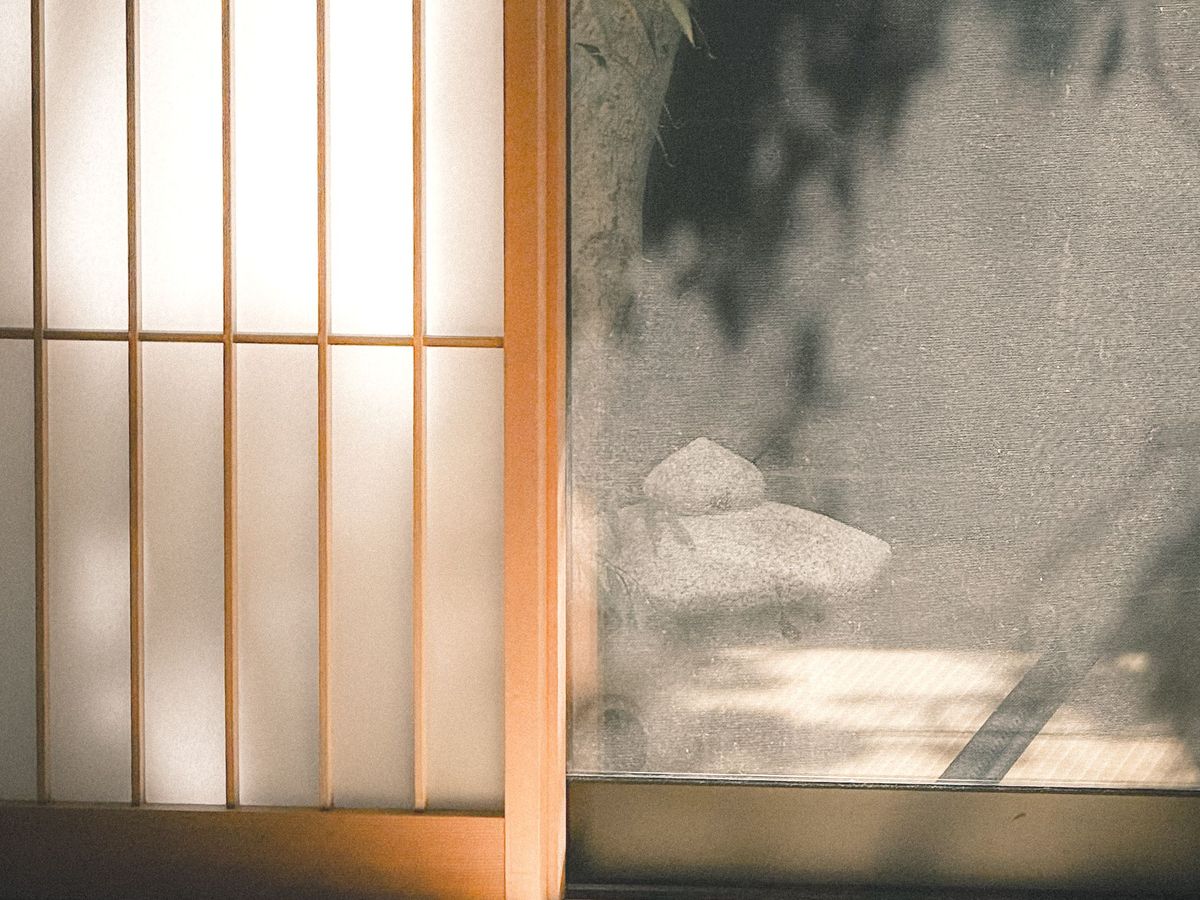
What washi is and why it softens light
Washi (Japanese handmade paper) is traditionally made from the fibres of the paper mulberry. UNESCO describes the craft as separating the fibres, soaking them in clear river water and filtering them through a bamboo screen. The craft was first inscribed on UNESCO's Representative List of the Intangible Cultural Heritage of Humanity in 2014, and the inscription was extended in 2025. UNESCO also notes that the paper is used in home interiors, for screens, room dividers and sliding doors.
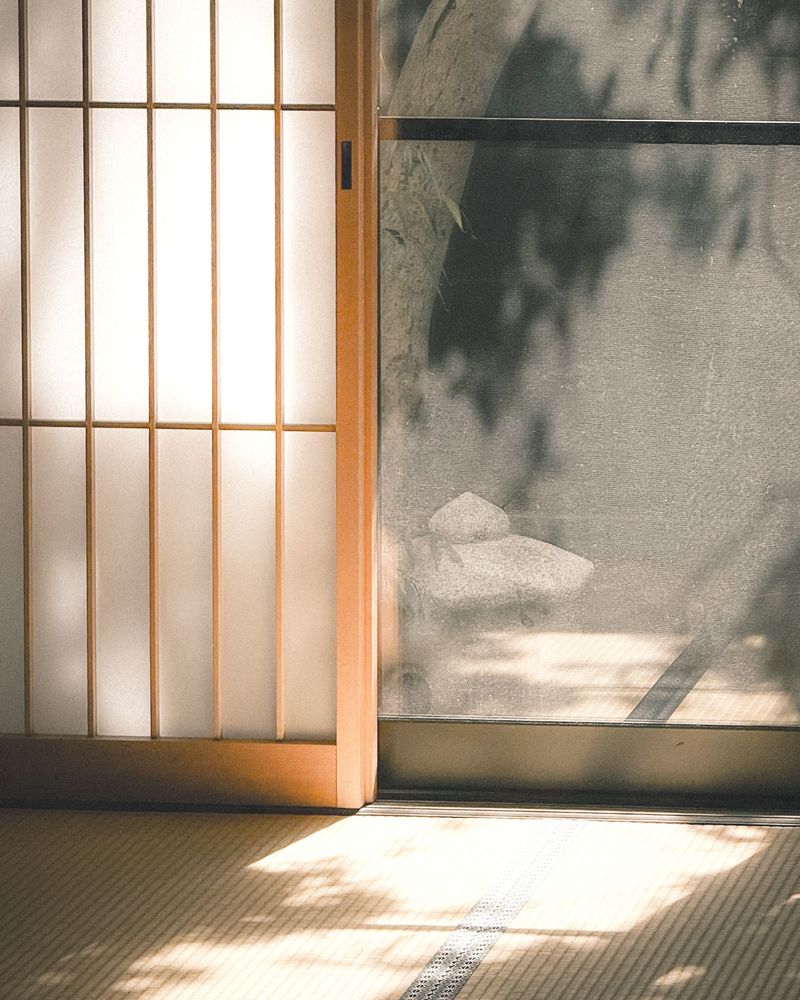
Long fibres laid in many directions scatter light rather than letting it pass in a straight line. The result is a lamp that glows across its whole surface, with no bright spot where the bulb sits. In a room furnished with restraint, this is the light that gives the space its calm: a little like komorebi (sunlight filtered through leaves), even, low and warm.
Some regions have centuries of lamp-making behind them. The Government of Japan's Highlighting Japan magazine (July 2022) describes Gifu paper lanterns as made from Mino washi and thin strips of bamboo, with a history of around 300 years, and notes that they were designated a National Traditional Craft in 1995.
Pendant, floor or table lamp
The shape you choose decides how the light falls. A few points help before you choose.
- Pendant: a large paper globe or lantern over a dining table or in a living room gives broad, soft light. Check the drop length and the weight against your ceiling fitting (see the last section).
- Floor lamp: a tall paper column lights a corner and makes a room feel wider at night. Keep it out of walkways, where it can be knocked, and away from curtains.
- Table lamp: a small shade at seat height is the easiest to live with in a bedroom or beside a sofa, and the easiest to move away from a window in summer.
- Frame: bamboo ribs give a lantern its spring and lightness; wire frames hold a sharper geometric shape. Both are fine; ask how the paper is fixed so you know whether it can be repaired or re-papered.
Bulbs, heat and safety
Every lamp has a rated bulb type, base and maximum wattage. Use what the label says, even if a brighter bulb fits the socket. The Tokyo Metropolitan Government's consumer-safety notice on lighting fires (October 2019) gives three points: do not place flammable things near lights or cover fittings and bulbs with cloth or paper, stop using a fitting that flickers, makes noise or discolours, and use bulbs that match the fitting's rated type and wattage. One of the cases it cites is a 90 W incandescent bulb fitted in a downlight made for a 60 W reflector lamp, which overheated and caught fire.
A washi lamp is designed so that the paper stays at a set distance from the bulb. Keep it that way. If a shade has been dented or has slipped on its frame so that the paper sits close to the bulb, switch it off until it is fixed.
The national product-safety body NITE analysed 492 lighting accidents reported over the five fiscal years to 2011 (published July 2012). Among the patterns it identified were flammable materials touching bulbs and fittings that fell because they were not fixed securely. Both are worth remembering with a light paper shade.
- Choose an LED bulb within the lamp's rated wattage. LEDs run far cooler than incandescent or halogen bulbs, but they still should not be covered or touch the paper.
- For a calm evening light, look at the colour temperature on the box. Bulbs sold in Japan often say 電球色 (denkyu-iro, warm "bulb colour"); this is the one that suits washi.
- If the lamp has a dimmer, use a bulb marked as dimmable.
- Do not leave a paper lamp on in an empty apartment for long periods. A timer that you can check remotely is a safer way to make a home look lived in.
Cleaning a paper lamp
Switch the lamp off and let the bulb cool first. Dust is the main thing to deal with, and dry methods are the safe ones for untreated paper.
- Use a soft, clean brush or a feather duster, moving with the grain of the frame.
- A hair dryer on its cool setting, held at a distance, lifts dust from folds and pleats.
- A vacuum cleaner with a soft brush head on its lowest setting can work for larger shades; hold the paper still with your other hand.
- Do not use water, cleaning sprays or damp cloths on untreated washi. Some lamps use paper that has been treated or laminated so it can be wiped; only wipe a shade if the maker says it can be wiped.
- Small tears in handmade paper can often be mended. Ask the maker or shop before using tape or glue, which can stain.
Humidity and sunlight in a Tokyo home
Paper takes in moisture from the air. The Japan Meteorological Agency's normals for central Tokyo (1991–2020) put average relative humidity at 51 percent in January but 75 percent in June, 76 percent in July and 75 percent in September. A closed apartment in summer can feel damper than these averages. A washi shade in that air can soften, sag slightly or spot, and dust sticks more easily.
If you are away for months at a time, the simplest protection is air movement: ask whoever looks after the home to ventilate it and run the air conditioner's dry mode during the rainy season and summer. Keep paper lamps away from bathrooms, kitchens and any spot where condensation forms on windows.
Direct sun is the other enemy. Paper and its colours can fade or yellow when left in strong light for long periods. Place lamps out of the path of afternoon sun, or draw a sheer curtain when the home is empty. We could not find a care guide in English from a washi producers' association, so the maker's own care note remains the reference for each lamp.
Hanging a pendant from a Japanese ceiling
Many rooms in Japanese homes have a standard ceiling outlet that lighting made for the Japanese market plugs into by hand with a twist-lock connector. A pendant sold in Japan is usually made for this outlet. A lamp bought abroad usually is not, and wiring it into the ceiling is electrical work.
Under Japan's Electricians Act, electrical work on the wiring of ordinary homes must be done by a licensed electrician, apart from minor tasks listed in the cabinet order and ministerial ordinance. If a lamp needs to be wired in, or the ceiling needs a new outlet or a separate support for a heavy fitting, ask a licensed electrician. In a condominium, check with the management company before any work. Our article on lighting a home in Japan covers voltage, ceiling fittings and lamps from abroad in more detail.
Check the weight of a large lantern against the limit the ceiling fitting's maker gives. We could not find an official figure that applies to all fittings, so read it from the maker's documentation. This is general information only; for a specific home, ask the building's management company, a licensed electrician or the relevant office.
How STAYGO ATELIER can help
STAYGO ATELIER can choose washi pendants, floor lamps and table lamps for your home in Japan, check each lamp's bulb rating and the fitting it needs, and arrange the order and shipping from the maker or shop, whom you pay directly. We pass on the maker's care note. Any wiring or ceiling work is for a licensed electrician you or your management company appoint.
Questions owners ask
What bulb should I use in a washi lamp?
Use the bulb type and maximum wattage printed on the lamp. An LED bulb within that limit is the practical choice because it runs cool, but it should still never touch the paper.
How do I clean a Japanese paper lamp?
Switch it off and let it cool, then remove dust with a soft brush, a feather duster or a hair dryer on its cool setting. Do not use water or sprays on untreated washi; wipe only shades the maker says can be wiped.
Are paper lanterns safe?
They are designed to be used safely when the bulb matches the lamp's rating and the paper keeps its distance from the bulb. Tokyo's consumer-safety notice warns against covering bulbs with paper or cloth and against using bulbs the fitting is not rated for.
Will humidity in Tokyo damage a washi lamp?
Damp summer air can soften or spot paper and make dust cling. Ventilation, dry mode on the air conditioner and keeping lamps away from bathrooms and kitchens all help.
This article includes general information on electrical work rules in Japan, not legal advice. For a specific case, ask the building's management company, a licensed electrician or architect, or the relevant office.
Sources
- UNESCO, Washi, craftsmanship of traditional Japanese hand-made paper (Representative List of the Intangible Cultural Heritage of Humanity) (2025)
- Government of Japan, Highlighting Japan, The Traditional Light of Gifu Paper Lanterns (July 2022) (2022)
- Tokyo Metropolitan Government, Bureau of Citizens and Culture, 照明器具の発火等の事故に注意 (Beware of fires from lighting fittings) (2019)
- NITE (National Institute of Technology and Evaluation), 照明器具による事故の防止について (Preventing accidents involving lighting fittings) (2012)
- Japan Meteorological Agency, monthly climate normals for Tokyo (1991–2020) (2021)
- e-Gov, Electricians Act (電気工事士法), Act No. 139 of 1960 (2025)