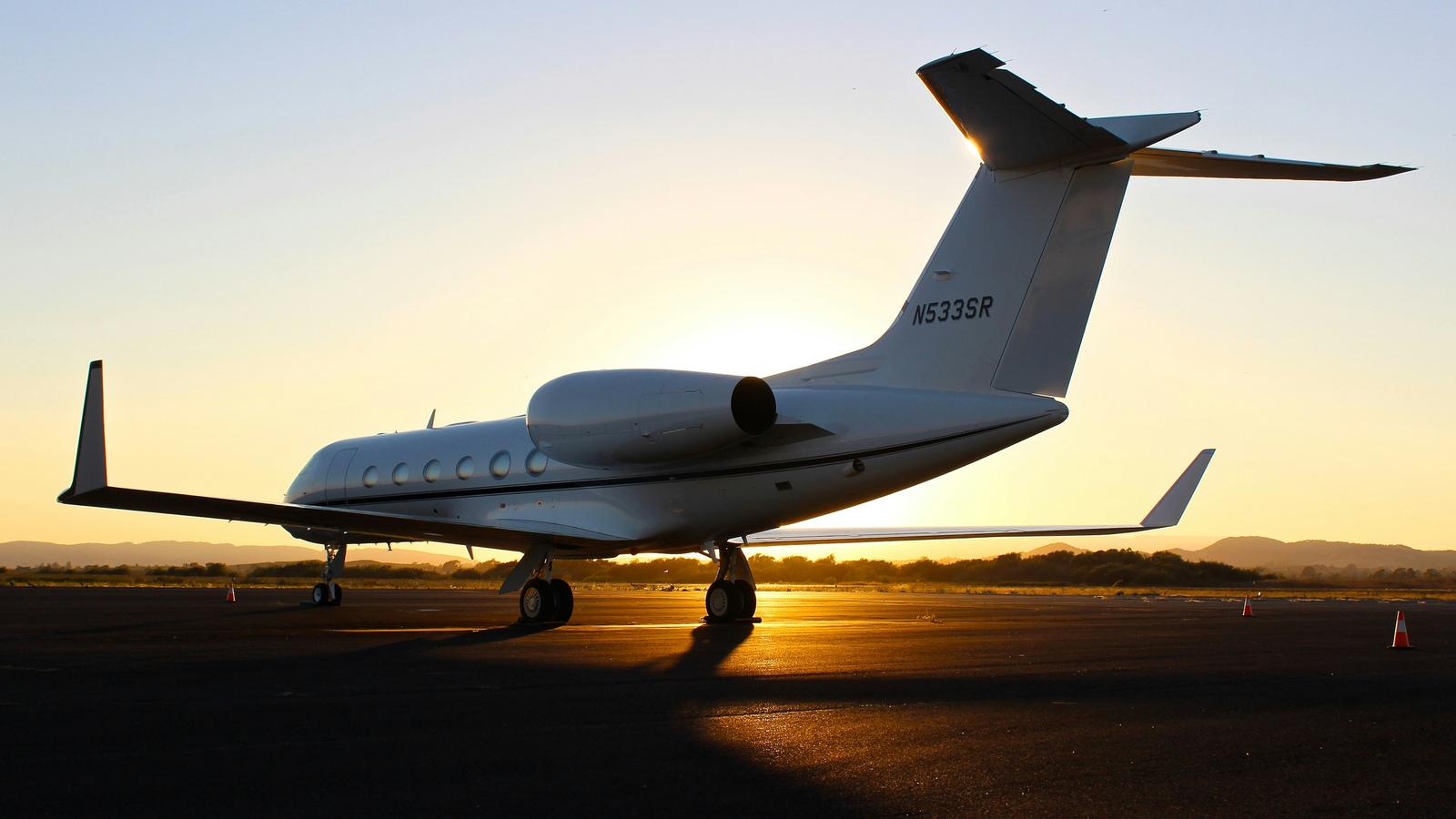
An American family crossing the Pacific on its own aircraft, or one that would rather not give a day of a long journey to transfers, finds Japan better prepared than many expect. Tokyo's two airports, Kansai, Chubu Centrair and New Chitose in Hokkaido have terminals or gates set aside for business aviation. Both of Japan's large airline groups own a company that arranges private jets. And helicopters leave Tokyo for the mountains, the lakes and the hot spring towns.
This article sets out how a private arrival works, what the JAL and ANA companies arrange, how a regional airport can bring a ryokan or a ski area within reach of the morning, where helicopters fit, and how all of it joins the cars and the luggage of the journey. On November 5, 2026 we read the pages of the airlines' business jet companies, the airport operators, a helicopter charter service, a regional tourism office, the transport ministry and the Japanese aviation press, and contacted none of them; the sources are listed at the end. For cars and drivers on the ground, see Private Driver in Japan Cost: Tokyo, Airport and Day Trip Rates →.
Key points
- Haneda receives business aviation at a dedicated gate in Terminal 3, open 24 hours, with its own lounge, security checkpoint and CIQ (customs, immigration and quarantine).
- Narita's business jet terminal, Premier Gate, reopened on August 1, 2026 with a large new lounge and a meeting room, and began receiving domestic business jets.
- JAL Business Aviation (Japan Airlines 51 percent, Marubeni Aerospace 49 percent) and ANA Business Jet arrange charters on aircraft flown by operators they select.
- New Chitose has had Hokkaido's first business jet terminal since December 2023, and Shimojishima in Okinawa opened one with dedicated CIQ in April 2024.
- Most regional airports keep fixed operating hours, so the flight is planned around the airport's day.
ASK US ABOUT FLYING PRIVATELY IN JAPAN →
WHY FLY PRIVATELY IN JAPAN
Japan's trains are fast, and for most of a journey a good car and a Shinkansen carriage are all a family needs. A private aircraft earns its place at three moments. The first is arrival: a family that lands on its own jet clears formalities in a private terminal and goes from the aircraft to the car without the halls of the main terminal. The second is reach. Japan has about 100 airports, by ANA Business Jet's count from government figures as of April 1, 2026, and many lie close to hot spring towns, islands and ski areas that take most of a day by rail and road. The third is the day itself: a helicopter turns a morning of transfers into well under an hour in the air.
For American travellers, the reason to go beyond Tokyo and Kyoto is often the onsen, the mountains and the island coasts. Those are exactly the places a private aircraft brings closer, and where the time saved becomes an extra evening in the bath or an extra morning on the snow.
ARRIVING ON YOUR OWN JET
At Haneda, the closest of Tokyo's airports to the city, business aviation uses a dedicated gate in Terminal 3; the airport states that it is not available at Terminals 1 and 2. The gate opened on July 15, 2021, the aviation news site Aviation Wire reported, with about 1,500 square meters and separate routes for departures and arrivals, run by the company that operates Terminal 3. It works 24 hours and has its own check-in counter, lounge, security checkpoint, CIQ facilities, a porte-cochere and short-term parking. Haneda lists twelve companies that support business jet operations there, among them JAL Business Aviation and All Nippon Airways.
Narita's terminal, Premier Gate, describes exclusive corridors, its own CIQ and a quick transfer from the aircraft to the car. The airport states that a slot application is required for business jets. On August 1, 2026 Premier Gate reopened after a renewal that added a large lounge and a meeting room, and it began receiving domestic business jets as well, Aviation Wire reported.
In western Japan, Kansai Airports opened Premium Gate Tamayura in the domestic area of Terminal 2 at Kansai International Airport on June 15, 2018, with a dedicated security checkpoint, CIQ, a lounge and a meeting room. ANA Business Jet's guide to private jet airports adds Chubu Centrair near Nagoya, with a 24-hour terminal, a lounge and a business corner. On the ground, the handling company coordinates the slot, the CIQ applications and the permits required under Japan's aviation law, as the transport ministry's guide to business aviation explains.
THE AIRLINES' CHARTER COMPANIES
Both of Japan's large airline groups have a company for private jets. JAL Business Aviation, owned 51 percent by Japan Airlines and 49 percent by Marubeni Aerospace, launched its service in September 2019. It arranges international, connecting and domestic charters on aircraft from four seats up to 13 or 14, and says plainly that the aircraft are not operated by JAL: it offers aircraft that meet JAL's and its own safety standards. Its published starting prices include US$230,000 for a one-way flight from Tokyo to New York and US$335,000 for a return to Los Angeles, both on a 13-seat long-range jet. Cancellation terms depend on the operator, with a charge of 25 percent in most cases. The company also provides ground handling at the 56 Japanese airports served by the JAL Group.
ANA Business Jet, founded on July 2, 2018 and registered as a travel agency that August, likewise arranges flights on aircraft run by a carrier it selects. It offers an area charter, in which you reach a region on scheduled flights and use a business jet within it, a global charter from Japan to abroad, and domestic charters. A quote comes in as little as two business days, the contract is then concluded and paid in advance, and passengers are asked to arrive 30 minutes before an international departure and 15 minutes before a domestic one. Some airports need several days to grant permission to operate, so early contact matters.
In both cases the family signs the arrangement with the airline's company, and the flight itself belongs to the operator that flies it. What the airline name brings is the screening of that operator and the ground support at the airports.
REGIONAL AIRPORTS AS GATEWAYS
ANA Business Jet notes that light jets such as the HondaJet can use runways of about 1,200 to 1,500 meters, including island airports, where scheduled airliners usually need 2,000 meters or more. On domestic flights a car can sometimes drive right up to the aircraft, depending on the airport. The limits are practical. Most regional airports keep fixed operating hours, ground handling has to be arranged in advance, and at airports not designated for international flights, customs and immigration can be handled only with prior permission. A jet arriving from the United States therefore usually clears formalities at a main airport, and the regional legs follow.
The hours shape the day. JAL Business Aviation's list gives Tajima Airport, 5 km from the city of Toyooka, the window 23:30 to 09:30 UTC, which is 8:30 to 18:30 in Japan, and Kinosaki Onsen's own visitor site points arrivals there to a direct bus into the hot spring town. Matsumoto in Nagano is open from 8:30 to 19:00 Japan time, and Komatsu on the Sea of Japan coast around the clock.
Some regional airports now receive international jets directly. Shimojishima Airport in the Miyako Islands of Okinawa opened a business jet terminal with dedicated CIQ and a lounge in April 2024. In winter, ANA Business Jet and KAMMUI offer a 12-night journey called Japan, Untracked, flying by private jet between Niseko, Rishiri Island, central Hokkaido and Hakuba from December to March. For the private baths and the powder snow of the north, see Hokkaido in Summer and Winter: Private Baths, Whisky and Powder →.
HELICOPTERS FROM TOKYO
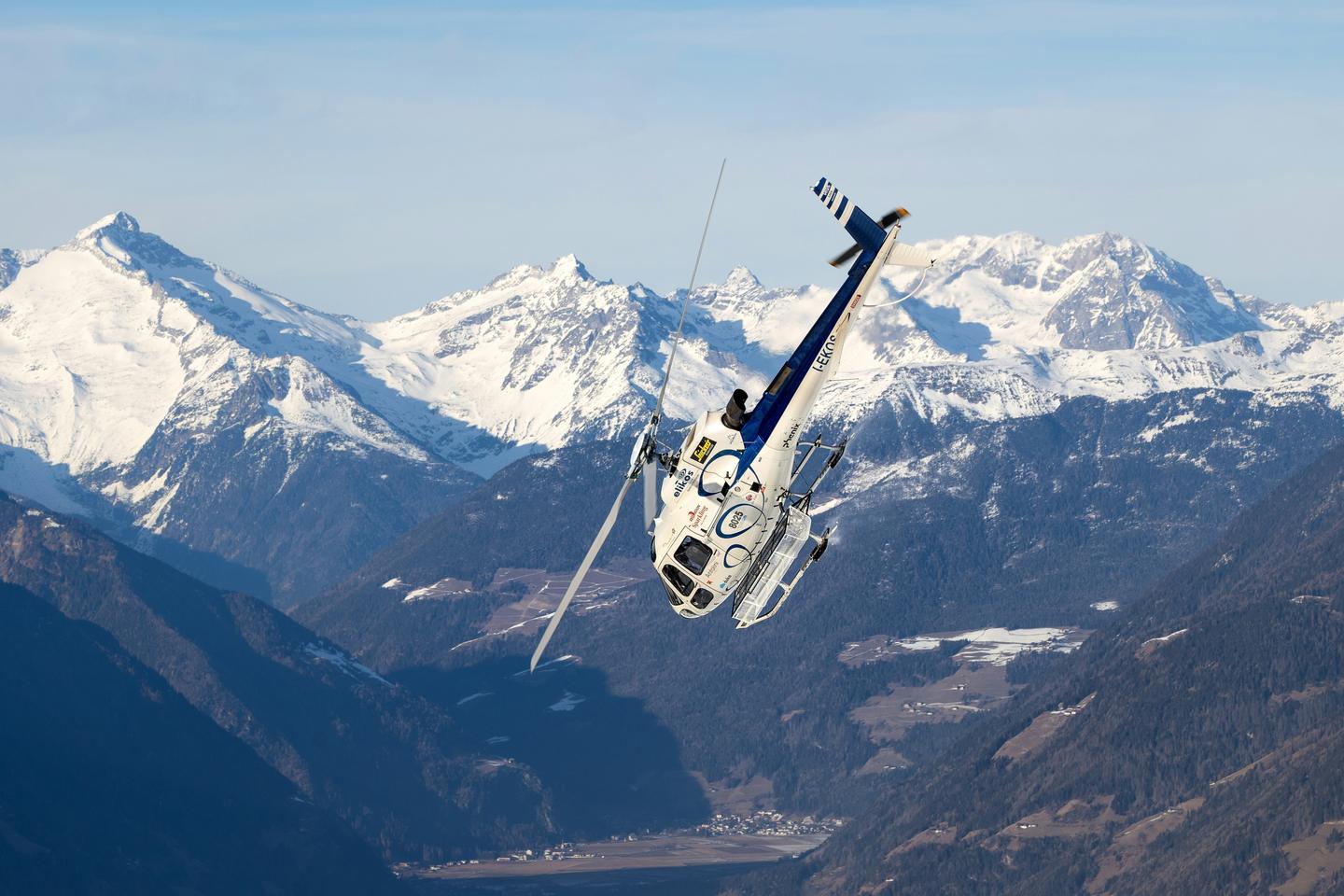
For a ryokan in the mountains or by the sea, a helicopter is often the finer way in. AIROS, the helicopter service of AirX, arranges charters with more than 30 partner operators across Japan, among them Akagi Helicopter, Aero Asahi, Noevir Aviation and Hokkaido Aviation, and matches the aircraft and pilot to the passengers. Its heliports include Tokyo Heliport, Hakone Sengokuhara, Karuizawa and Shimoda, and its aircraft range from the Robinson R44 to the Airbus AS350 and the Kawasaki BK117.
Its published plans from Tokyo show the scale: Mount Fuji from ¥240,000 and 30 minutes, Karuizawa or Izu Akazawa from ¥360,000 and 45 minutes, Minakami Onsen or Nasu from ¥400,000 and 50 minutes, with flight and stay plans in Hakone, including Hanaori on Lake Ashi. On the R44, luggage rides under the seats, one more reason to send the large cases ahead by road. For ryokan with their own baths within this radius, see Ryokan With Private Onsen Near Tokyo: 2026 Guide →.
CARS AND LUGGAGE ON THE GROUND
A private flight is only as smooth as the car at each end. Haneda and Narita both build their business aviation around the car: a porte-cochere and short-term parking at Haneda, a quick transfer from the aircraft to the car at Narita. We place a driver at the terminal and at the regional airport or heliport, with the car sized to the family and its bags; the choices are set out in Private Driver in Japan Cost: Tokyo, Airport and Day Trip Rates →.
Luggage is the other half. A long-range jet carries a family's bags with ease, but a light jet or a helicopter carries far less, and a ryokan room is no place for six large cases. Sending the main luggage by road from the hotel in Tokyo to the next stay, and on to the departure airport, leaves only a small bag on board; how that works is in Luggage Forwarding in Japan: Sending Bags Between Hotels and the Airport →. For the wider picture of moving through Japan at this level, see How Luxury Travelers Move Around Japan →.
WHERE STAYGO COMES IN
Within Signature, our planning for journeys of 7 to 21 days, we draw the journey first: where the family enters Japan, which stays lie far from the rail lines, and which legs are worth a jet or a helicopter. We then arrange the flights through the airline groups' charter companies or a helicopter service, together with the cars, the luggage and the timing at each ryokan, so that a landing at a regional airport falls inside its hours and the house expects the family at the right moment.
The aircraft operator flies the aircraft and the arranging company holds the charter contract; each is settled with the provider in the way it sets, which for ANA Business Jet is in advance. Rooms and cars are settled with each house and driver, usually on your bill or on the day. We quote no flight prices of our own: the figures above are the starting prices the companies publish, and each flight is quoted by them for its date, route and passengers.
SOURCES AND HOW WE CHECKED
We read the pages below on November 5, 2026. Times are as the sources give them. We did not contact any airline company, airport, operator or other body.
- JAL Business Aviation, official site: charter types, aircraft from 4 to 13 or 14 seats, service launch September 2019
- JAL Business Aviation, Company: Japan Airlines 51%, Marubeni Aerospace 49%, business lines
- JAL Business Aviation, Charter plans: starting prices Tokyo to New York and Los Angeles, 13-seat long-range jet
- JAL Business Aviation, FAQ: aircraft not operated by JAL, safety standards, cancellation 25% in most cases
- JAL Business Aviation, Airports: 56 airports, hours of Tajima, Matsumoto and Komatsu, distance to Toyooka
- ANA Business Jet, official site (Japanese): area, global and domestic charters, operator selected by the company
- ANA Business Jet, Company (Japanese): founded July 2, 2018, travel agency registration August 2018
- ANA Business Jet, How to arrange (Japanese): quote in 2 business days, contract, advance payment, 30 and 15 minutes, airport permission
- ANA Business Jet, Private jet airports in Japan (Japanese): about 100 airports as of April 1, 2026, runway lengths, regional hours, CIQ, Kansai and Chubu facilities
- ANA Business Jet, news on KAMMUI (Japanese): Japan, Untracked, 12 nights, December to March, Niseko to Hakuba
- Haneda Airport, Business Aviation: Terminal 3 only, 24 hours, facilities, twelve support companies
- Aviation Wire, July 17, 2021 (Japanese): Haneda gate opened July 15, 2021, about 1,500 square meters, separate routes
- Narita Airport, Business Jet Operations: Premier Gate, slot application required
- Narita Airport, Premier Gate: exclusive corridors, CIQ, aircraft to car
- Aviation Wire, July 16, 2026 (Japanese): Premier Gate renewal on August 1, 2026, lounge, meeting room, domestic jets
- ACI Asia-Pacific, Kansai Airports announcement: Premium Gate Tamayura, June 15, 2018, Terminal 2, facilities
- Hokkaido Airports, Business Aircraft Facility at New Chitose: HBAC, December 2023, Hokkaido's first, dedicated CIQ
- Hokkaido Airports, HBAC (Japanese): operator, lounge, CIQ
- Aviation Wire, April 30, 2025 (Japanese): Shimojishima business jet terminal April 2024, dedicated CIQ, lounge
- Ministry of Land, Infrastructure, Transport and Tourism, business jet guide: handling companies coordinate slots, CIQ and aviation law applications
- AIROS by AirX, official site: partner operators, heliports, aircraft, plans from Tokyo
- AIROS by AirX, official site (Japanese): more than 30 partner operators, Hakone Hanaori plan, R44 luggage
- Visit Kinosaki, Access: direct bus from Tajima Airport
QUESTIONS TRAVELLERS ASK
Can a private jet land at Haneda?
Yes. Haneda receives business aviation at a dedicated gate in Terminal 3, open 24 hours, with its own lounge, security checkpoint and CIQ facilities. Business aviation is not available at Terminals 1 and 2.
Do JAL and ANA fly the private jets themselves?
No. JAL Business Aviation and ANA Business Jet arrange charters on aircraft flown by operators they select. JAL Business Aviation says its aircraft meet JAL's and its own safety standards.
Can we clear immigration at a regional airport?
At airports designated for international flights, yes; at others, only with prior permission from the CIQ authorities. Shimojishima in Okinawa and New Chitose in Hokkaido have business jet terminals with dedicated CIQ.
How long is a helicopter flight from Tokyo to Karuizawa?
AIROS lists its plan to Karuizawa or Izu Akazawa at 45 minutes, from ¥360,000. Its Mount Fuji plan is 30 minutes and its Minakami Onsen or Nasu plan 50 minutes.
How far ahead should a private jet be arranged?
ANA Business Jet quotes in as little as two business days, but some airports need several days to grant permission, and payment is made in advance. We settle the flight once the stays are fixed, so that it lands within the airport's hours.
ASK US ABOUT FLYING PRIVATELY IN JAPAN
Send us your dates, where your aircraft will arrive, and the places you would like to reach. We will draw the journey around the airports' hours, the cars and the luggage, and arrange the flights with the companies that operate them.
Begin planning →We reply within 24 hours, in writing
Some of the restaurants and bars we arrange seat guests only by introduction or membership. We ask on your behalf; the table and the evening are the house's decision. We do not publish their names.