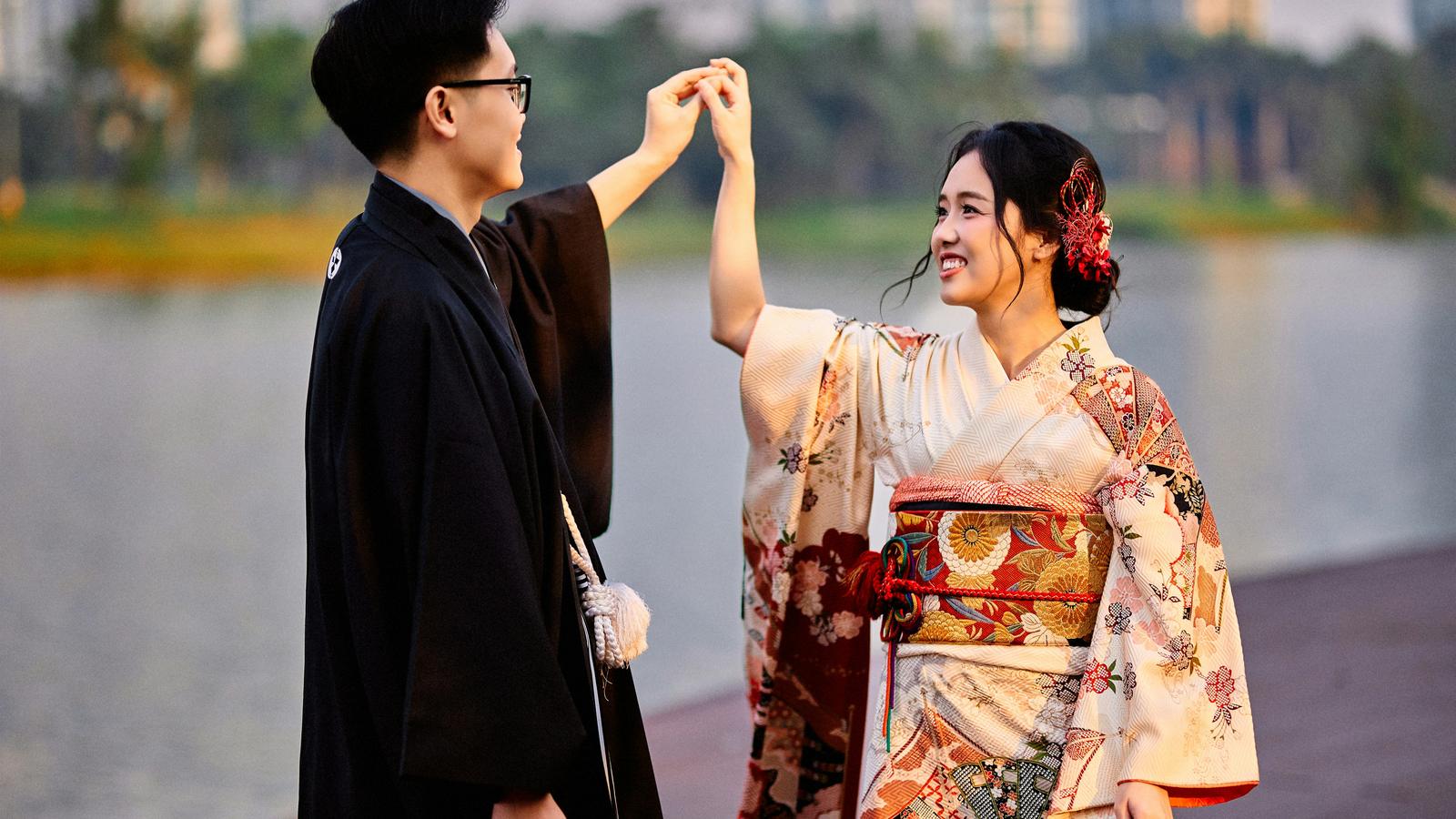
A private photographer in Tokyo or Kyoto costs from about ¥16,500 to ¥374,000, depending on how long the shoot runs and who arranges it. On the official price pages we read on October 28, 2026, a 30-minute kimono walk with a photographer in Asakusa or Gion was ¥16,500 for 25 images, Flytographer listed Tokyo shoots from US$325 for 30 minutes and surprise proposals from US$425, and Hotel Chinzanso Tokyo charged its own guests ¥264,000 for 30 images in its garden. Where you may shoot matters as much as the price: Kiyomizu-dera forbids wedding photo shoots, Shinjuku Gyoen does not allow a paid photographer to take your personal commemorative photos, and Kyoto Gyoen refuses shoots with hired photographers.
This guide explains how a private shoot works in Japan, what photographers and studios publish as their prices, the rules at Meiji Jingu, Kiyomizu-dera, Fushimi Inari Taisha, the Kyoto Imperial Palace, the national gardens and the city parks, when the light is kind, and what to wear. We read every rule and price on the official pages on October 28, 2026, and the sources are listed at the end. If the photographs are for a proposal, proposal ideas in Japan covers where and how to ask.
Key points
- Published prices, October 28, 2026: wargo kimono shoots in Asakusa and Gion ¥16,500 for 30 minutes, ¥29,700 for 60 minutes and ¥38,500 for 120 minutes, tax included, kimono extra. Flytographer Tokyo from US$325 for 30 minutes and from US$425 for a surprise proposal. Hotel Chinzanso Tokyo ¥264,000 for 30 images, for hotel guests only.
- A kimono photo wedding through the Kyoto Wedding Association starts at ¥198,000 plus tax, with a photographer, hair and makeup, an interpreter, a car and 100 images. Its member companies arrange shoots at temples and shrines such as Kodaiji, Tofukuji and Ninnaji.
- Kiyomizu-dera forbids wedding, cosplay and model shoots and any tripod, monopod or drone. Fushimi Inari Taisha forbids filming for business and walking the grounds in a wedding dress. Meiji Jingu asks for no photographs in front of the main shrine and no promotional photography without permission.
- Shinjuku Gyoen and Kyoto Gyoen, both run by the Ministry of the Environment, do not allow a paid photographer for your personal photos. The Kyoto Imperial Palace allows photographs, without tripods, stepladders or large professional cameras.
- Sunrise and sunset set the day. On November 15, 2026 the sun sets at 16:35 in Tokyo and 16:52 in Kyoto, so an autumn shoot in soft light runs from mid-afternoon.
LET US ARRANGE YOUR PHOTOGRAPHER →
HOW A PRIVATE SHOOT WORKS
Most shoots in Tokyo and Kyoto follow one of three patterns, and the pattern decides the price, the places you can go and how much planning is needed.
- A walking shoot on a set route. Kimono rental shops such as wargo pair the rental with a photographer who walks a fixed route from the shop: around Senso-ji and Kaminarimon in Asakusa, and Yasaka, Gion Shirakawa and Nene-no-Michi in Kyoto. Their pages say the route starts from the shop and that custom locations are not offered.
- A photographer you choose for a time and place. Marketplaces such as Flytographer let you pick a photographer and a route, meet ten minutes before the start, and receive a gallery by email. Flytographer says Tokyo galleries arrive within five days and that it does not photograph weddings or elopements.
- A planned shoot with permission. A photo wedding or a shoot inside a temple garden goes through a company that holds the arrangements with the temple or shrine. The Kyoto Wedding Association asks couples not to contact the temples and shrines directly, and to apply through its member companies.
Whichever you choose, the photographer moves through places where other people are praying, walking or working. The rules in the next sections exist for that reason, and a good photographer will know them before you arrive.
WHAT PHOTOGRAPHERS CHARGE
These are the prices published on each company's own pages on October 28, 2026. Yen prices include tax unless noted.
| Who | What you get | Price |
|---|---|---|
| wargo, Asakusa and Gion | Walking shoot on the shop's route: 30 min and 25 images for 1 person; 60 min and 50 images for up to 2; 120 min and 100 images for up to 4. Images by email within 7 days. Kimono rental extra | ¥16,500, ¥29,700, ¥38,500; ¥5,500 per extra person |
| Flytographer, Tokyo | Photographer and route of your choice; a set number of images by package; gallery within 5 days | From US$325 for 30 min; surprise proposal from US$425 |
| Hotel Chinzanso Tokyo | English-speaking photographer in the hotel's garden; 30 images, or 30 images and a 60-second film. For hotel guests only | ¥264,000 or ¥374,000 |
| Kyoto Wedding Association members | Kimono photo wedding: one kimono each, photographer, hair and makeup artist, interpreter, car, 100 JPEG images. Some temples and shrines charge an extra fee | From ¥198,000 plus tax |
The gap between the lines is mostly time and access. A walking shoot of 30 to 120 minutes on public streets is the simplest thing to arrange. The hotel and the photo wedding cost more because they include a private garden or a temple that accepts shoots, a team for hair and dressing, and an interpreter. Kimono rental is extra at wargo: the couple plan started at ¥7,700 per pair online in both Asakusa and Gion, and wargo says to allow 45 to 90 minutes for dressing and hair before the shoot begins.
Read the cancellation terms before you choose a date. wargo charges 100% for a cancellation the day before or on the day, and rain or strong wind does not change that. The Kyoto Wedding Association says its members go ahead in light rain with traditional umbrellas and adjust when a typhoon is forecast.
SHRINES AND TEMPLES
Shrines and temples are places of worship first, and each one sets its own rules. Here is what four of the places couples ask about most say on their own pages.
Meiji Jingu, Tokyo
Meiji Jingu allows photographs in its grounds. Its etiquette page asks visitors not to take photos or videos at the main sanctuary where people pray, not to take videos or promotional photography without permission, and not to fly drones. Its Q&A adds a request not to photograph the amulet office. A couple walking the forest approach with a photographer should keep the camera down near the main shrine buildings.
Kiyomizu-dera, Kyoto
Kiyomizu-dera's notice to visitors is the clearest of the four. Photo shoots using drones, monopods or tripods are prohibited, and photo shoots for weddings or cosplay, or fashion sessions with models, are forbidden. The temple also asks visitors not to record for commercial purposes, including photos or videos with the temple buildings in the background, without permission. Staff will caution visitors who break the rules and may ask them to leave.
Fushimi Inari Taisha, Kyoto
Fushimi Inari Taisha's request to visitors lists filming for business purposes or in prohibited places, walking the grounds in a wedding dress or in clothes unsuited to worship, and blocking the narrow approaches by taking photographs. The torii tunnels are narrow, so even a personal photograph there means stepping aside for people walking up the mountain.
Temples that accept photo weddings
Some temples and shrines do take shoots, through set channels. The Kyoto Wedding Association, set up by the Kyoto Prefecture shrine association, the Kyoto Buddhist Association, wedding companies and local government, lists Toyokuni Shrine and Yoshida Shrine, and the temples Kodaiji, Daikakuji, Tofukuji, Ninnaji, Taizoin at Myoshinji and Toji, where the Mieido area is excluded. It notes that each venue has dates and times it cannot accept, that a Western dress is not allowed at some venues, and that it takes no shoots from December 27 to January 12.
IMPERIAL GROUNDS NATIONAL GARDENS AND PARKS
Gardens and parks in Japan are run by different bodies, and each sets its own rules. The table sets out what each one publishes.
| Place and who runs it | Rule |
|---|---|
| Kyoto Imperial Palace, Imperial Household Agency | Photography allowed; no large professional cameras, tripods or stepladders; no drones |
| Kyoto Gyoen, Ministry of the Environment | Shoots for profit, including with photography firms or freelance photographers, refused; costume shoots such as pre-wedding photos and model sessions not accepted. Visitors' own commemorative photos are exempt |
| Shinjuku Gyoen, Ministry of the Environment | Paying a professional photographer to take personal commemorative photos is not allowed. Tripods and reflectors for portraits banned in busy periods, including the Japanese garden from November 1 to 15, 2026 and the whole garden from March 25 to 31, 2027 |
| Tokyo metropolitan parks, Tokyo Metropolitan Government | Family and scenery photos need no application. A shoot that occupies a fixed area for a set time needs an occupancy permit and a fee by the hour, arranged with the park office |
| Kyoto city parks, City of Kyoto | Still photography as a business ¥4,600 per hour, applied for online two weeks ahead; Maruyama Park through its own office |
| Kamogawa and Arashiyama parks, Kyoto Prefecture | ¥17,440 per day, applied for in person seven working days ahead |
The practical result is simple. A hired photographer belongs on streets, in hotel gardens, in temples that accept shoots, and in parks with a permit. For Shinjuku Gyoen or Kyoto Gyoen, take your own pictures as ordinary visitors and plan the professional shoot somewhere else.
LIGHT AND TIMING
Soft light comes in the first and last hours of the day. The National Astronomical Observatory of Japan gives these times for two dates in the busy seasons:
- November 15, 2026. Tokyo sunrise 6:16, sunset 16:35. Kyoto sunrise 6:31, sunset 16:52.
- April 1, 2027. Tokyo sunrise 5:29, sunset 18:02. Kyoto sunrise 5:45, sunset 18:18.
Early mornings are quieter as well as softer. Meiji Jingu opens at sunrise and closes at sunset, so its hours change each month: in November the shrine lists 6:10 to 16:10. Kimono shops open later; wargo's Gion shop lists 10:00 to 17:30 with the last dressing at 15:30, and its shoot starts about 90 minutes after the reservation time. Opening hours change, so check each place's own page for the day of your shoot.
The Kyoto Wedding Association recommends weekdays, when there is more room to take your time. During the cherry blossom and autumn colour weeks, the busy-period rules at Shinjuku Gyoen and the crowds at the famous temples make an early start or a weekday even more useful.
WHAT TO WEAR AND KIMONO RENTAL
Clothes that photograph well in Japan are plain, in mid-tones, without large logos. Kimono rental is popular for couples and families, and the rental shops publish their own rules.
- Timing. wargo asks you to allow 45 to 90 minutes for dressing and hair before the shoot, and that time is outside the shoot time you pay for.
- What is included. wargo's standard kimono plan includes the kimono, obi, hair ornament, undergarments, sandals, bag and tabi socks; on its retro-modern plan a formal fukuro obi is an extra ¥2,200.
- Your own kimono. The Kyoto Wedding Association's members do not accept your own costume as a rule; they provide wedding kimono, and morning coats and formal kimono for parents.
- Western dress at shrines. Fushimi Inari Taisha asks visitors not to walk the grounds in a wedding dress, and some venues on the Kyoto Wedding Association list do not allow a Western dress.
- Costumes in gardens. Kyoto Gyoen does not accept costume shoots such as pre-wedding photos, and Shinjuku Gyoen bans cosplay that may frighten or offend other visitors.
PROPOSALS AND FAMILIES
A proposal shoot is planned like a small piece of theatre. The photographer arrives first and waits at a set distance, dressed like any other visitor, and starts shooting at an agreed signal. Flytographer publishes a separate proposal price in Tokyo, from US$425. Hotels with gardens give you a private setting, and Hotel Chinzanso Tokyo offers its photography plan for proposals and family portraits to its own guests. Temples and the national gardens do not allow a hired photographer to stage the moment, so a proposal there is a quiet one, with your own phone. Our proposal guide sets out the places that publish proposal plans.
For families, the shorter walking shoots work well: wargo's 120-minute plan covers up to four people for ¥38,500 and adds ¥5,500 for each additional person, and its pages note that larger groups may receive fewer images. Tokyo's metropolitan parks allow family photos without an application, which suits a relaxed session with young children, as long as the shoot does not take over a fixed area.
HOW WE ARRANGE A PHOTOGRAPHER
We arrange the photographer in your name and write to them in Japanese beforehand with the details that decide the day.
- The place and the rules. We choose locations where a hired photographer is allowed, and we check each venue's own rules for the date, including busy-period restrictions and closed days.
- Permits. Where a park needs a permit or a temple accepts shoots only through set companies, we arrange it through that route and confirm the fee.
- Timing and light. We set the start time against sunrise or sunset and the opening hours, and add the time for kimono dressing.
- The brief. Number of people, children's ages, images you want, delivery date and, for a proposal, the signal and where the photographer will wait.
- Payment and cancellation. You pay the photographer or studio directly at their published price, and we tell you their cancellation and rain terms before you decide.
A shoot fits well into a trip with time for each other; romantic things to do in Kyoto has ideas for the rest of the day.
SOURCES AND HOW WE CHECKED
We read each rule and price on the official websites listed below on October 28, 2026. We did not contact the photographers, studios, temples or shrines. Prices and rules change, and some venues change their rules by season; we confirm the current terms when we arrange the shoot. Yen prices include tax unless noted.
- wargo Asakusa, photo plans and wargo Gion, photo plans: prices, images, routes, booking deadlines, cancellation, dressing time, couple kimono plan, shop hours
- Flytographer, Tokyo: shoot and proposal prices, gallery delivery, no weddings
- Hotel Chinzanso Tokyo, Anniversary Photography Plan: prices, images, guests only
- Kyoto Wedding Association, photo wedding plan, locations, FAQ and about: base price and contents, temples and shrines, rain, no shoots December 27 to January 12, members
- Meiji Jingu, etiquette, Q&A and opening hours: photography rules and hours
- Kiyomizu-dera, notice to visitors: shoots, tripods, drones, commercial recording
- Fushimi Inari Taisha, request to visitors: business filming, wedding dress, narrow approaches
- Imperial Household Agency, Kyoto Imperial Palace visit: cameras, tripods, drones
- Ministry of the Environment, Kyoto Gyoen applications: hired photographers and costume shoots
- Ministry of the Environment, Shinjuku Gyoen photography with equipment: paid photographers, busy periods
- Tokyo Metropolitan Government, photography in metropolitan parks: when a permit is needed
- Kyoto Media Support Center, photography in parks: city and prefectural park fees and deadlines
- National Astronomical Observatory of Japan, Tokyo November 2026, Kyoto November 2026, Tokyo April 2027 and Kyoto April 2027: sunrise and sunset
QUESTIONS GUESTS ASK
How much does a photographer cost in Tokyo or Kyoto?
On the official pages we read on October 28, 2026, a 30-minute kimono walking shoot with wargo in Asakusa or Gion was ¥16,500 for 25 images, and 120 minutes was ¥38,500 for up to four people, kimono extra. Flytographer listed Tokyo shoots from US$325 for 30 minutes. Hotel Chinzanso Tokyo charged its guests ¥264,000 for 30 images in its garden.
Can we have wedding photos taken at Kiyomizu-dera or Fushimi Inari?
No. Kiyomizu-dera forbids photo shoots for weddings, and Fushimi Inari Taisha forbids filming for business and walking the grounds in a wedding dress. Temples such as Kodaiji, Tofukuji and Ninnaji accept photo weddings through the Kyoto Wedding Association's member companies.
Can a photographer shoot us in Shinjuku Gyoen?
No. The Ministry of the Environment says that paying a professional photographer to take personal commemorative photos in Shinjuku Gyoen is not allowed. Kyoto Gyoen refuses shoots with hired photographers too. You can still take your own photos there as visitors.
Can I take photos at Meiji Jingu?
Yes. Meiji Jingu allows photographs in its grounds, and asks visitors not to take photos or videos at the main sanctuary where people pray, not to photograph the amulet office, not to take promotional photographs or videos without permission, and not to fly drones.
What time of day is good for a shoot?
The first and last hours of daylight. On November 15, 2026 the sun rises at 6:16 and sets at 16:35 in Tokyo, and rises at 6:31 and sets at 16:52 in Kyoto. Mornings are also quieter at temples and shrines; check opening hours on each venue's own page.
LET US ARRANGE YOUR PHOTOGRAPHER
Send us your dates, the cities on your route, who will be in the photographs and what the occasion is. We will come back with two or three photographers or studios that fit the day, the places where they are allowed to shoot, and the published price, and we arrange the one you choose.
Begin planning →We reply within 24 hours, in writing