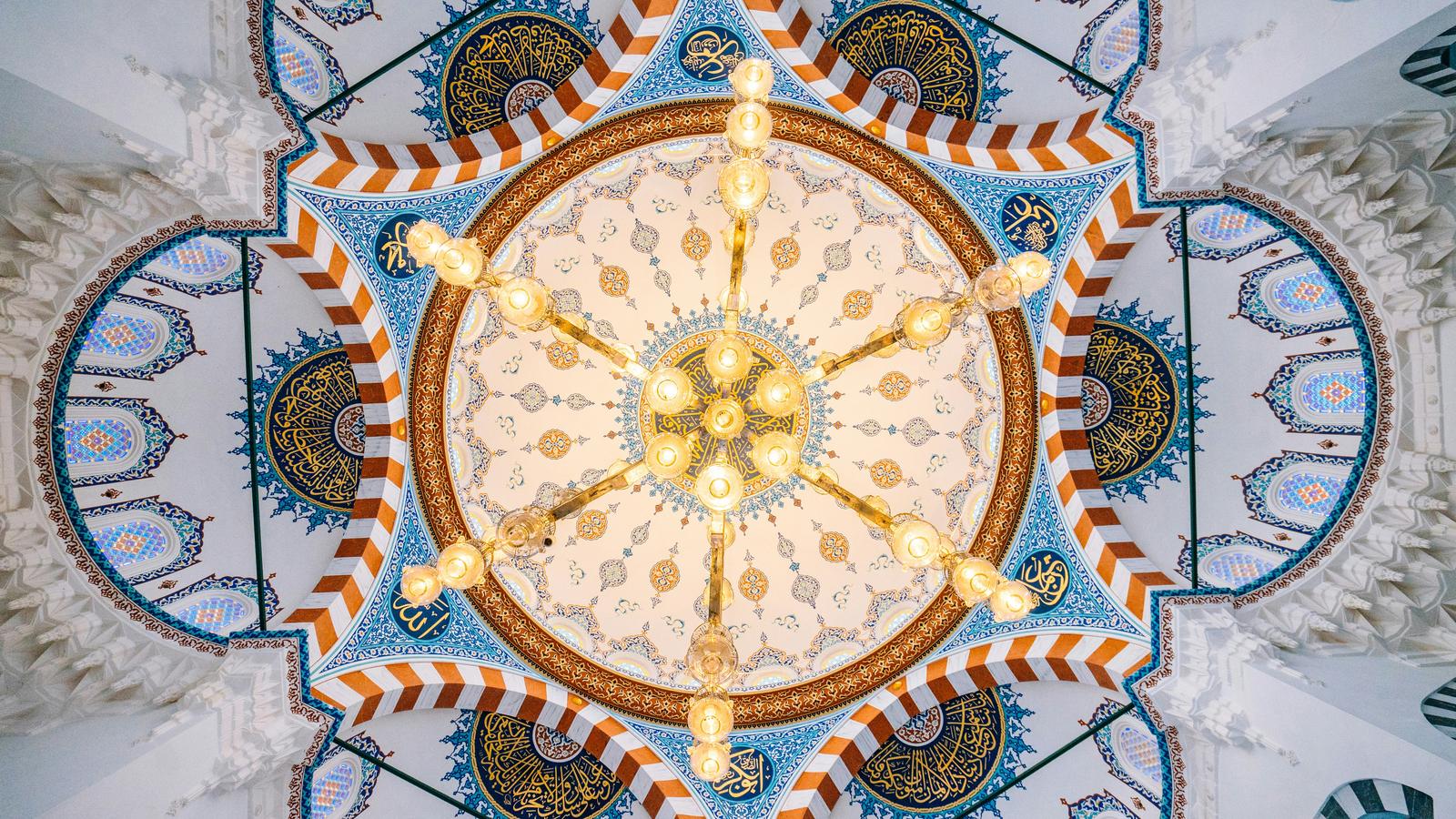
Japan's three main international airports all list prayer rooms on their own websites: six at Narita, six at Haneda in Terminals 2 and 3, and rooms at Kansai International with ablution spaces separated by gender. In the cities, Tokyo Camii in Shibuya opens to visitors daily from 10:00 to 18:00, Tokyo Station has a small prayer room with ablution water open 10:00 to 17:00, and Kyoto's mosque near the Imperial Palace opens Tuesday to Saturday, 12:00 to 18:00. Turkey's Presidency of Religious Affairs, which runs Tokyo Camii, gives Monday, February 8, 2027 as the first day of Ramadan and Tuesday, March 9, 2027 as the first day of Eid al-Fitr.
This guide covers where to pray at airports, stations and shopping centres, the main mosques in Tokyo, Kyoto and Kobe and their rules for visitors, finding the qibla and places for wudu, what Ramadan 2027 looks like in Japan, the resources the Japan National Tourism Organization (JNTO) publishes for Muslim travellers, and what you can ask a hotel to prepare. We read every rule and price on the official pages on October 28, 2026, and the sources are listed at the end. For food, our guide to halal fine dining in Japan covers halal wagyu, halal kaiseki and the questions we put to a kitchen.
Key points
- Narita lists six prayer rooms across its three terminals, before and after security. Haneda lists six in Terminals 2 and 3 with facilities for washing before prayer, and none in Terminal 1. Kansai separates its prayer rooms and ablution spaces by gender.
- Tokyo Camii welcomes visitors daily from 10:00 to 18:00, and from 14:00 on Fridays. Women cover their hair in the prayer hall, and both men and women dress modestly.
- Kyoto's tourism site gives the qibla from the city as 69 degrees anticlockwise from true north, roughly west-northwest.
- Ramadan 2027 begins on Monday, February 8 by the Diyanet calendar, with Eid al-Fitr on Tuesday, March 9. In Tokyo, sunset on February 8 is at 17:15, according to the National Astronomical Observatory of Japan.
- JNTO publishes a bilingual Muslim Services Inquiry Sheet that hotel and restaurant staff can answer Yes or No, covering prayer mats, qibla compasses, prayer space and food.
LET US PLAN YOUR DAYS AROUND PRAYER →
PRAYER ROOMS AT THE AIRPORTS
JNTO notes that most major airports, tourist areas and Muslim-friendly hotels increasingly offer places to pray. The three airports most visitors use publish their rooms on their own pages, and the detail they give varies.
| Airport | Locations as listed | What the operator says |
|---|---|---|
| Narita | Terminal 1 Central Building 2F after security (international) and 3F before security. Terminal 2 Main Building 1F after security (international) and 1F before security. Terminal 3 Main Building 2F before security and 3F after security (international). | Six rooms, open to anyone for prayer, devotion or meditation. Hours and equipment are not stated. |
| Haneda | Terminal 2 international area, 3F before security, two rooms, and 2F after security, two rooms. Terminal 3, 3F before security, two rooms. No prayer room in Terminal 1. | The rooms have facilities for washing before worship. Hours are not stated. |
| Kansai International | Terminal 1, 3F, and the international gate area in the Main Building and the North Wing. | Prayer rooms and ablution spaces are separated by gender and are free for all visitors. |
At Haneda, Terminal 1 has no prayer room on the operator's list, so a domestic connection there needs planning. At Narita, every terminal has a room on both sides of security.
STATIONS AND SHOPPING CENTRES
Tokyo Station. JR East lists a prayer room inside its Travel Service Center, which is on your left as you leave the Marunouchi North Exit ticket gate on the first floor. The prayer room is available from 10:00 to 17:00. JNTO's guide adds that the room has water for ablution, and that you call staff on the intercom to have the door opened.
Osaka Station. Osaka Station City's own information sheet, which is undated, describes separate prayer rooms for men and women, each with a place for wudu, in South Gate Plaza on the first floor of the South Gate Building. Hours are 10:00 to 18:00, with last entry at 17:30, and you go first to the 3F information desk, where an attendant takes you to the rooms. Because the sheet carries no date, we confirm it with the desk before a visit.
Tokyo shopping centres. JNTO's Muslim guide lists a prayer room on the fifth floor of Shibuya PARCO, divided into areas for men and women with room for four to five people in each and water for ablution. It also lists prayer spaces at Tokyo Midtown in Akasaka and on the fourth floor of Tower Plaza at Mori JP Tower in Azabudai Hills.
Department stores. Several Tokyo and Osaka department stores have been reported to offer prayer rooms, but we could not find the rooms described on the stores' own websites on October 28, 2026, so we do not list them here. When a day includes shopping, we ask the store directly beforehand.
Kyoto sights. The Kyoto City tourism site lists places that offer space for prayer free of charge. Nijo-jo Castle has a place for prayer; ask at the Castle Estate office, and an admission ticket is needed. The Kyoto International Community House in Sakyo has a small room for up to five people, open 9:00 to 21:00 and closed on Mondays.
MOSQUES IN TOKYO KYOTO AND KOBE
Tokyo Camii, Shibuya
Tokyo Camii and Diyanet Turkish Culture Center is the mosque most visitors to Tokyo will see, five minutes on foot from Yoyogi-Uehara station on the Odakyu and Chiyoda lines. JNTO gives its praying space as 500 people or more, with water for ablution. The mosque's visitor page sets out its rules:
- Hours. Open daily 10:00 to 18:00. On Fridays, general visits start at 14:00, after the congregational prayer; the Friday adhan is at 12:30 and the prayer at 13:00.
- Dress. Modest clothing for men and women. Women wear an ankle-length skirt or loose trousers and a long-sleeved, high-necked top, and a headscarf is required in the prayer hall. Men do not wear shorts.
- In the prayer hall. Shoes go on the shelves, voices stay low, and visitors sit at the back. The upper floor is for women only. Personal phone photos are allowed, but not of other visitors and worshippers, and not during prayer.
- Tours. A Japanese-language guided tour runs on Saturdays, Sundays and public holidays from 14:30, for about 45 to 60 minutes, with no reservation. The mosque does not allow outside guides to lead tours inside, and groups of five or more outside those times apply in advance.
JNTO's Tokyo guide also lists Masjid Darul Arqam in Asakusa and Masjid As-Salaam near Okachimachi, both with water for ablution.
Kyoto Mosque
The Kyoto Muslim Association runs the Kyoto Mosque and Islamic Cultural Center, near the Imperial Palace, where it holds the five daily prayers, Jumu'ah and the Eid prayers. The mosque and office open Tuesday to Saturday, 12:00 to 18:00, and close on Sundays. Friday prayers are held at 12:30, 13:00 and 13:30, for men only. To pray there outside opening hours, the association asks you to arrange it with the office in advance.
Kobe Muslim Mosque
Kobe's official tourism site records that the Kobe Muslim Mosque was built in 1935 with donations from Turkish, Tatar and Indian merchants living in the city, and the mosque's own site calls itself the oldest mosque in Japan. It stands at 2-25-14 Nakayamate-dori in Chuo-ku. Kobe's tourism site also lists Hyogo Masjid, about 15 minutes on foot from Sannomiya, as open 24 hours. Its visiting hours were not on the pages we could read, so we ask before a visit.
QIBLA AND WUDU
The direction. The Kyoto Muslim Association's message on the city tourism site gives the qibla from Kyoto as 69 degrees anticlockwise from true north, which is west-northwest. The association suggests a Japanese-made qibla compass, set with north at No. 8, kept away from electronic devices; hotels on Kyoto's Muslim-friendly list lend one. JNTO's guide links Google's Qibla Finder, which works from your phone's location.
Where you can make wudu. JNTO notes that some prayer rooms have wudu facilities, prayer mats and a qibla marking. From the official pages we read:
- With ablution facilities stated: Haneda's prayer rooms, Kansai International (separate for men and women), Osaka Station City (one wudu place in each room), Tokyo Station, Shibuya PARCO, Tokyo Camii and the two mosques in Taito-ku listed by JNTO.
- Not stated: Narita's rooms, the Kyoto Mosque page, and most of Kyoto's free prayer spaces. Two kimono rental shops on Kyoto's list say you can use the sink in the room.
Tokyo Camii publishes monthly prayer timetables for Tokyo as PDFs.
RAMADAN 2027 IN JAPAN
Turkey's Presidency of Religious Affairs (Diyanet) publishes a calendar of religious days for 2027. It lists the start of Ramadan 1448 on Monday, February 8, 2027, Laylat al-Qadr on the night of Friday, March 5, and the first day of Eid al-Fitr on Tuesday, March 9. Tokyo Camii is run by the Diyanet foundation, so its programme follows this calendar. Communities that rely on local moon sighting may begin a day later; if your own mosque at home follows a different authority, use its dates.
Day length. February is winter in Japan, so fasting days are short. The National Astronomical Observatory of Japan gives Tokyo's sunset as 17:15 on February 8, 2027 and 17:42 on March 8, with sunrise at 6:36 and 6:02 on the same days. Fajr is earlier than sunrise; the mosque's monthly timetable gives the exact time.
Iftar at Tokyo Camii. For Ramadan 2026, the mosque held an iftar every evening, timed to sunset, from February 19. Muslims who were fasting did not need a reservation; non-Muslims could join once per Ramadan with a reservation from the calendar on its site, since seats were limited. Tarawih prayers were held every night of the month. The 2027 programme had not been announced when we checked, so we will confirm it in January.
What changes for a trip. With sunset before 18:00, iftar falls close to the usual start of dinner service, so we set each restaurant booking against that day's sunset. Suhoor needs more planning, since it comes before most hotel breakfasts open. We ask the hotel in advance whether in-room dining or a meal for before dawn can be prepared, and we keep long transfers and walking tours out of the late afternoon.
JNTO'S RESOURCES FOR MUSLIM TRAVELLERS
JNTO publishes the JAPAN Welcome Guide for Muslim Travelers, an English section of its site with pages on salat, travel ideas and links to regional guides from Hokkaido to Okinawa. Three parts are worth saving before you travel.
- Salat Information. Links to each major airport's prayer room page, Google's Qibla Finder, IslamicFinder prayer times for Japan and the Japan Masjid Finder.
- Muslim Services Inquiry Sheet. A Japanese and English sheet you show to staff, who mark Yes or No. For hotels it asks about alcohol-free rooms, prayer space, the loan of a Quran, prayer mats, qibla compass and women's prayer clothing, and directions to a nearby mosque. For restaurants it asks about pork, alcohol and mirin, soy sauce, separate storage and utensils, and disposable tableware.
- Food guidance. JNTO states that there is no central agency for halal accreditation in Japan, and that food in restaurants that call themselves halal-friendly may not be prepared in a separate kitchen.
WHAT TO ASK A HOTEL TO PREPARE
JNTO notes that more hotels in Japan now offer facilities for Muslim guests, mostly in the major cities, and that some provide prayer mats and a qibla-facing space in the room. Much of this is prepared only when the hotel knows in advance. These are the requests we make, and we pass on the hotel's written answer before anything is confirmed.
- A prayer mat and a qibla compass in the room. Hotel Chinzanso Tokyo, for example, states that it places prayer mats and qibla compasses in the room before arrival, at no charge and in any number, when requested at booking. Kyoto City's list names hotels, among them Hotel Granvia Kyoto, Hyatt Regency Kyoto and Hotel Okura Kyoto, that provide a qibla compass, prayer mats and a map to the Kyoto Mosque.
- The qibla direction marked. Risshisha's townhouse inns in Kyoto, for example, mark it on the ceiling of the prayer space at one property and lend compasses at the others.
- The minibar. Ask for alcohol to be removed from the minibar; JNTO's inquiry sheet lists alcohol-free rooms as a question to put to hotels.
- Halal room service. Ask whether in-room dining can be prepared with halal ingredients, and how. Chinzanso says its restaurants and in-room dining can be adapted on request, while stating that its restaurants are not halal-certified and share a kitchen and utensils. Kyoto's list marks only Hotel Granvia Kyoto as serving halal menus. We ask each hotel which ingredients are certified and by whom, so you can decide what fits your practice.
- Suhoor in Ramadan. Ask whether a meal can be delivered before dawn.
For a ryokan, where dinner is part of the stay, we write to the inn first, since most kaiseki is built on dashi, mirin and soy sauce. How we choose an inn is in how to choose a ryokan.
HOW WE PLAN THE DAYS AROUND PRAYER
When you tell us how you pray and eat, we build each day around it. We set the five prayer times against the itinerary, place sights near a prayer room or mosque at Dhuhr and Asr, and leave the gaps in the schedule. Friday is planned around Jumu'ah at Tokyo Camii or the Kyoto Mosque. We arrange guides, restaurants and hotels in your name, and we write to each in Japanese beforehand with the requests above. Getting around between these places is covered in how luxury travellers move around Japan.
SOURCES AND HOW WE CHECKED
We read each page below on October 28, 2026. We did not contact the mosques, stations or hotels. Hours and facilities change, and Ramadan dates depend on the authority your community follows, so we confirm each place again before you travel.
- Narita International Airport, prayer rooms: six locations by terminal and security area
- Haneda Airport, prayer rooms: rooms in Terminals 2 and 3, washing facilities, none in Terminal 1
- Kansai International Airport, prayer room: locations, rooms and ablution spaces separated by gender
- JR East, Travel Service Center Tokyo Station: location and prayer room hours
- Osaka Station City, prayer rooms information sheet: location, hours, wudu places, how to use
- JNTO, Muslim travellers: places to pray, no central halal accreditation, separate kitchens
- JNTO, Salat Information: wudu and qibla note, Qibla Finder, prayer times, airport links
- JNTO, Muslim Services Inquiry Sheet: hotel, restaurant and shop questions
- JNTO, Tokyo sightseeing spots with prayer facilities: Shibuya PARCO, Tokyo Midtown, Azabudai Hills, Asakusa and Okachimachi mosques, Tokyo Camii capacity
- JNTO, Ginza and Nihonbashi half-day plan: Tokyo Station prayer room intercom and ablution water
- Tokyo Camii, visit, access and home page: hours, dress, rules, tours, Friday prayer
- Tokyo Camii, Ramadan 2026 and prayer times: iftar arrangements, tarawih, monthly timetables
- Diyanet, 2027 religious days: Ramadan start, Laylat al-Qadr, Eid al-Fitr
- National Astronomical Observatory of Japan, Tokyo sunrise and sunset, February 2027 and March 2027: sunset and sunrise times
- Kyoto City tourism, Muslim travellers, free prayer spaces and accommodations: Kyoto Mosque, qibla, prayer spaces, hotels
- Feel Kobe, prayer spots and Kobe Muslim Mosque: history, address, Hyogo Masjid
- Hotel Chinzanso Tokyo, Muslim friendly: prayer mats, qibla compasses, dining
- Risshisha, halal: prayer clothes, mats, qibla marker
QUESTIONS GUESTS ASK
Are there prayer rooms at Japanese airports?
Yes. Narita lists six prayer rooms across its three terminals, before and after security. Haneda lists six in Terminals 2 and 3 with facilities for washing before prayer, and none in Terminal 1. Kansai International has rooms in Terminal 1 with prayer and ablution spaces separated by gender.
When is Ramadan 2027?
The Diyanet calendar for 2027, which Tokyo Camii follows, gives Monday, February 8, 2027 as the first day of Ramadan and Tuesday, March 9 as the first day of Eid al-Fitr. Communities that follow local moon sighting may start a day later.
Can non-Muslims visit Tokyo Camii?
Yes. The mosque welcomes visitors daily from 10:00 to 18:00, and from 14:00 on Fridays. Dress modestly; women cover their hair in the prayer hall. A guided tour in Japanese runs on weekends and public holidays from 14:30.
Which way is the qibla in Japan?
The Kyoto Muslim Association gives the qibla from Kyoto as 69 degrees anticlockwise from true north, which is west-northwest. Google's Qibla Finder, linked by JNTO, gives the direction from your exact location.
Will a hotel in Japan provide a prayer mat?
Many will if asked in advance. Hotel Chinzanso Tokyo states that it places prayer mats and qibla compasses in the room at no charge when requested at booking, and Kyoto City lists hotels that lend a qibla compass and prayer mats. Ask at booking, and confirm the answer in writing.
LET US PLAN YOUR DAYS AROUND PRAYER
Send us your dates, the cities on your route, and how you pray and eat. We will come back with an itinerary that places each prayer time near a prayer room or mosque, the hotels we suggest and what each has confirmed it can prepare, and we arrange the stay in your name.
Begin planning →We reply within 24 hours, in writing