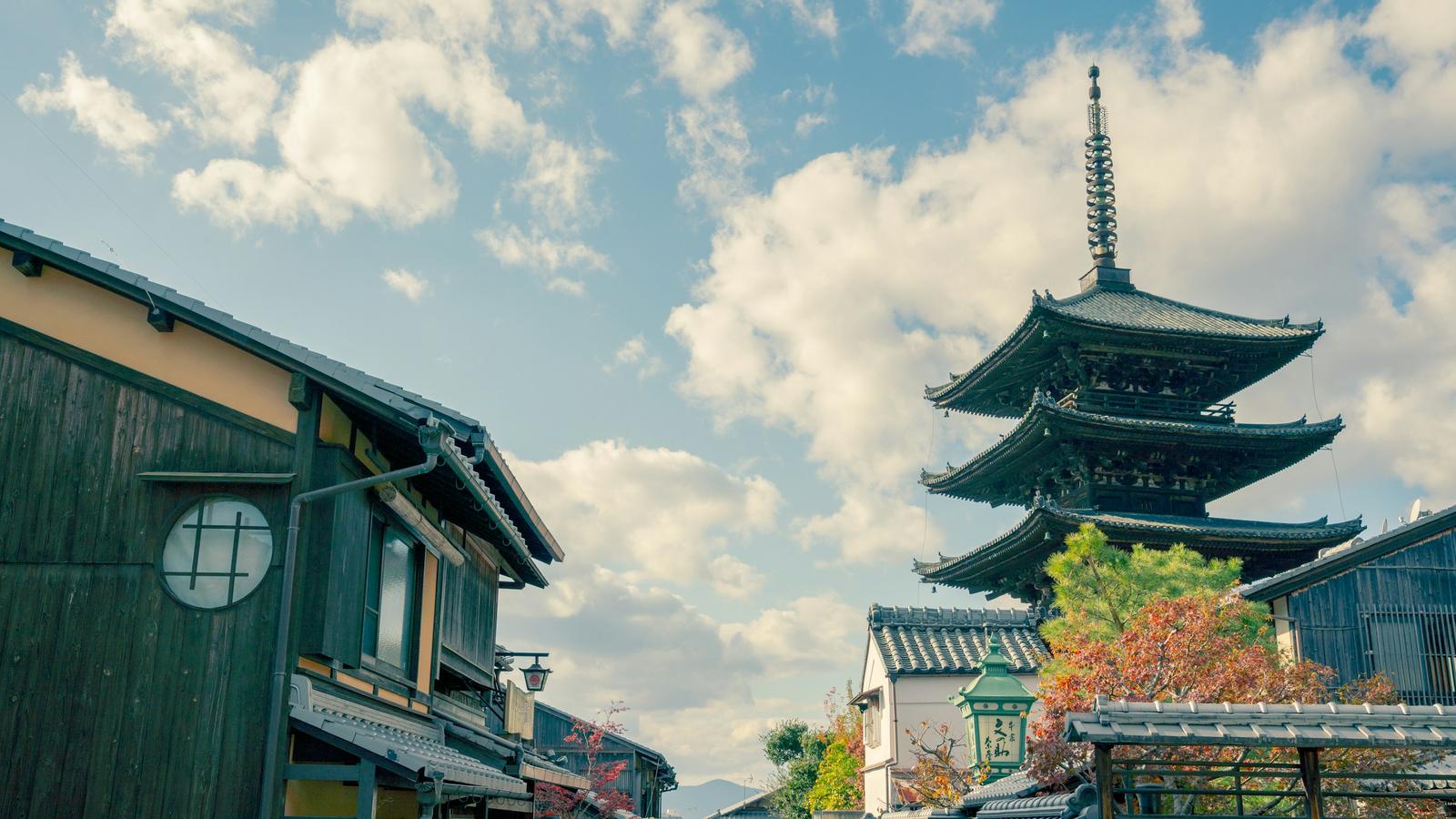
Park Hyatt Kyoto stands a few steps from the stone slope of Ninenzaka, on the old approach to Kiyomizu-dera, and it shares its hillside with Sanso Kyoyamato, a ryotei that has served kaiseki on this land since 1877. The hotel is low and small, 70 rooms spread down the slope, and from the rooms on the pagoda side the five-storey Yasaka Pagoda rises over the tiled roofs of Higashiyama.
This article explains which rooms see the pagoda, what the restaurants and the small spa offer, how the hotel works for children and older travellers, and who would be happier elsewhere. It belongs to our series on the best luxury hotels in Japan for 2027; for the city as a whole, see our guide to Kyoto's luxury hotels. We read the hotel's own pages, room descriptions and FAQ, Hyatt's opening release, the MICHELIN Guide and Japanese press in November 2026, and contacted none of them; the sources are listed at the end.
Key points
- 70 rooms, including 9 suites, opened on October 30, 2019 on land leased from Sanso Kyoyamato, a ryotei founded in 1877.
- The Yasaka Pagoda view comes with four room categories and one suite. The hotel says it cannot accept requests for a specific room, so the category has to carry the view.
- Sanso Kyoyamato, next door, holds Two MICHELIN Stars. The MICHELIN Guide gives the hotel One Key.
- There is no pool and no onsen. The spa is one treatment suite for hotel guests, with a bath house of saunas and hot and cold baths beside the gym.
- Children under 10 are not admitted to Yasaka, the signature restaurant, and guests under 20 are not admitted to the Kohaku bar.
- The World's 50 Best Hotels 2026 list places it at No. 37.
ASK US ABOUT A STAY IN HIGASHIYAMA →
WHERE IT IS AND WHAT THAT GIVES YOU
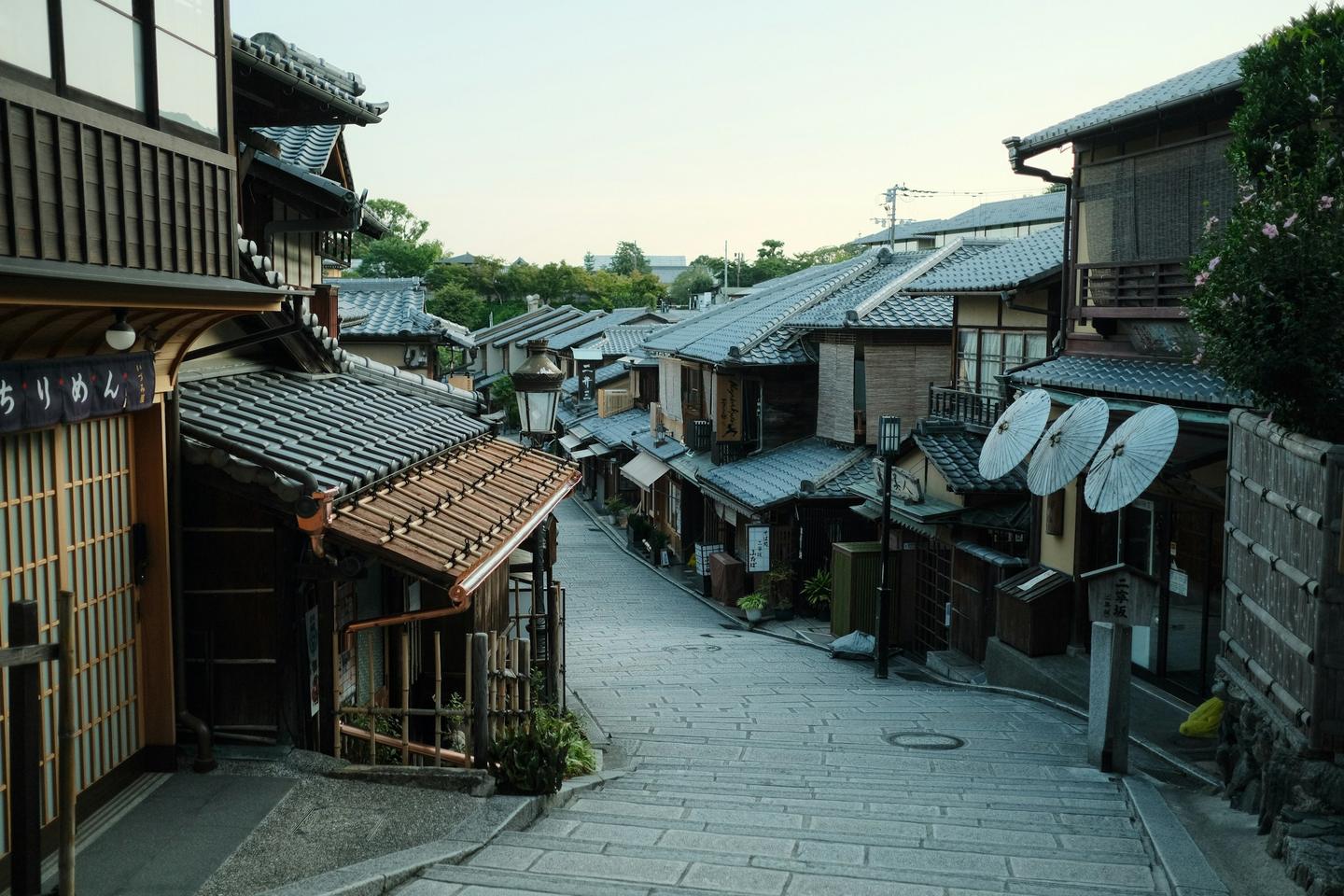
The address is Kodaiji Masuyacho in Higashiyama. Hyatt puts Ninenzaka and Ichinenzaka 0.04 miles from the hotel and says Kiyomizu-dera is about 550 metres away, roughly 10 minutes on foot. Kyoto Station is 3 kilometres off. The hotel calls its setting Kyoto's largest preserved district of traditional buildings, and what that gives a guest is time: the temples of Higashiyama are a walk from the door, early in the morning and late in the evening, when the day visitors have gone.
Hyatt opened the hotel on October 30, 2019, as the second Park Hyatt in Japan after Tokyo. Takenaka Corporation built it on land it leases from Sanso Kyoyamato, and Hyatt's release names the ryotei, a family business now in its seventh generation, among the owners. The interiors, by Tony Chi and Associates with Takenaka, are in fragrant tamo wood with work by local artists. The MICHELIN Guide describes low, interconnected buildings spread out like a hillside village. The grounds include Kyoyamato's own gardens and teahouses, among them Soyotei, which dates from the Edo period.
WHICH ROOM TO ASK FOR
The standard rooms are all 45 square metres and differ by what lies outside: Hill View, Garden View, Garden Terrace, which has its own small tsuboniwa garden, and Pagoda View, which looks over the pagoda and the city towards the sunset. Deluxe rooms are 68 square metres, again with or without the pagoda. The suites are the Park Suite (68 square metres), Ninenzaka House (68, facing the slope and its tiled roofs), Higashiyama House (90) and Pagoda House (135), the signature suite at the top of the property, with a bedroom, a living room and a kitchen.
Two lines in the hotel's FAQ matter more than any photograph. Views vary by room even within one category, and the hotel does not accept requests for a specific room. If the pagoda is the reason for coming, the category has to carry the view: Pagoda View King or Twin, Deluxe Pagoda View King or Twin, or Pagoda House. For a first stay of two or three nights we would ask for a Deluxe Pagoda View, which adds 23 square metres to the same outlook, room for an afternoon on the daybed. For guests who will spend more time in the room than out of it, a Garden Terrace room is the quieter choice, with its own square of moss and stone. Guests in any of the nine suites, and World of Hyatt Globalist members, are invited to Champagne in The Living Room from 5 to 6 pm each day. Rates change by date, so we have left them out.
WHEN TO GO
Late November is when this slope is at its most beautiful and its most crowded. Kiyomizu-dera opens at night for its autumn special viewing, in 2026 from November 21 to 30, 5:30 to 9:00 pm, with the main hall and its stage lit among the maples. A guest staying here can walk up after dinner and be back in ten minutes, which is the strongest argument for this address. In the same season Yasaka, normally open only for dinner, serves a Sunday lunch so that guests can see the streetscape by daylight; in 2026 it ran on six Sundays between October 25 and November 29.
Spring brings the cherry blossom and the same crush on the lanes by day. Summer in the Kyoto basin is hot and humid, and the bath house and an early walk become the pleasures. In our view winter is the calmest time on Ninenzaka, when the fireplaces in The Living Room come into their own. For guests who dislike crowds, we usually suggest January or February, or the first days of December once the leaves have fallen.
THE TABLES WORTH STAYING IN FOR
For many guests the reason to stay here is next door. Sanso Kyoyamato holds Two MICHELIN Stars; the guide raised it to two in its 2025 Kyoto and Osaka selection, naming Mitsuo Nakajima as chef, and gave its seventh-generation proprietress, Junko Sakaguchi, the guide's Service Award that year. It is a separate ryotei at 359 Masuyacho, set in buildings that Kyoto City designates as cultural assets, and it prepares the hotel's Japanese breakfast. Breakfast is not included in the room rate; the hotel sells packages with it. Dinner at Kyoyamato is the first thing we would arrange once dates are fixed, and for a first kaiseki our guide to kaiseki, course by course is worth reading before you sit down.
Inside the hotel, Yasaka on the fourth floor is the signature restaurant: teppanyaki with French technique, under chef Kentaro Koyama, behind floor-to-ceiling windows that frame the pagoda. The 2026 autumn dinner is seven courses at ¥33,000 including tax, with a 15% service charge added (as of November 15, 2026). Kohaku, beside it, is the bar, built around Japanese whisky, sake and gin, with the same view. The fourth-floor terrace is open only to hotel guests and to guests of Yasaka and Kohaku. KYOTO BISTRO on the ground floor is the relaxed room, open from 11:30 am to 8 pm, with three private dining rooms. In-room dining runs 24 hours, with a Japanese breakfast from Kyoyamato among the options.
SPA, POOL AND THE QUIET HOURS
There is no pool and no onsen, and the hotel says so plainly in its FAQ. The Spa at Park Hyatt Kyoto, on the third floor, is a single private treatment suite with a relaxation lounge, open from 10 am to 5:30 pm and reserved for hotel guests. Hyatt's opening release describes the suite as made for two, with Japanese-style tubs and dry and mist saunas. Beside the fitness centre, which is open 24 hours, The Bath House is open from 7 am to 10 pm, with a dry sauna, a steam room and hot and cold vitality baths.
So the quiet hours here are the early morning and the late evening. The bath house before breakfast, the lanes before the shops open, a nightcap at Kohaku after the visitors have gone: we would plan a stay around that rhythm. For hotels with larger spas, see our guide to hotel spas in Tokyo and Kyoto.
FAMILIES AND SEVERAL GENERATIONS
Connecting rooms are available on request to the hotel, and there are no family suites. Extra beds are limited in number, so the hotel asks for them to be requested in advance; the standard rooms are described as suitable for up to two adults, with a baby cot on request. Children have high chairs, children's menus and their own cutlery at KYOTO BISTRO and The Living Room, and the hotel runs a Little Chef Experience for them. The rules on the fourth floor are firm: no children under 10 at Yasaka, and no one under 20 at Kohaku.
For grandparents, the setting works both ways. The temples are close, but the way to them is on slopes and stone steps. The hotel has accessible rooms, wheelchairs on loan and arrival and departure transfers. For a family of four or more, we would plan two connecting rooms and early dinners at the bistro, keeping Yasaka for the adults on another evening. More on setting a pace for three generations is in our guide to travelling with three generations.
WHAT IT IS NOT FOR
It is a poor fit for a guest whose ideal afternoon includes a swim. With no pool here, the better choices are Four Seasons Hotel Kyoto, which has a 20-metre indoor pool, or HOTEL THE MITSUI KYOTO, which draws natural hot spring water from beneath its own site. It also suits less well a traveller who wants a large hotel's range of facilities: there is one spa suite, one signature restaurant and one bar.
Anyone who dislikes crowds should know that the hotel's door opens onto one of the most walked routes in Kyoto, busy from mid-morning until the shops close. And for guests who find slopes and steps tiring, much of the charm of the location is on foot; we would plan most of their outings by car.
HOW IT FITS A JOURNEY
Park Hyatt Kyoto works best as the Higashiyama chapter of a Kyoto stay of three nights or more, for guests who want to walk to the temples at the edges of the day. It pairs well with a hotel in the centre of the city for the second half of a week, such as HOTEL THE MITSUI KYOTO beside Nijo-jo Castle. Hyatt also offers a joint programme across Park Hyatt Tokyo, Park Hyatt Kyoto and Park Hyatt Niseko Hanazono, for guests who like one brand throughout a longer journey.
The hotel's concierge runs its own programmes, among them a visit to Kiyomizu-dera that includes a sermon by the head priest. STAYGO can arrange dinners at Sanso Kyoyamato and other Kyoto restaurants, private cars and guides, and set the days around the hours when the lanes are quiet. All of it depends on availability on your dates.
SOURCES AND HOW WE CHECKED
We read these pages on November 15, 2026, and contacted none of these organisations. Hotel facts come from the hotel's own pages, checked against Hyatt's opening release, the MICHELIN Guide and press.
- Park Hyatt Kyoto, official site: 70 rooms including nine suites; Champagne in The Living Room 5 to 6 pm for suite guests and Globalist members; Kiyomizu-dera tour with a sermon by the head priest; joint programme with Park Hyatt Tokyo and Park Hyatt Niseko Hanazono; distance to Ninenzaka
- Park Hyatt Kyoto, rooms and suites: room categories and sizes of 45, 68, 90 and 135 square metres; Pagoda House with kitchen; Garden Terrace tsuboniwa; standard rooms for up to two adults; cot on request
- Park Hyatt Kyoto, FAQ: no specific room requests; pagoda-view categories; no pool, no onsen; The Bath House; connecting rooms, no family suites; extra beds limited; children's amenities; under-10 and under-20 rules; Kiyomizu-dera 550 metres; fourth-floor terrace access; breakfast not included; 24-hour in-room dining
- Park Hyatt Kyoto, restaurants and bars: KYOTO BISTRO, The Living Room, Yasaka, Kohaku; Kyoyamato since 1877 in buildings designated as cultural assets by Kyoto City; KYOTO BISTRO 11:30 am to 8 pm
- Park Hyatt Kyoto, Yasaka: teppanyaki on the fourth floor; chef Kentaro Koyama; seven-course dinner ¥33,000 including tax, 15% service extra; autumn Sunday lunches October 25 to November 29, 2026; no children under ten
- The Spa at Park Hyatt Kyoto, official: private treatment suite with relaxation lounge on the third floor; spa 10 am to 5:30 pm; fitness 24 hours; Bath House 7 am to 10 pm; for hotel guests only
- Park Hyatt Kyoto, hotel information: Kyoto Station 3 kilometres; Itami 50 kilometres; Kansai 100 kilometres; valet parking
- Hospitality Net, Hyatt's opening release (October 30, 2019): 70 rooms including nine suites; Takenaka Corporation and Tony Chi and Associates; Kyoyamato as a seven-generation family business and an owner; Soyotei teahouse; spa suite for two with Japanese-style tubs and saunas
- Travel Voice (Japanese, November 2, 2016): Takenaka Corporation to own the hotel on land leased from Sanso Kyoyamato; about 70 rooms
- MICHELIN Guide, Park Hyatt Kyoto: 70 rooms; low interconnected buildings spread out like a hillside village
- MICHELIN Guide, all the Key hotels in Japan 2026 (September 18, 2026): Park Hyatt Kyoto listed among the One Key hotels
- MICHELIN Guide, Sanso Kyoyamato: Two Stars; 359 Masuyacho, Higashiyama-ku
- MICHELIN Guide Kyoto Osaka 2025 (March 26, 2025): Sanso Kyoyamato newly awarded Two Stars; chef Mitsuo Nakajima; Service Award to proprietress Junko Sakaguchi
- Kiyomizu-dera, official site: autumn night special viewing November 21 to 30, 2026, 5:30 to 9:00 pm
- Four Seasons Hotel Kyoto, press facts: 20-metre indoor pool
- The World's 50 Best Hotels 2026, official list: The World's 50 Best Hotels 2026 list places it at No. 37.
QUESTIONS TRAVELLERS ASK
Which rooms at Park Hyatt Kyoto look at the Yasaka Pagoda?
The hotel lists Pagoda View King and Twin (45 square metres), Deluxe Pagoda View King and Twin (68 square metres) and the Pagoda House suite (135 square metres). It does not accept requests for a specific room, so the category that names the pagoda is the one to ask for.
Does Park Hyatt Kyoto have a pool or an onsen?
Neither. It has a single spa treatment suite for hotel guests, a 24-hour gym and The Bath House, with a dry sauna, a steam room and hot and cold baths, open from 7 am to 10 pm.
Is Sanso Kyoyamato part of the hotel?
It is a separate ryotei, founded in 1877, on the same hillside, and it is among the hotel's owners. It holds Two MICHELIN Stars and prepares the hotel's Japanese breakfast.
Can children eat at Yasaka?
Not under the age of ten, and no one under 20 is admitted to the Kohaku bar. Children are welcome at KYOTO BISTRO and The Living Room, which have children's menus.
How far is Kiyomizu-dera from the hotel?
About 550 metres, roughly 10 minutes on foot along the old approach through Ninenzaka, according to the hotel.
ASK US ABOUT A STAY IN HIGASHIYAMA
Tell us your dates, who is travelling and whether the pagoda view matters. We will suggest the room category and the evenings, with the reasons, and arrange the tables and cars around them.
Begin planningWe reply within 24 hours, in writing
Some of the restaurants and bars we arrange seat guests only by introduction or membership. We ask on your behalf; the table and the evening are the house's decision. We do not publish their names.