Under the lobby ceiling of The Okura Tokyo hang the Okura Lanterns, each a column of five lanterns made of pentagonal panels, modelled on the faceted crystal beads of Japan's Kofun period. Around them, low lacquer tables with five chairs each are set out so that, seen from the mezzanine above, every group reads as a plum blossom. The factbook says the 1962 lobby was surveyed piece by piece before the old building closed in August 2015; the new hotel opened on September 12, 2019, with the lobby on the fifth floor of the 41-storey Prestige Tower.
That detail matters when you choose a room, because The Okura Tokyo is two hotels under one name: the tall Prestige Tower with the recreated lobby, and the 17-storey Heritage Wing beside the garden. This article is about which one to ask for, and why. We read the hotel's own pages, its factbook, the MICHELIN Guide and Forbes Travel Guide pages, and Japanese and international press in November 2026, and contacted none of them; the sources are listed at the end. For the wider picture, see The Best Luxury Hotels in Japan 2027 and our guide to Tokyo's luxury hotels.
Key points
- 508 rooms in two buildings: 368 in the 41-storey Prestige Tower, 140 in the 17-storey Heritage Wing.
- The 1962 lobby by Yoshiro Taniguchi was recreated in the Prestige Tower by his son, the architect Yoshio Taniguchi, with its lanterns, plum blossom tables and world clock restored or remade.
- Heritage rooms start at 60 to 63 sq m and look over the garden; Prestige rooms are 48 sq m and begin on the 28th floor.
- The 25-metre indoor pool on the 27th floor is free for staying guests and open to children aged 13 and above.
- The Okura Museum of Art, founded in 1917, stands on the same square, and entry is free for hotel guests.
- The MICHELIN Guide gives it One Key in its 2026 Japan selection. The World's 50 Best Hotels 2026 places it at No. 69, on its extended 51–100 list.
ASK US WHICH SIDE OF THE OKURA SUITS YOU →
WHERE IT IS AND WHAT THAT GIVES YOU
The hotel stands on the hill at 2-10-4 Toranomon, on the land of the old Hotel Okura, next to the United States Embassy, between the stations of Toranomon Hills, Kamiyacho and Roppongi-itchome. The site is steep, framed by three old slopes, and Yoshio Taniguchi placed a square, Okura Square, between the two buildings and the museum, with a 42-metre reflecting pool and a hexagon planted with a willow at its centre. Lines drawn from that hexagon mark the centre of each lobby. To make room for the square, the 1917 museum building was moved 6.5 metres by traditional house-lifting.
The Prestige Tower is the hotel most people picture: the recreated lobby, five restaurants and bars, the pool and the spa, and rooms from the 28th floor up. The Heritage Wing is quieter by design. Its own lobby is treated, in the factbook's words, as a tokonoma, an alcove for seasonal flowers, with a 12.5-metre wisteria chandelier of 2,400 crystals by the Paris-based architect Lina Ghotmeh falling through the stairwell. Forbes Travel Guide rates the two separately for 2026: The Okura Tokyo as Five-Star, and the Heritage Wing as Four-Star, describing it as a lower-rise building focused on a Japanese experience.
WHICH ROOM TO ASK FOR
In the Heritage Wing, the Heritage Room is 60 to 63 sq m on floors 6 to 17, with a window more than six metres wide beside the living area; the factbook gives the frontage as 8 metres. The 18 Heritage Rooms with Balcony, 60 sq m on floors 6 to 9, sit directly above the garden. There are 5 Heritage Suites of 120 sq m on floors 7 to 9 and 15 to 16, an Ambassador Suite of 137 sq m and a Presidential Suite. The factbook says Heritage Wing guests may use the Club Lounge on the 37th floor of the tower, except on some plans, and check-in can be done in the Library.
In the Prestige Tower, the Prestige Room is 48 sq m on floors 28 to 36, with 234 of them; the upper floors begin at 31 by the room page and at 34 by the factbook, so we would ask the hotel which floor a given rate means. The 36 Prestige Corners, 56 sq m, are the rooms from which the hotel says you can pick out the Imperial Palace and the three towers of Azabudai Hills. Floors 37 to 40 are the club floors, 98 rooms in all, and above them the 730 sq m Imperial Suite takes the top two floors.
Our reasoning is simple. For a couple staying four nights or more, or anyone who wants a room that feels like a residence, we would ask for a Heritage Room with Balcony or a Heritage Room with the bath by the window. For a first visit to Tokyo, where the city at night is part of the point, we would ask for a Prestige Corner, which adds 8 sq m and a second outlook to the standard tower room. We did not see room prices on the official site, so we give none here.
WHEN TO GO
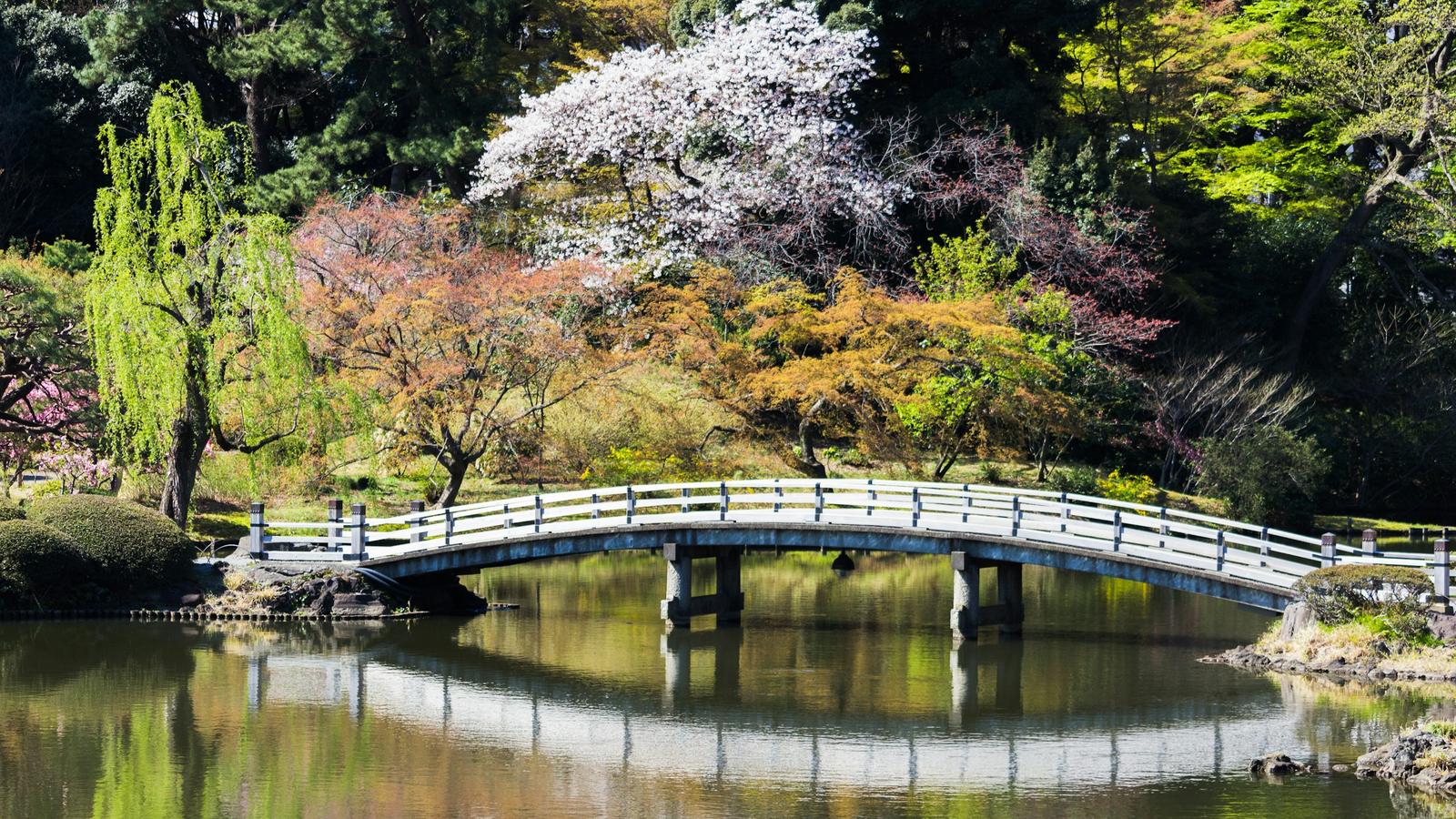
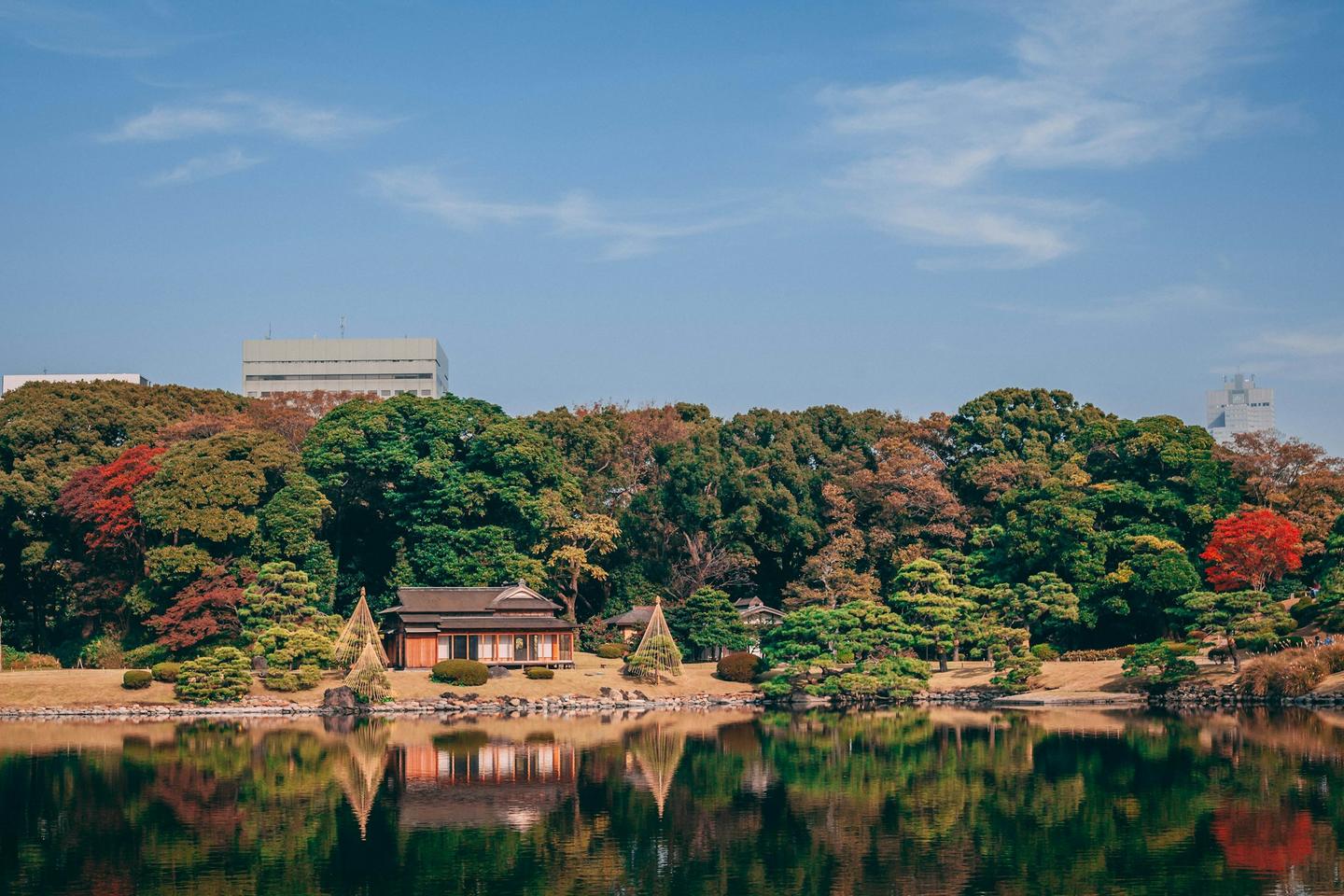
The garden decides much of this. The factbook describes the Okura Garden north of the Heritage Wing, about 1.3 hectares of green with the adjoining Edomizaka Park, laid out over a 19-metre fall in the land. Trees and stones were moved from the old main building, among them the great ginkgo that is the hotel's symbol tree and a camphor tree planted by Admiral Togo Heihachiro. A ginkgo in Tokyo usually turns gold in late November and early December, which makes that a fine time for a garden-side room.
The large flower arrangement in the tower lobby, by the Sekiso school, is redone in the daytime by deliberate choice, so guests can watch it being made. Plan around two dates: the pool, baths and spa close for maintenance from January 12 to 15, 2027, and the museum next door is closed on Mondays and between exhibitions. Its current exhibition, of bijinga paintings, runs until December 20, 2026. The hotel also has a ballroom for up to 2,300 guests and hosts weddings, so the public floors are busier on wedding weekends.
THE TABLES WORTH STAYING IN FOR
Nouvelle Epoque, on the fifth floor of the Heritage Wing, carries on the French cooking the old Okura was known for; the hotel names Masakichi Ono, its Grand Chef from 1969, as the source of its style. Lunch and dinner call for a jacket for men, and diners must be 12 or older. Yamazato, one floor down, is the Japanese restaurant, with separate counters for kappo, sushi and tempura and a tea room, Chosho-an, built by the master carpenter Sotoji Nakamura. Children aged 10 and above are welcome at the sushi and kappo counters.
In the tower, Toh-Ka-Lin on the sixth floor serves Cantonese cooking under Grand Chef Ryusei Chin, and the factbook calls it Japan's first hotel-run Cantonese restaurant. Sazanka on the 41st floor is teppanyaki with the city below. Orchid, on the lobby floor, is the all-day restaurant, with a 46-seat terrace and the hotel's French toast. Orchid Bar has been the main bar since 1962, and Starlight on the 41st floor is the bar with the view; both admit guests aged 20 and over after 17:00. We usually suggest one dinner at Yamazato or Nouvelle Epoque and the other evenings in the city.
SPA, POOL AND THE QUIET HOURS
Okura Fitness and Spa occupies the 26th and 27th floors of the Prestige Tower. On the 27th floor there are the gym, a 25-metre indoor pool of five lanes, a jacuzzi, dry and steam saunas and a relaxation room, open from 6:00 to 22:00 Monday to Saturday and to 21:30 on Sunday. Staying guests use it free of charge. The 26th floor holds 7 private treatment rooms, with facials using a premium line from the French brand ORLANE and body treatments built on Japanese ingredients such as sake lees and rice bran, scented with kyara, the most prized of aloeswoods. Treatments are for guests aged 16 and over.
The quiet hours here are early: the pool opens at 6:00 and the Orchid at 6:30. There is no onsen and no outdoor pool. Guests who want hot spring water would be better served by a night or two in Hakone.
FAMILIES AND SEVERAL GENERATIONS
The tower is the easier building for a family. The Prestige Room and Prestige Corner both have adjoining rooms available, the Spacious Living type of Prestige Room can take an extra bed, and the hotel lends cribs for children under one. In the Heritage Wing the extra bed is offered in the Bath with View type, and bed guards are available in limited numbers. We would plan a three-generation stay around two adjoining Prestige rooms for parents and children, and a Heritage Room for grandparents who prefer the quieter wing.
The age rules are what parents should know before arriving. The fitness club, pool included, admits children aged 13 and above, so younger children cannot swim here. Spa treatments start at 16, Nouvelle Epoque at 12, and the Yamazato counters at 10. The museum is a calm hour for older children and grandparents together, with entry free for hotel guests.
WHAT IT IS NOT FOR
The Okura is a large hotel with banquets, weddings and conferences under the same roof, and the tower lobby is a public room. Guests who want the feeling of a private house with a handful of rooms would be happier at Aman Tokyo, high above Otemachi, or in a smaller hotel. Families with children under 13 who want time in a pool would do better at a hotel whose pool admits younger children, and we check those rules before suggesting one. And Toranomon is a business district of embassies and offices; travellers who want to step out into shops and late streets will find Ginza or Omotesando livelier bases.
HOW IT FITS A JOURNEY
We see The Okura Tokyo as a hotel for guests who care about Japanese design and want a calm base close to the centre. It suits the start of a journey, when jet lag makes a 6:00 swim and a quiet garden welcome, and it suits a return to Tokyo after Kyoto, when the Heritage Wing feels like a long exhale. Paired with the Imperial Hotel Tokyo it gives two of Tokyo's classic hotels; paired with Aman Tokyo, a contrast of scale.
STAYGO arranges the parts around the stay: tables at the hotel's restaurants and across the city, cars and drivers, and guides for the museum or for Tokyo's architecture. We cannot promise availability, rates or upgrades, and we tell you when something is still being arranged.
SOURCES AND HOW WE CHECKED
We read these pages on November 15, 2026, and contacted none of these organisations. We saw no room prices on the official site.
- The Okura Tokyo, official site: address, the two buildings, list of restaurants and bars, 25-metre pool, the museum on the grounds.
- The Okura Tokyo, Prestige rooms: 48 and 56 sq m, floors, 234 and 36 rooms, views of the Imperial Palace and Azabudai Hills, adjoining rooms, extra bed, cribs.
- The Okura Tokyo, Heritage rooms: 60 to 63 sq m, floors 6 to 17, 18 balcony rooms above the gardens, oak walls and andon lanterns, check-in from the Library.
- The Okura Tokyo, Heritage suites and Imperial Suite: 120 sq m Heritage Suites, 137 sq m Ambassador Suite, the 730 sq m Imperial Suite on the top two floors.
- Okura Fitness, official page: 25-metre five-lane indoor pool on the 27th floor, hours, free for staying guests, age 13 and above, closure January 12 to 15, 2027.
- Okura Spa, official page: ORLANE facials, sake lees and rice bran, 7 private rooms, no treatments under 16.
- The Okura Tokyo, dining pages: Nouvelle Epoque (jacket, 12 and above), Yamazato (counters, tea room by Sotoji Nakamura), Toh-Ka-Lin (Grand Chef Ryusei Chin), Orchid terrace, Orchid Bar and Starlight (20 and above after 17:00).
- The Okura Tokyo, history: opening in 1962, Yoshiro Taniguchi, Masakichi Ono as Grand Chef from 1969, the museum founded in 1917.
- The Okura Tokyo factbook (Japanese, updated September 2025): opening on September 12, 2019, closure of the old building in August 2015, 140 and 368 rooms, Okura Square, the lobby pieces, the garden, the spa floors, the museum.
- The Okura Museum of Art, hotel page and Okura Museum of Art, official site: three National Treasures, hours, free entry for hotel guests, the current exhibition to December 20.
- Forbes Travel Guide, The Okura Tokyo and The Okura Heritage Wing: 2026 Five-Star and Four-Star, 140 Heritage Wing rooms, Baron's Bar.
- MICHELIN Guide, The Okura Tokyo: 508 rooms, public spaces by Yoshio Taniguchi recreating the lobby.
- Hospitality Net, opening release (September 2019): closure in August 2015, the recreated lobby pieces, 1.3 hectares of gardens.
- Time Out Tokyo (September 26, 2019): 508 rooms, the lamps, lattice and plum blossom seating, the world clock.
- Travel Watch (September 9, 2019, Japanese) and Casa BRUTUS (September 2019): opening date, 17 and 41 storeys, the lobby carried on by Yoshio Taniguchi.
- MICHELIN Guide, All the Key Hotels in Japan 2026 (September 18, 2026): The MICHELIN Guide gives it One Key in its 2026 Japan selection.
- The World's 50 Best Hotels 2026, official list: The World's 50 Best Hotels 2026 places it at No. 69, on its extended 51–100 list.
QUESTIONS TRAVELLERS ASK
What is the difference between the Heritage Wing and the Prestige Tower?
The Heritage Wing is a 17-storey building of 140 rooms beside the garden, with rooms from 60 sq m and its own lobby. The Prestige Tower has 41 storeys and 368 rooms from the 28th floor up, with the recreated 1962 lobby, the pool, the spa and most of the restaurants.
Is the original Hotel Okura lobby still there?
The old main building closed in August 2015. Its lobby was surveyed and recreated on the fifth floor of the Prestige Tower under the architect Yoshio Taniguchi, son of the original designer, with the Okura Lanterns, plum blossom tables and world clock restored or remade.
Can children use the pool at The Okura Tokyo?
The fitness club, including the 25-metre indoor pool, admits children aged 13 and above. Spa treatments are for guests aged 16 and over.
Is the Okura Museum of Art free for hotel guests?
Yes, the hotel says entry is free for staying guests. The museum, founded in 1917, opens from 10:00 to 17:00, closes on Mondays and between exhibitions, and holds three National Treasures.
Which room has a view of the Imperial Palace?
The hotel says the Prestige Corner rooms, 56 sq m on floors 28 to 36, look out to sights such as the Imperial Palace and the three towers of Azabudai Hills. We would ask for a high floor and confirm the outlook with the hotel.
ASK US WHICH SIDE OF THE OKURA SUITS YOU
Tell us who is travelling, how many nights you have in Tokyo and what you would like to see from the window. We will suggest the wing and the room type, with the reasons, and arrange the tables and cars around it.
Begin planningWe reply within 24 hours, in writing
Some of the restaurants and bars we arrange seat guests only by introduction or membership. We ask on your behalf; the table and the evening are the house's decision. We do not publish their names.