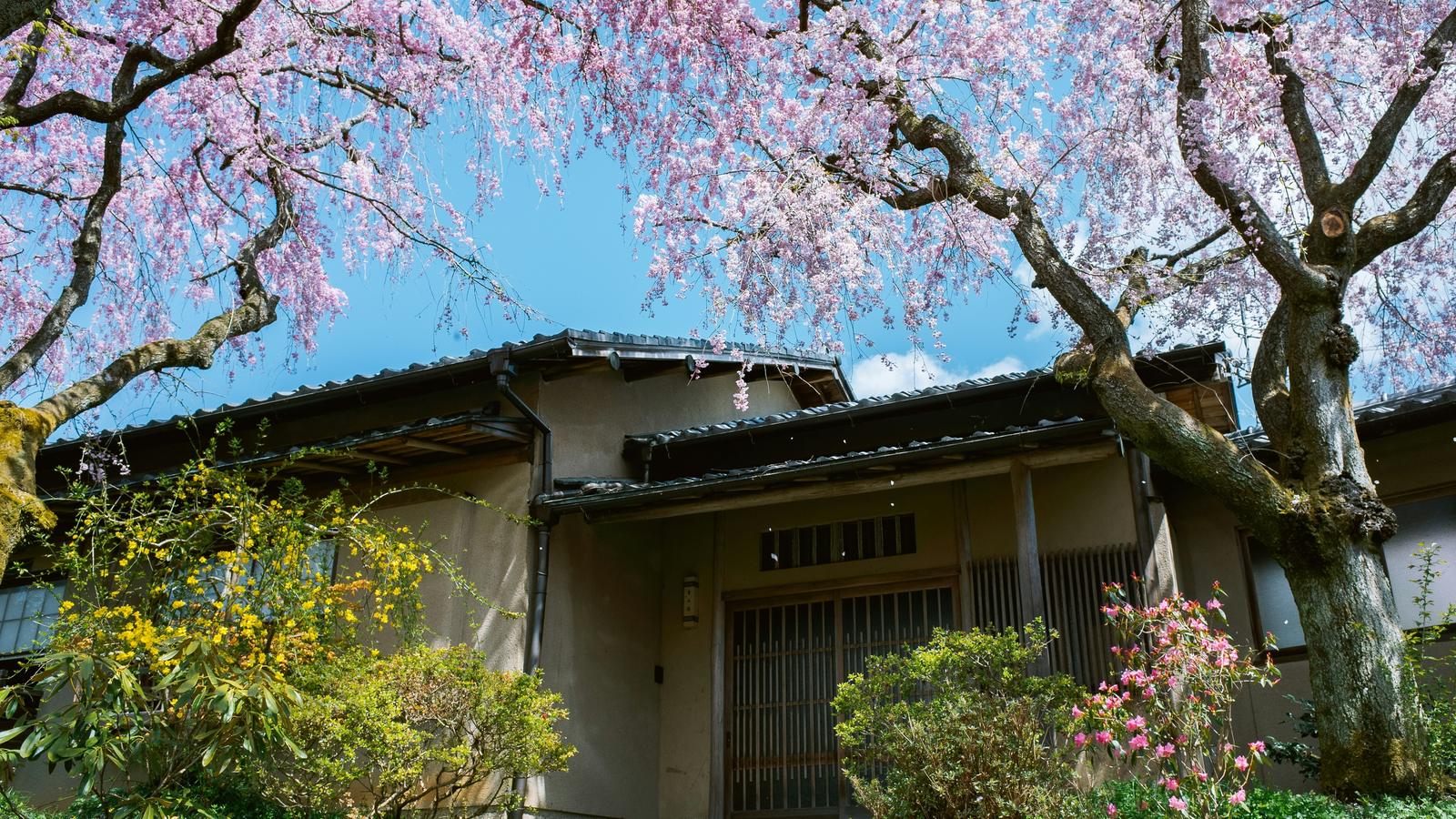
A spring morning at Heian Shrine in Kyoto can be close to silent. The garden gate opens at 8:30, red weeping cherries hang over the first path, and for a while the loudest sound is gravel underfoot. By late morning the same path is full. Between those two visits only the hour has changed.
This guide is for a trip in late March or April 2027 that is being planned now. It covers three ways to keep the blossom season calm: the hour you arrive, the trees that flower after the main week, and the gardens you do not share with a crowd. The usual opening dates in each city, and how far they moved in recent years, are in our cherry blossom and autumn leaves comparison. When to start on rooms and tables is in how far ahead to plan a Japan trip. We make no forecast for 2027 here; Weathernews, for one, says its 2027 cherry information will appear in February 2027. We read every page cited below on October 31, 2026.
Key points
- The first hour is the quiet one. Heian Shrine's garden opens at 8:30 and Shinjuku Gyoen at 9:00. In 2026 Shinjuku Gyoen sold timed tickets for 10:00 to 16:00 on its peak weekend days, and visitors arriving from 9:00 to 10:00 needed none.
- Later trees carry the season past the main week. Shinjuku Gyoen's double-flowered cherries open from early to late April, and Ninna-ji in Kyoto is known for its low, late-blooming Omuro cherries.
- On Mount Yoshino the trees flower in stages up the slopes, so the season there lasts about three weeks, against about one week in most places, according to the Japan Tourism Agency.
- Some famous views have reached their limit. Fujiyoshida did not hold its cherry festival at Arakurayama Sengen Park in 2026, after peak days of more than 10,000 visitors.
- A hotel garden is the calmest seat of all. The MICHELIN Guide notes the plum and cherry trees of the Geishun Garden at Hotel Okura Kyoto Okazaki Bettei.
THE FIRST HOUR OF THE DAY
Most of the calm in cherry season comes from the clock. Gardens open at a fixed time, tour groups arrive later, and the first hour belongs to the people who are already at the gate.
Heian Shrine, Kyoto
Heian Shrine opens its gates at 6:00 and its garden, the Shin-en, at 8:30; from March to September the last entry is at 17:30. The garden covers about 33,000 square metres around the shrine buildings, was made by the Meiji-era garden maker Ogawa Jihei VII, and became a national Place of Scenic Beauty in 1975. The first thing you see inside the south garden is a ceiling of red weeping cherries. The shrine traces them to a tree in the Kyoto residence of the Konoe family, which a lord of the Tsugaru domain took north; when the shrine was built, Sendai's first mayor sent saplings back, and they are still called the homecoming cherries. Entry is ¥600 for adults. During the blossom, from late March to mid-April, the shrine does not allow tripods in the garden because so many people come.
Shinjuku Gyoen, Tokyo
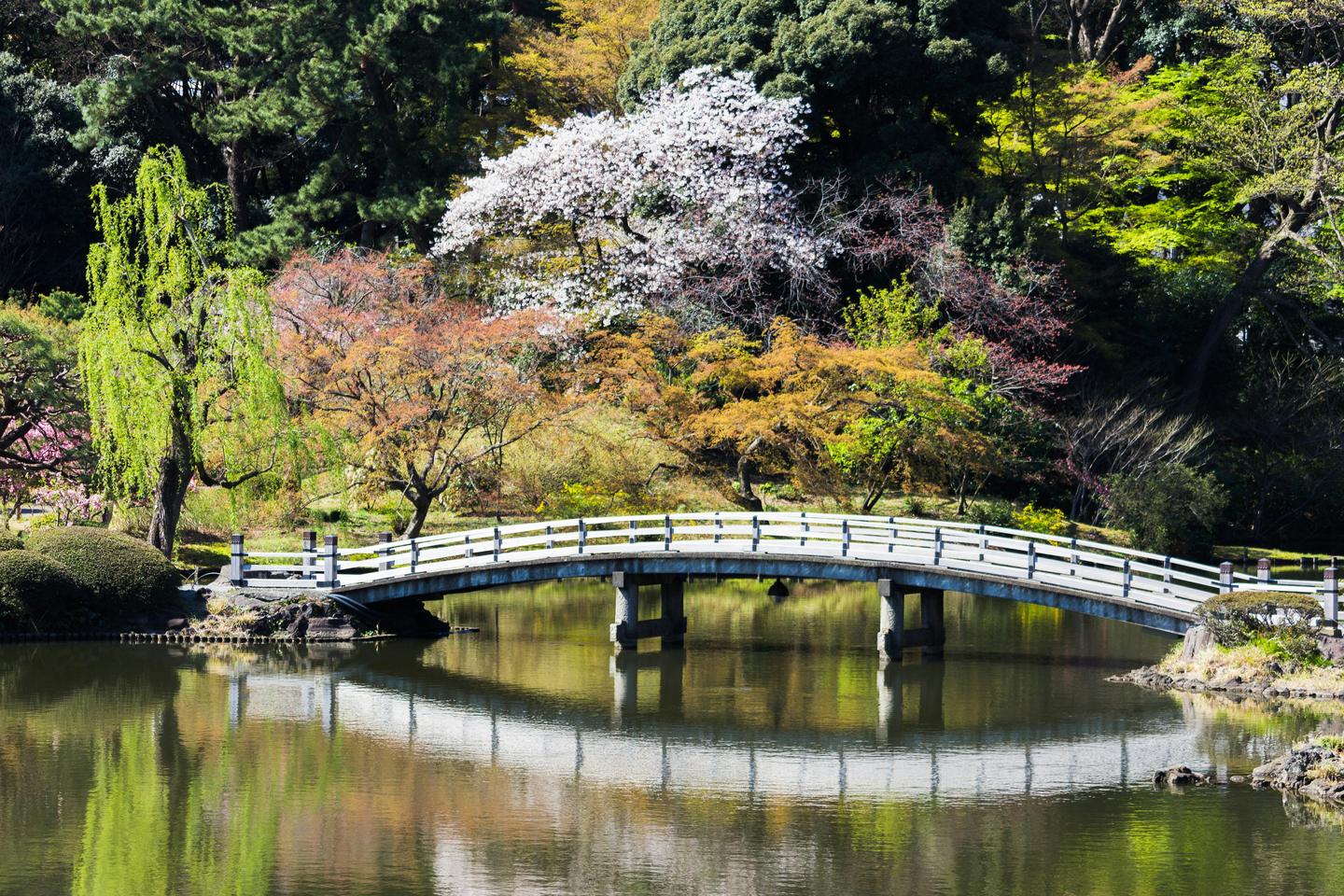
Shinjuku Gyoen, a national garden run by the Ministry of the Environment, has about 900 cherry trees of about 70 varieties. From mid-March it opens at 9:00 and closes at 18:00, and from March 25 to April 24 it opens on Mondays as well. Adults pay ¥500, and alcohol may not be brought in. In 2026, to ease crowding, the garden sold timed tickets online for 10:00 to 16:00 on the peak weekend days, with a cap for each hour; anyone entering between 9:00 and 10:00 walked in without one. The garden's own page says it may use timed entry again in blossom season, mainly at weekends and on holidays. A weekday at 9:00 is the gentlest way in.
THE TREES THAT BLOOM LATER
The pale Somei-yoshino most people picture opens first and falls first. Other varieties keep flowering after it, when the crowds have thinned.
Shinjuku Gyoen in April
The garden lists about 300 Somei-yoshino, in flower from late March to early April. About 100 Ichiyo, a large double-flowered cherry, follow from early to mid-April, and about 70 Kanzan, with deep pink, ruffled double flowers, from mid to late April. The garden's early cherries flower from January to early March, so its season runs for most of the spring.
Ninna-ji, Kyoto
Inside the middle gate of Ninna-ji, on the west side, stands a grove of Omuro cherries, known for flowering late and for staying low; the temple's recent survey points to a clay soil with little oxygen or nourishment for the roots. The Edo-period scholar Kaibara Ekiken wrote that the temple's double cherries were the finest in and around the capital, to be set beside the mountain cherries of Yoshino, and the grove became a national Place of Scenic Beauty in 1924. During the spring festival the temple charges a special entry fee of ¥800 for adults, and the palace garden opens from 9:00 to 17:00 between March and November.
Daigo-ji, Kyoto
Daigo-ji has been called Daigo of the flowers since the Heian period, and its weeping cherries, Somei-yoshino, mountain cherries and double-flowered cherries open one after another across the precinct. In the spring of 1598 Toyotomi Hideyoshi had 700 cherry trees brought in from the region around Kyoto for a single viewing party, attended by more than 1,300 women of his household; Kyoto City dates it to April 20, 1598. The temple opens at 9:00, and its hours can change in spring. It recreates Hideyoshi's procession on the second Sunday of April, its fullest day; the procession was not held in 2026. A weekday morning sees the same trees with more room around them.
YOSHINO, A MOUNTAIN THAT FLOWERS IN STAGES
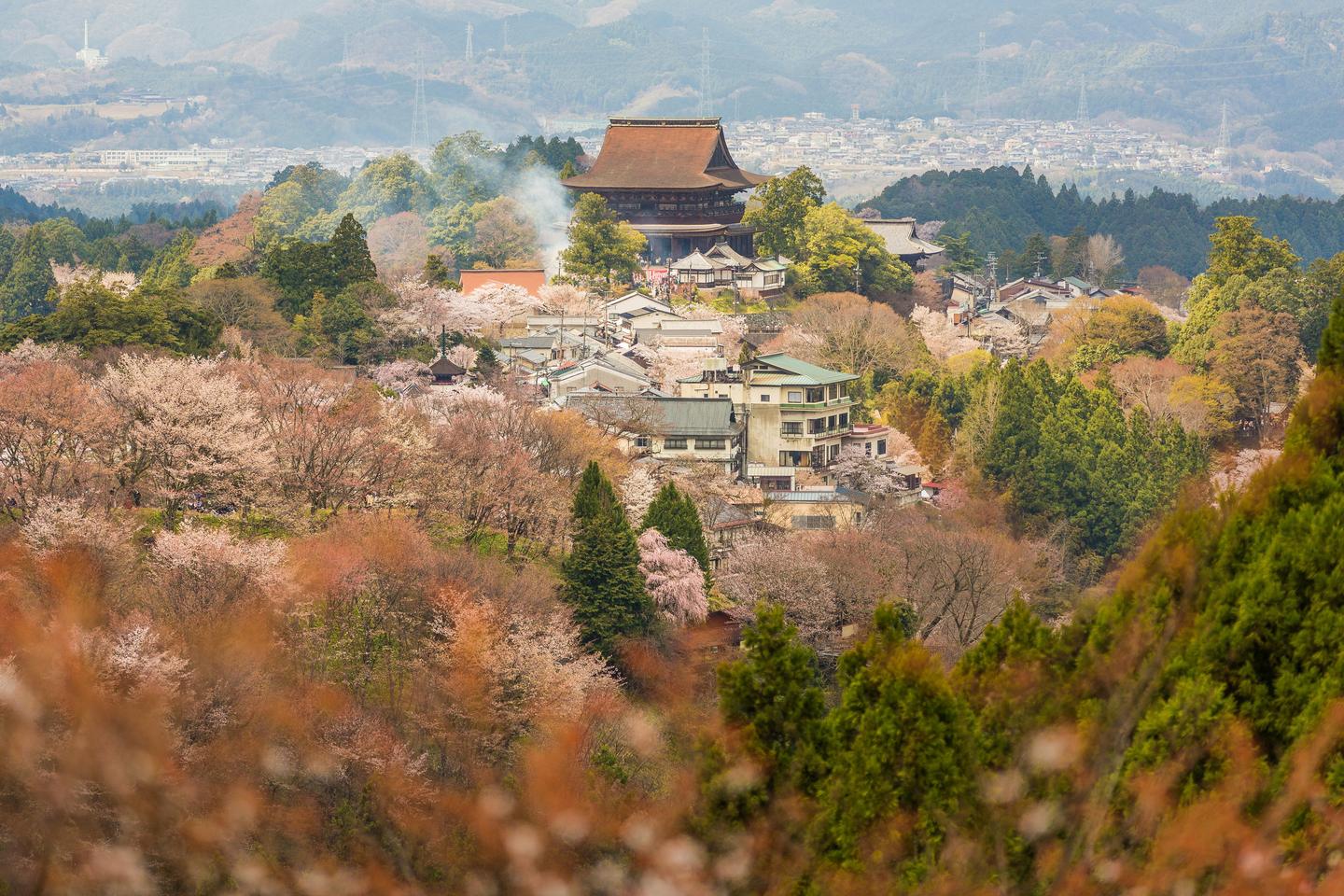
Mount Yoshino in Nara has drawn people to its cherries since the Heian period. The Japan Tourism Agency's description tells the story behind them: the founder of Shugendo, En no Gyoja, is said to have carved the deity Zao Gongen from a mountain cherry, the white-flowered trees came to be held sacred, and those who broke a branch were once severely punished. Pilgrims planted more trees over the centuries, and today local residents gather cherry stones to raise new saplings.
The trees flower in stages as the warmth climbs the slopes. Weathernews describes about 30,000 trees, opening from Shimo-senbon near Yoshino Station through Naka-senbon and Kami-senbon to Oku-senbon near Saigyo-an at the top. The Japan Tourism Agency puts the season at about three weeks, against about one week in most of Japan, so a later visit follows the flowers uphill.
WHERE THE CROWDS HAVE CHANGED THE RULES
Arakurayama Sengen Park in Fujiyoshida frames Mount Fuji, a five-storey pagoda and cherry trees in one picture, and the view spread on social media. The city's festival there began about ten years ago and drew around 200,000 people a year. On February 3, 2026 the city announced that it would not hold the festival that spring. Norimono News reported the city's account of more than 10,000 visitors a day at the peak, traffic jams and trespass on private property along the narrow residential approach, and Mayor Shigeru Horiuchi's statement that the city was giving up the festival to protect residents' daily lives and dignity. The city kept guards, traffic control and temporary toilets in place from April 1 to 17. Time Out noted that Fujiyoshida has fewer than 50,000 residents.
The same pressure shows in the smaller rules above: timed tickets at Shinjuku Gyoen, and no tripods in Heian Shrine's garden during the blossom. A day that is calm for visitors usually begins with where and when it can also be calm for the people who live there.
A GARDEN WITH FEWER PEOPLE IN IT
The quietest cherry of a spring trip is often the one outside your own window. In an October 2025 article on Kyoto's hotel gardens, the MICHELIN Guide notes that Hotel Okura Kyoto Okazaki Bettei stands within the grounds of the Okazaki Betsuin temple, that plum and cherry trees bloom in its Geishun Garden in spring, and that guests may join the temple's early morning worship or a tea ceremony overlooking the grounds. The same article describes Nanzenji Sando Kikusui, where all six guest rooms look onto a garden made by Ogawa Jihei VII, the designer of the Heian Shrine garden.
A garden like this changes the shape of the day. The blossoms are there before breakfast and again in the evening light, and the busiest hours in the city can be spent somewhere else.
HOW WE ARRANGE A QUIET SPRING
A spring week we arrange might begin at the Heian Shrine gate at 8:30, leave the city before the paths fill for a long lunch, and return to a hotel garden as the light goes. The order of the days follows the trees: Somei-yoshino in the first days, then the later cherries of Ninna-ji, Shinjuku Gyoen or the upper slopes of Yoshino. We follow the forecasts as they are published, set each place on the day its trees are likely to be at their best, and arrange the stays, tables and car around those days. When the bloom moves, the plan moves with it.
SOURCES AND HOW WE CHECKED
We read each source below on October 31, 2026: the Ministry of the Environment and the Japan Tourism Agency, Kyoto City, the shrine and temples themselves, a weather company, the MICHELIN Guide, and Japanese and international journalism. Opening hours, fees and entry rules for 2027 will be set nearer the season, and we confirm them for your dates. We did not contact the shrine, temples or hotels.
- Ministry of the Environment, Shinjuku Gyoen, cherry blossoms (Japanese): about 900 trees and 70 varieties, flowering periods and numbers by variety
- Ministry of the Environment, Shinjuku Gyoen, admission (Japanese): hours, Monday opening from March 25 to April 24, fees, possible timed entry
- Ministry of the Environment, Shinjuku Gyoen, garden rules (Japanese): no alcohol
- Ministry of the Environment, press release, March 2, 2026 (Japanese): timed entry in the 2026 blossom season, hourly caps, free entry from 9:00 to 10:00
- Heian Jingu, Shin-en garden (Japanese): size, Ogawa Jihei VII, the red weeping cherries and their history, fees, tripods in blossom season
- Heian Jingu, visiting hours (Japanese): gates from 6:00, garden from 8:30
- Ninna-ji, the Omuro cherries (Japanese): late flowering, low trees, Kaibara Ekiken, the 1924 designation
- Ninna-ji, visiting and fees (Japanese): spring festival entry, garden hours
- Daigo-ji, the Hotaiko hanami procession (Japanese): Hideyoshi's 1598 viewing, the varieties, the second Sunday of April, no procession in 2026
- Daigo-ji, hours and fees (Japanese): opening at 9:00, hours that change in spring
- Kyoto City, press release, February 10, 2026 (PDF) (Japanese): the date of the Daigo hanami, April 20, 1598
- Japan Tourism Agency, Cherry Blossoms and Yoshinoyama: history, the sacred trees, replanting, a season of about three weeks
- Weathernews, Yoshinoyama (Shimo-senbon) (Japanese): about 30,000 trees, the four groves, 2027 information from February 2027
- Norimono News, February 4, 2026 (Japanese): the Fujiyoshida decision, visitor numbers, the mayor's statement, safety measures
- Time Out, February 20, 2026, Dewi Nurjuwita: the announcement of February 3, the population of Fujiyoshida
- MICHELIN Guide, Kyoto's Great Hotels and the Art of the Garden, October 12, 2025, Louise George Kittaka: Hotel Okura Kyoto Okazaki Bettei, Nanzenji Sando Kikusui
QUESTIONS GUESTS ASK
Where can I see cherry blossoms in Japan without the crowds?
Arrive when the gardens open, choose trees that flower after the main week, and leave the most photographed views for another day. Heian Shrine's garden in Kyoto opens at 8:30 and Shinjuku Gyoen in Tokyo at 9:00; Ninna-ji's Omuro cherries and Shinjuku Gyoen's double-flowered cherries bloom later in April.
When will the cherry blossoms bloom in 2027?
No one can say yet. Forecasters publish their outlooks early in the year; Weathernews says its 2027 cherry information will appear in February 2027. The usual dates by city are in our cherry blossom and autumn leaves comparison.
Do I need a reservation for Shinjuku Gyoen in cherry blossom season?
In 2026 the garden required timed tickets between 10:00 and 16:00 on its peak weekend days, and entry from 9:00 to 10:00 needed none. It says it may use timed entry again, mainly at weekends and on holidays.
Which cherry blossoms bloom later in April?
At Shinjuku Gyoen, the Ichiyo flowers from early to mid-April and the Kanzan from mid to late April. In Kyoto, Ninna-ji's Omuro cherries are known for flowering late, and on Mount Yoshino the upper groves open after the lower ones.
PLAN A QUIET SPRING IN 2027
Tell us the cities you have in mind and how you like to spend a morning. We will suggest where each day begins, and arrange the stays, tables and car around the bloom.
Begin planning →We reply within 24 hours, in writing