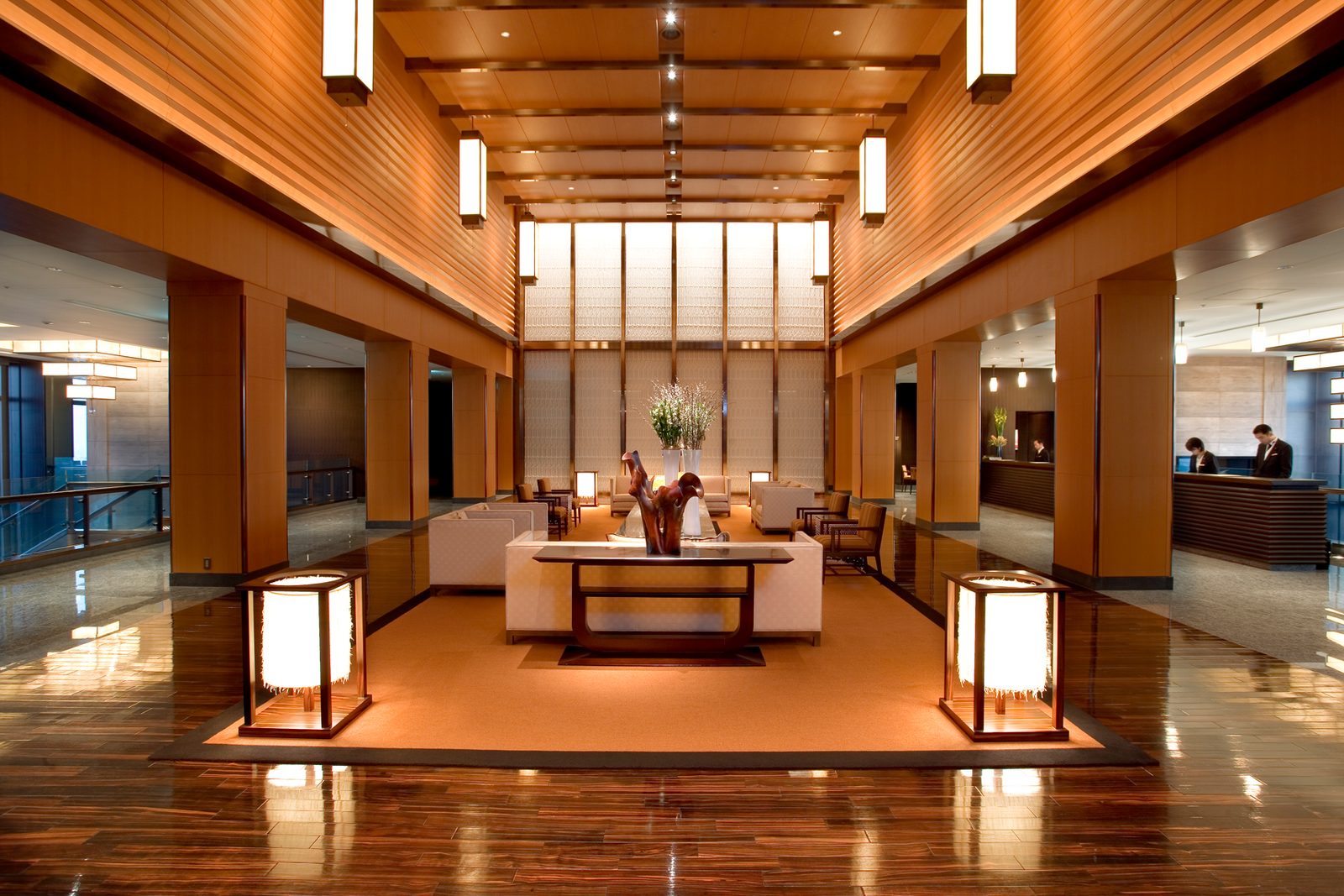
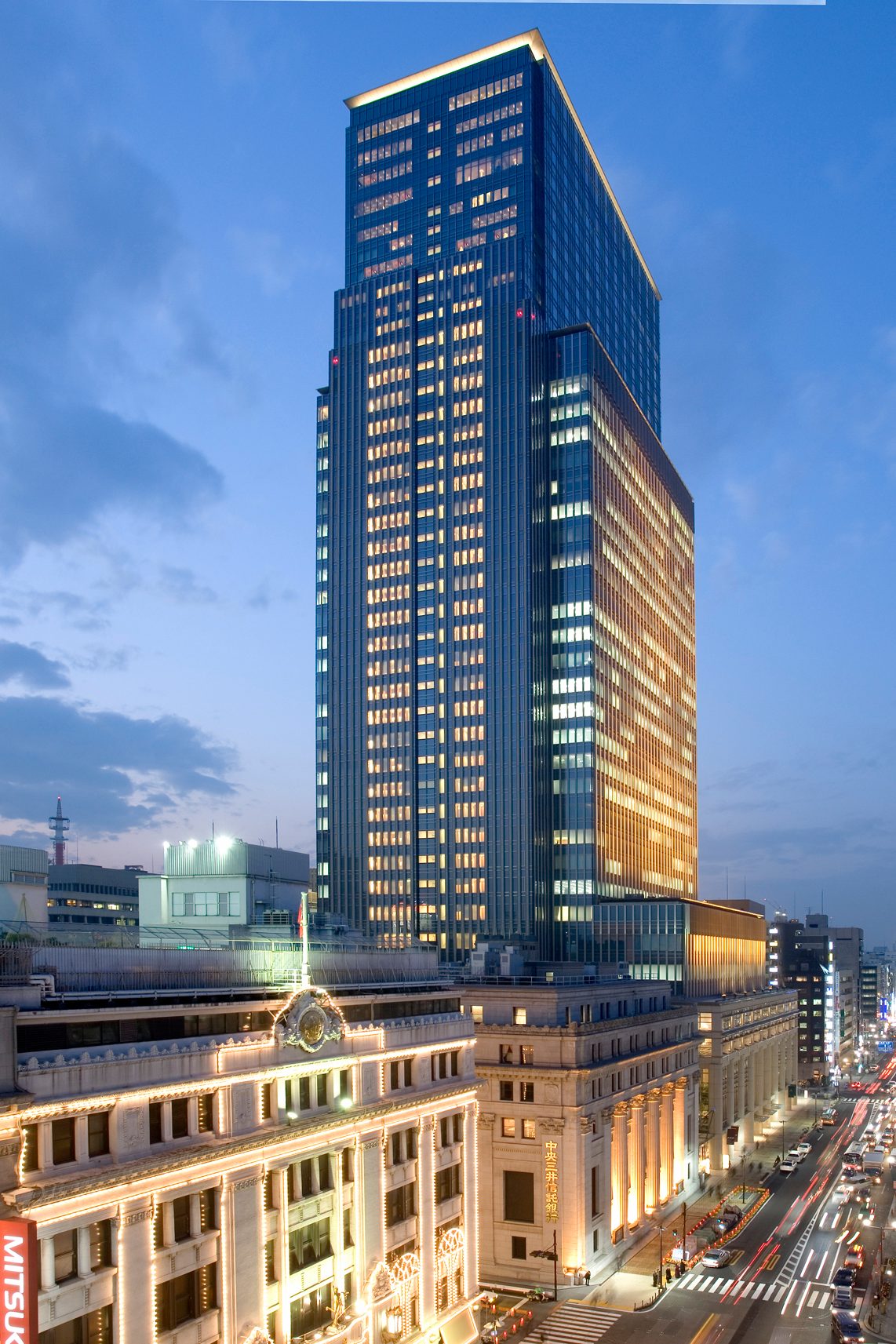
The lift from the street at Mandarin Oriental, Tokyo goes to the 38th floor before it goes anywhere else. The lobby is at the top of Nihonbashi Mitsui Tower, and the rooms are below it, on the 30th to 36th floors. Beside the tower stands the Mitsui Main Building of 1929, a nationally designated cultural property, and around both is Nihonbashi, the district from which the five great roads of the Edo period were measured. On a clear day the west-facing rooms see Mount Fuji; the east-facing ones see the Tokyo Skytree.
This article is for guests deciding whether this is the right Tokyo hotel for them, and which room to ask for if it is. It covers the building and the 2019 renovation, the rooms and their views, the restaurants, the spa, families and where the hotel fits a journey. We read the hotel's own pages, menus and room plans, the MICHELIN Guide, the architects' page, press releases and Japanese and international press in November 2026, and contacted none of them; the sources are listed at the end. No renovations are under way; the works on the Grand Ballroom and event spaces were completed in 2025. For the wider field, see The Best Luxury Hotels in Japan 2027 and The Best Luxury Hotels in Tokyo 2027.
Key points
- Opened on December 2, 2005 as the group's first hotel in Japan; 157 rooms and 22 suites on the upper floors of Nihonbashi Mitsui Tower, with the lobby on the 38th floor.
- All 179 rooms and suites underwent a comprehensive renovation completed in 2019, with textiles by Reiko Sudo. The works on the Grand Ballroom and event spaces were completed in 2025, and no renovations are under way.
- The hotel's 157 rooms and 22 suites range from 50 to 250 square metres, with panoramic views across Tokyo and, from selected accommodations, towards Tokyo Skytree or Mount Fuji.
- The hotel has no conventional swimming pool; the Spa on the 37th floor has a vitality pool as part of its Heat and Water facilities, and admits guests from 16.
- The hotel holds One MICHELIN Key in the 2026 selection.
ASK US ABOUT A STAY IN NIHONBASHI →
WHERE IT IS AND WHAT THAT GIVES YOU
The hotel opened on December 2, 2005, the first Mandarin Oriental in Japan, on the top floors of Nihonbashi Mitsui Tower at 2-1-1 Nihonbashi Muromachi. Nihonbashi Mitsui Tower was designed by César Pelli & Associates, with Nihon Sekkei responsible for design and supervision, and links to the Mitsui Main Building, the Beaux-Arts headquarters that the Japanese government protects as an important cultural property. The hotel has 157 rooms and 22 suites. The rooms were renovated by the textile designer Reiko Sudo and the art director Ryu Kosaka, keeping the original theme of woods and water. All 179 rooms and suites underwent a comprehensive renovation completed in 2019.
What the address gives is old Tokyo within a short walk. GO TOKYO describes Nihonbashi as the starting point of the five roads of the Edo period, a district of kimono houses, makers of knives and gold leaf, and old department stores; the hotel names Mitsukoshi Nihombashi and COREDO Muromachi as neighbours. Tokyo Station is a short ride. The district is also changing: Time Out Tokyo reports that Tokyo Midtown Nihonbashi, a tower of about 284 metres on the Nihonbashi River, was completed on September 30, 2026 and is due to open fully in autumn 2027, when Waldorf Astoria Tokyo Nihonbashi, with 197 rooms on the 39th to 47th floors of the new tower, is also due to open.
WHICH ROOM TO ASK FOR
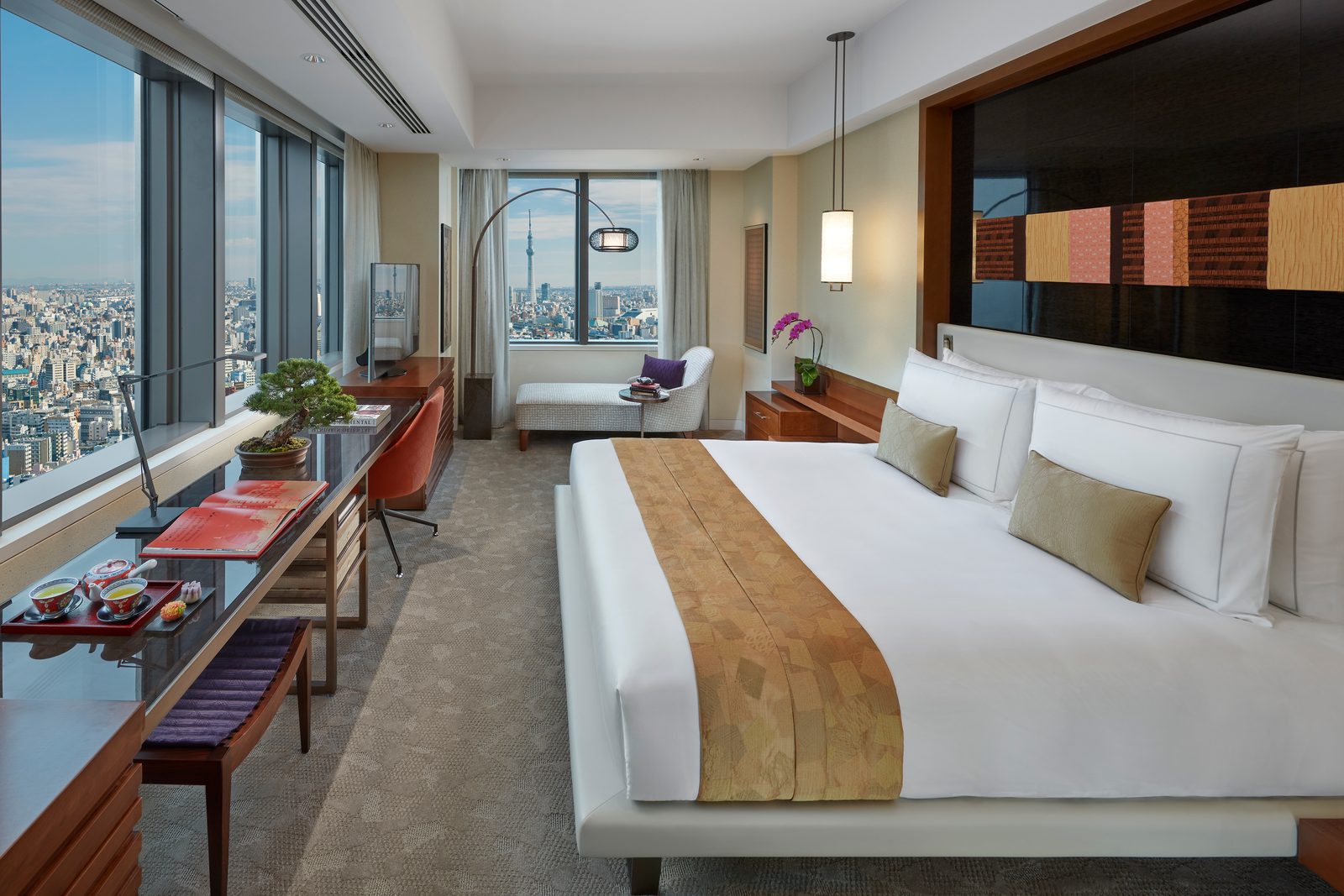
The Deluxe Room is 50 square metres on floors 30 to 36, facing the city or the Skytree, and the hotel notes Mount Fuji from the rooms in the west. The Deluxe Premier Room is also 50 square metres, on floors 32 to 36, and faces the Skytree. The Deluxe Corner Room, 50 square metres on floors 33 to 36, has windows on two walls toward Tokyo Bay or the city. The Mandarin Grand Room is 60 square metres on floors 30 to 36, with city views and, the hotel says, Fuji in good weather. Suites begin at 90 square metres with the Premier Suite; the Mandarin Suite, Mandarin Corner Suite and Oriental Suite are 100, and the Presidential Suite is 250, with a dining room for eight.
Our reasoning is simple. For a guest who wants Fuji, we would ask for the Mandarin Grand Room: it is the one standard category with 10 more square metres and a stated western view. For a guest arriving after dark, or one who loves the city at night, the Deluxe Premier Room and its Skytree view is the stronger choice. The corner rooms suit those who want light from two sides more than a landmark. The hotel's room pages show an average nightly rate, but we could not see whether tax and service were included, so we give no price.
WHEN TO GO
Because the view is half the reason to stay, the season matters. The hotel itself says Fuji is seen on clear days; in our judgement the cold, dry air of December to February gives the best chance. Late March to early April and the year-end holidays are the busiest periods for Tokyo's top hotels, and we would plan those dates well ahead.
The neighbourhood will look different through 2027. The full opening of Tokyo Midtown Nihonbashi will add shops, restaurants and a river walk a few minutes away, and the work to move the expressway over the Nihonbashi River underground continues. We would check the dates as they are announced, and for a guest sensitive to noise, ask for a room away from any construction.
THE TABLES WORTH STAYING IN FOR
The hotel has more restaurants than most in Tokyo, and three are in the MICHELIN Guide selection: Signature, Sense and The Pizza Bar on 38th. Signature, on the 37th floor, serves classic French cooking; its head chef, born in Paris, has cooked there since 2010 and has led the kitchen since 2023. The dress code asks gentlemen for a jacket or a shirt. Sense, also on the 37th floor, is Cantonese, led by chef Toshiyuki Nakama, who has been with the hotel since 2005; on weekends and holidays it serves dim sum at lunch, and it looks toward the Skytree.
Two counters are the ones we would secure first. Sushi Shin by Miyakawa, on the 38th floor, is the Tokyo branch of chef Masaaki Miyakawa's sushi restaurant in Hokkaido, with a counter of hinoki cypress over 350 years old and fish from Hokkaido and Toyosu. The Pizza Bar on 38th has 8 seats at a marble bar, where executive chef Daniele Cason serves pizzas from dough fermented for 48 hours, as an omakase menu. Tapas Molecular Bar, led by chef Kento Ushikubo, serves an omakase of molecular cooking in two seatings each evening. The hotel advises that some tables need reserving weeks ahead, up to a month for some.
THE SPA AND THE QUIET HOURS
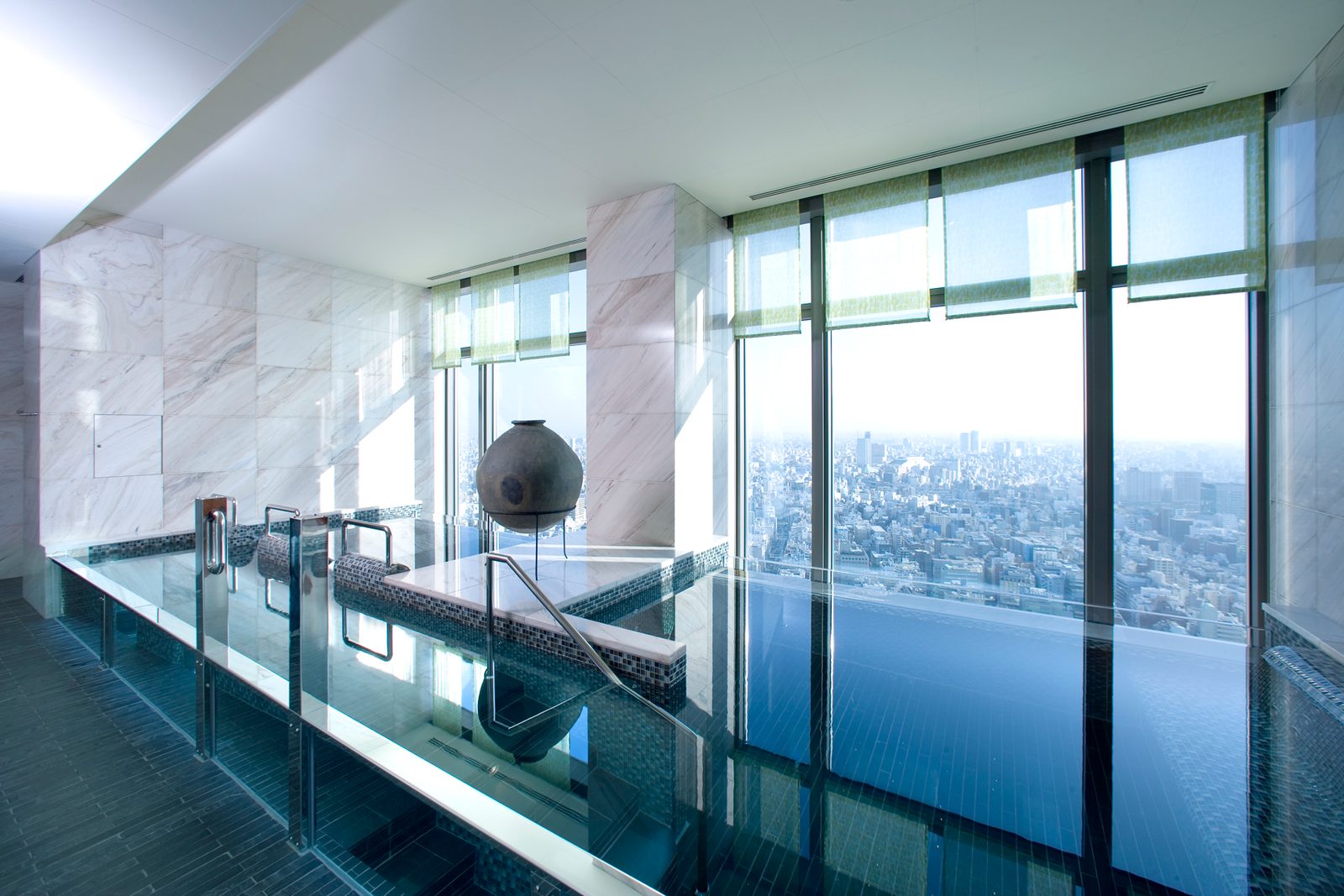
The Spa is on the 37th floor, with four treatment rooms and five suites for one or two guests, and windows over the city toward the mountains. Its heat and water areas include a vitality pool, a steam room and a sauna, and the hotel asks guests to arrive an hour before a treatment to use them. Following Japanese custom, guests bathe without clothing in the heat and water areas, and tattoos should be covered. The spa opens from 10:00 to 21:00 Monday to Thursday and to 22:00 Friday to Sunday; treatment prices carry a 15% service charge and tax.
The fitness centre is on the 38th floor, with Technogym equipment, open from 6:30 to 22:00 and around the clock for hotel guests. Suite guests have heat and water access included during spa hours. A guest who swims lengths every morning should know that the hotel has no conventional swimming pool; the vitality pool is for rest. For that, Bvlgari Hotel Tokyo, with its 25-metre pool, is a short drive away.
FAMILIES AND SEVERAL GENERATIONS
The family arrangement we would ask for is the Deluxe Corner Connecting Room: 100 square metres on floors 33 to 36, with a king bed in one room and two twin beds in the other, for up to four guests. The Mandarin Corner Suite and the Oriental Suite can also connect to a room for a larger group, which suits grandparents who want a sitting room for the family to gather in. The hotel says connecting rooms and additional bedding may be available on request, so we would confirm both before arrival.
The age rules are worth reading. The spa and the fitness centre admit guests from 16. Sense and the Oriental Lounge welcome children; Signature seats children under 10 only in its private dining room; The Pizza Bar on 38th takes children from 6 at lunch and from 10 at dinner; Tapas Molecular Bar from 12; and the hotel says Sushi Shin has age guidelines of its own. The Mandarin Bar welcomes children under 12 until 20:00. For more on travelling across generations, see Japan with Three Generations.
WHAT IT IS NOT FOR
A guest whose Tokyo is Omotesando, Roppongi or Shinjuku will spend time in taxis from here; Andaz Tokyo or Park Hyatt Tokyo sit closer to those evenings. A guest who wants a swimming pool should look at Bvlgari Hotel Tokyo, and a family with young children will find no pool for them here, since the spa admits guests from 16. A traveller who wants the palace gardens at the window will be happier at Aman Tokyo or the Four Seasons at Otemachi.
The hotel is also busy in its public spaces. With many restaurants and a lobby lounge serving afternoon tea from 11:00 to 18:00, the 38th floor is lively through the day. A couple who wants the house to feel like a private home may prefer a smaller hotel such as JANU Tokyo or Hoshinoya Tokyo.
HOW IT FITS A JOURNEY
We see it as a hotel for guests who want to know Tokyo through eating and through its older trades: the knife shops and kimono houses of Nihonbashi in the morning, a counter on the 38th floor in the evening. It suits a first stay of four or five nights, and it pairs well with a quieter second hotel. After the city, a few nights in Hakone or Nikko give the onsen this hotel does not have, and in Kyoto, Aman Kyoto or Capella Kyoto offer the garden and the stillness.
STAYGO arranges the parts around the stay: the request for a Fuji-facing or Skytree-facing room, seats at Sushi Shin by Miyakawa or The Pizza Bar on 38th on the evening that suits, a car from the airport, and a guide for Nihonbashi's old shops. Availability, rates and upgrades are the hotel's to give, and we confirm nothing until the hotel does in writing.
SOURCES AND HOW WE CHECKED
We read these pages on November 15, 2026, and contacted none of these organisations. Where the hotel's own claims of awards were not shown on the awarding body's site, we left them out.
- Mandarin Oriental, Tokyo, about the hotel: 157 rooms and 22 suites, lift access from the 38th floor, spa on the 37th floor, the Mitsui Main Building, nearby Mitsukoshi Nihombashi and COREDO Muromachi
- Mandarin Oriental, Tokyo, rooms and suites: room categories, sizes, floors and views, connecting rooms, check-in at 15:00 and check-out at 12:00
- Deluxe Corner Connecting Room, official page: 100 square metres, floors 33 to 36, a king bed and two twin beds, up to four guests
- The Spa, official page: four treatment rooms and five suites, vitality pool, hours, 15% service charge, bathing customs, minimum age of 16
- Fitness Centre, official page: 38th floor, Technogym, open around the clock for hotel guests
- Sushi Shin by Miyakawa, official page: 38th floor, hinoki counter over 350 years old, chef Masaaki Miyakawa, opened in 2016
- The Pizza Bar on 38th, official page: 8 seats, chef Daniele Cason, 48-hour fermentation, age rules at lunch and dinner
- Signature, official page: classic French cooking, head chef since 2023, child policy, dress code
- MICHELIN Guide, all the Key hotels in Japan 2026: Mandarin Oriental Tokyo among the One-Key hotels
- MICHELIN Guide, The Pizza Bar on 38th: in the selection, a counter of eight seats on the 38th floor; Signature and Sense also listed
- Opening press release, December 2, 2005, Hotel Executive: opening date, first Mandarin Oriental in Japan, 179 rooms and suites
- TravelNewsAsia, 2019: renovation of all 179 rooms and suites by Reiko Sudo and Ryu Kosaka
- Pelli Clarke & Partners, Nihonbashi Mitsui Tower: the architects, the link to the 1929 Mitsui Main Building
- Time Out Tokyo (Japanese), October 9, 2026: Tokyo Midtown Nihonbashi completed on September 30, 2026, full opening in 2027
- GO TOKYO, Nihonbashi: starting point of the five roads of the Edo period, traditional trades
QUESTIONS TRAVELLERS ASK
Which rooms at Mandarin Oriental, Tokyo have a view of Mount Fuji?
The hotel names Fuji for its west-facing Deluxe Rooms, the Mandarin Grand Room, the Premier Suite in the west, the Mandarin Suite and the Oriental Suite, always subject to the weather. The Deluxe Premier Rooms face the Tokyo Skytree.
Does Mandarin Oriental, Tokyo have a swimming pool?
The hotel has no conventional swimming pool. The Spa on the 37th floor has a vitality pool as part of its Heat and Water facilities, with a steam room and a sauna. The spa and fitness centre admit guests aged 16 and over.
Is Mandarin Oriental, Tokyo being renovated or rebranded?
No renovations are under way. All 179 rooms and suites underwent a comprehensive renovation completed in 2019, and the works on the Grand Ballroom and event spaces were completed in 2025. We found no announcement of a closure or change of name when we checked on November 15, 2026.
Are there family rooms at Mandarin Oriental, Tokyo?
The Deluxe Corner Connecting Room is 100 square metres on floors 33 to 36, with a king bed and two twin beds for up to four guests. Some suites can also connect to a room, and the hotel says additional bedding may be available on request.
Which restaurants at Mandarin Oriental, Tokyo are in the MICHELIN Guide?
Signature, Sense and The Pizza Bar on 38th appear in the MICHELIN Guide selection. The hotel itself holds One MICHELIN Key in the 2026 selection.
ASK US ABOUT A STAY IN NIHONBASHI
Tell us who is travelling, which nights you have, and which view you hope for at the window. We will suggest the room and the counters that suit, with our reasons.
Begin planningWe reply within 24 hours, in writing
Some of the restaurants and bars we arrange seat guests only by introduction or membership. We ask on your behalf; the table and the evening are the house's decision. We do not publish their names.