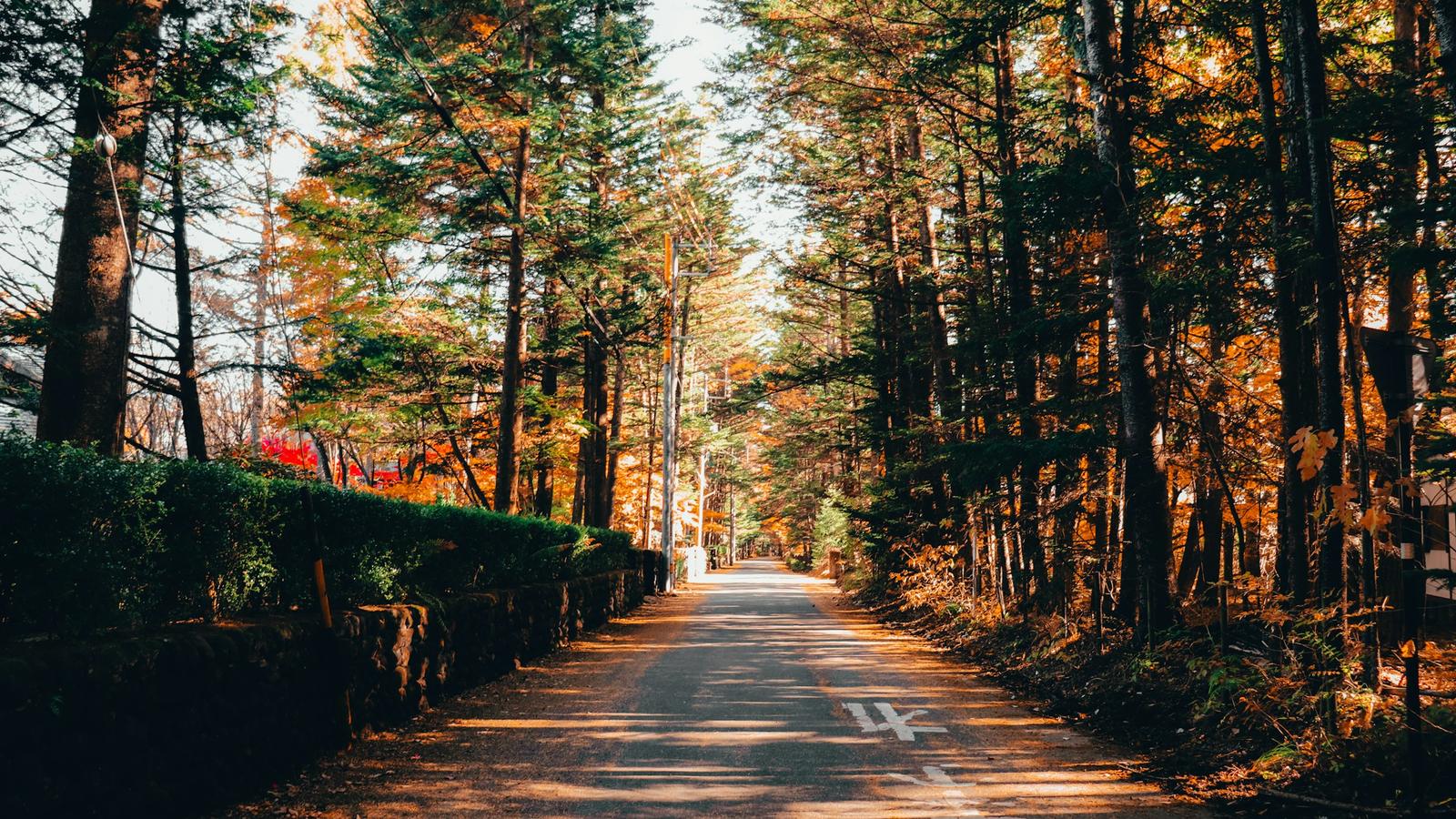
At HOSHINOYA Karuizawa there is no television in the room and no clock on the wall. The hotel took both out on purpose. What you hear instead is the river that runs through the middle of the grounds, which also works as the lower pond of the hotel's own small hydroelectric plant. Eighty minutes by Hokuriku Shinkansen from Tokyo Station, then fifteen minutes by taxi, and you are in a valley of 77 low pavilions at the edge of a national wild bird sanctuary.
This article is for a guest deciding whether this is the right mountain stay, and which of its three room types to ask for. It sits in our series on the best luxury hotels in Japan for 2027, and alongside our piece on resorts and ryokan beyond the big cities. We read the hotel's own pages, menus and press materials, the MICHELIN Guide, Karuizawa's tourism association and reputable press in November 2026, and contacted none of them; the sources are listed at the end.
Key points
- Opened on July 20, 2005 as the first HOSHINOYA. 77 rooms in three types: Mizunami by the water, Yamaroji on the slope, Niwaroji along garden paths.
- Rooms run from 44 m² to 81 m². The hotel says guests cannot select a specific room, so the type is what you choose.
- Two hot springs: Tombo-no-yu, the area's day bathhouse on a spring opened in 1915, and the Meditation Bath, which is for hotel guests only.
- Children are welcome. Under-12s can share a bed, and the main kaiseki has prices for ages 4 to 6 and 7 to 11. Massage is for adults aged 18 and over.
- No TV, no clocks, and about 70% of the energy made on site from water and ground heat.
WHERE IT IS AND WHAT THAT GIVES YOU
The hotel stands at the bottom of a valley in the Hoshino area of Karuizawa, where the Yukawa River runs between the Karuizawa National Wild Bird Sanctuary Forest to the east and Hoshino Hill to the west. It replaced the Hoshino family's old onsen inn, which had generated its own hydroelectric power since 1929; that plant still supplies the site. Together with geothermal heating from the hot-spring ground, the hotel says about 70% of its energy is made where you sleep, and the floors of the pavilions are warmed by it in winter.
The architecture is by Rie Azuma of Azuma Architect & Associates, the landscape by Hiroki Hasegawa of Studio on site, and the lighting by Masanobu Takeishi. Hoshino Resorts' own press profile counts 22 different pavilion designs among the 77 rooms, and Tatler Asia, writing for the twentieth year, describes how the paths were drawn around old trees that could not move. The hotel says about 700 trees were lifted out during construction and replanted afterwards. The lighting is kept low on purpose, in the spirit of In Praise of Shadows, so that the moon does most of the work at night.
The MICHELIN Guide describes it as ryokan-like in concept, with onsen and kaiseki, at a larger scale. That is the right way to picture it: a small village with shared paths and a central dining hall, where the people you pass are other guests walking to the bath.
WHICH ROOM TO ASK FOR
There are three types, and the hotel is clear that it does not take requests for a particular room. Mizunami (57 to 68 m², for 1 to 4 guests) overlooks the river that runs through the grounds. Yamaroji (44 to 67 m², 1 to 3 guests) sits on the slope: the hotel says ground-floor rooms are wrapped in greenery and upper-floor rooms look over the whole village to the bird sanctuary beyond. Niwaroji (48 to 81 m², 1 to 3 guests) are the most separate, reached by narrow side paths. All have a bathtub, beds of 200 by 105 cm, and a separate WC.
For a couple, we usually suggest Mizunami. The sound of water is the reason to come, and these are the rooms built around it. For a guest who wants a view over trees, Yamaroji, with a request for the upper floor; the hotel may not be able to promise it, and we would say so plainly. For a longer stay or a guest who values quiet over everything, Niwaroji. A family of four needs Mizunami, the only type that takes four; the fourth bed is made up on the sofa.
Rates change daily and we could not see a fixed public price, so we give none here. Check-in is at 15:00 and check-out at 12:00, which makes the last morning unhurried.
WHEN TO GO
Karuizawa has long been Tokyo's summer retreat, and the pavilions are designed to let mountain wind do the work of air conditioning. In July and August the Hoshino area fills with day visitors, at Harunire Terrace, the row of shops and cafés beside the hotel, and at the public bath.
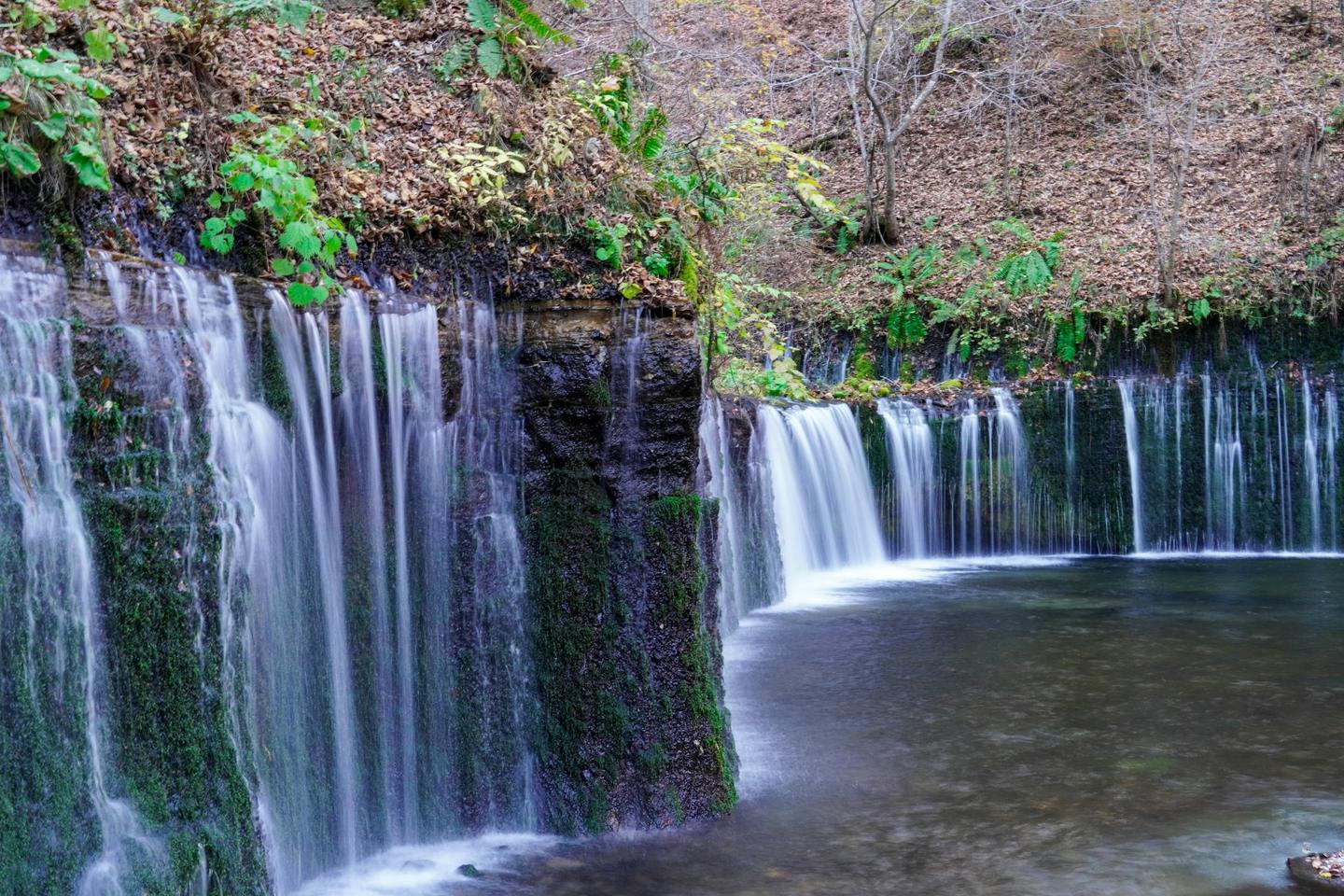
Autumn here has a calendar of its own. The hotel serves its Tanada Lounge lunches above the terraced steps until November 30, and runs full-moon evenings on the bath terrace in September, October and November. Winter is quieter and, in our view, underrated. The hotel notes clear skies, hoarfrost on the trees and, on days below minus 10°C, diamond dust in the air. The bare forest also makes it the easiest season for birdwatching, and the hotel suggests the open-air bath at Tombo-no-yu for the night sky. Between December 1, 2026 and February 22, 2027 the hotel adds a herbal hot pot dinner and an apple afternoon tea; the tea is not served from December 26 to January 6.
THE TABLES WORTH STAYING IN FOR
The main dining room is Japanese Cuisine KASUKE. It serves what the hotel calls alpine kaiseki from 17:30, at ¥18,000 per adult before tax and a 10% service charge, as shown on the official menu page on November 15, 2026. The room is built to recall rice terraces and riverside dining, and one dish to look for is carp sashimi, a Nagano speciality raised in tanks fed with water from the foot of Mount Asama. KASUKE also offers a beef shabu-shabu dinner, an in-room dinner chosen by the head chef, and a vegetarian kaiseki made with kombu broth (¥19,800, to be arranged 5 days ahead). Each party may order only one dinner option per night, which is worth knowing before a group splits its preferences.
Yukawatan, the French restaurant the hotel lists among its dinners, serves French cooking around river fish, duck and venison, from ¥18,000; the hotel notes it is not suited to preschool children. Sonmin Shokudo, with sunken horigotatsu seating, is the easy evening for a family or a second night. Breakfast is built on a vegetable broth simmered for hours from whole vegetables, and can be taken in the room.
SPA, POOL AND THE QUIET HOURS
Hoshino Onsen opened in 1915 and flows straight from the source. Tombo-no-yu, the day bathhouse of the Hoshino area, is open to hotel guests and visitors alike, with indoor and open-air baths, a sauna and a cold bath; guests with tattoos may bathe if they can cover them with the stickers sold at reception. The Meditation Bath is the hotel's own: a hot spring for staying guests only, which moves you from a space of light into a space of near darkness and sound. It is the hour we would ask guests to keep free, ideally after dark.
The spa offers oil treatments and meridian acupressure by nationally certified therapists, for guests aged 18 and over. For a longer stay the hotel runs a two-night sleep programme for guests 16 and over, and a digital detox stay with forest bathing. The official pages do not describe a swimming pool, and we would not plan around one.
Quiet hours here are outdoors. Picchio, the wild bird research centre the Hoshino family set up in 1992, guides walks in the sanctuary forest, and the hotel also offers a free morning stretch and a tour of the village.
FAMILIES AND SEVERAL GENERATIONS
HOSHINOYA Karuizawa is one of the easier HOSHINOYA properties for children. Under-12s can share a bed up to the room's capacity, without meals or bedding, and the rooms have room wear in children's sizes. There is a playroom, a pottery class with a local potter from age 3, and KASUKE prices its kaiseki for ages 4 to 6 (¥3,500) and 7 to 11 (¥10,909), plus tax and service. Commercial baby food is available, and parents may bring their own.
For grandparents the layout matters more than the menu. The village is spread out on a slope with paths and small bridges, and the bath and dining hall are separate walks. We would ask the hotel for help with luggage and for a room close to the reception area for anyone who tires easily, and choose two Mizunami rooms side by side for a family rather than one larger room. The hotel does not describe connecting rooms on its pages.
WHAT IT IS NOT FOR
A guest who wants a lake or mountain view from the bed will do better elsewhere: the valley is the view, and it is close. A guest who wants a single large building with everything under one roof will find the walks between pavilion, bath and dining hall long on a cold night. Those who need a television for the news, or a set evening schedule of shows, will miss them. And because Harunire Terrace and Tombo-no-yu next door welcome day visitors, the paths outside the hotel's own grounds are busier on summer weekends.
For a sense of being far from everything, Nikko's lakes or the Izu coast feel more remote. For a ryokan with one bath of your own, see our guide to choosing a ryokan.
HOW IT FITS A JOURNEY
Karuizawa is a natural first or second stop out of Tokyo: two nights here after a few days in the city, then on by the same Hokuriku Shinkansen to Kanazawa, or back to Tokyo. Within the series it pairs well with HOSHINOYA Tokyo, so that the same house style frames both the city and the mountains, and with The Ritz-Carlton, Nikko for a guest who wants a second, different mountain lake on the same trip.
The hotel runs a free shuttle from Naka-Karuizawa Station for arriving and departing guests, with limited seats, and allows dinner reservations only after the room is confirmed. We can arrange the room type, KASUKE or Yukawatan on the right night, a Picchio guide for birdwatching, and a car from Tokyo for those who would rather not change trains.
SOURCES AND HOW WE CHECKED
We read these pages on November 15, 2026, and contacted none of these organisations. Menu prices are those shown on the official dining page that day.
- HOSHINOYA Karuizawa, official site: 77 rooms; three room types with sizes and occupancy; beds 200 x 105 cm; no specific room selection; bed sharing for under-12s; check-in 15:00, check-out 12:00; playroom
- HOSHINOYA Karuizawa, dining: alpine kaiseki from 17:30 at ¥18,000 excluding tax and 10% service; children's prices; vegetarian kaiseki ¥19,800; one dinner option per party; Yukawatan not suited to preschool children; seasonal winter dinner and afternoon tea dates
- HOSHINOYA Karuizawa, onsen and spa: Hoshino Onsen found in 1915; Tombo-no-yu; Meditation Bath for staying guests only; spa treatments
- HOSHINOYA Karuizawa, activities: massage for 18 and over; sleep programme for 16 and over; pottery from age 3; morning stretch and village tour
- HOSHINOYA Karuizawa, story: winter heating: hydroelectric power since 1929; about 70% energy self-sufficiency; the river as regulating pond
- HOSHINOYA Karuizawa, story: flying squirrels: Picchio founded in 1992 as the wild bird research centre; Kasuke Hoshino
- HOSHINOYA Karuizawa, story: paths and buildings: valley between the sanctuary forest and Hoshino Hill; no TV or clocks
- HOSHINOYA Karuizawa, story: winter: hoarfrost, diamond dust below 14°F, winter birdwatching
- HOSHINOYA Karuizawa, access: 80 minutes by Hokuriku Shinkansen from Tokyo; 15 minutes by taxi; free shuttle from Naka-Karuizawa Station by reservation
- Hoshino Resorts press center (September 1, 2023): architecture by Rie Azuma; landscape by Hiroki Hasegawa; lighting by Masanobu Takeishi; 22 pavilion designs; 77 rooms
- Hoshino Area, Tombo-no-yu (official): opened in 1915; day bathhouse open whether or not you stay overnight; indoor and open-air baths, sauna; tattoos covered with stickers
- Karuizawa Tourist Association: opened on July 20, 2005 as the first HOSHINOYA; two hot springs
- MICHELIN Guide, Hoshinoya Karuizawa: 77 rooms; ryokan-like concept on a larger scale; just over an hour by train from Tokyo
- Tatler Asia (December 4, 2025): 22 pavilion types; paths drawn around old trees; energy from river and geothermal wells
QUESTIONS TRAVELLERS ASK
Can we choose a specific pavilion at HOSHINOYA Karuizawa?
No. The hotel says guests cannot select a specific room. You choose the type: Mizunami by the water, Yamaroji on the slope or Niwaroji along the garden paths. A floor or position can be requested, without a promise.
Is HOSHINOYA Karuizawa suitable for children?
Yes. Children under 12 can share a bed up to the room's capacity, there is a playroom and a pottery class from age 3, and the kaiseki at KASUKE has prices for ages 4 to 6 and 7 to 11. Massage is for guests aged 18 and over.
Which room takes a family of four?
Mizunami, the only type for up to 4 guests (57 to 68 m²). The fourth bed is made up on the sofa. For more space, two rooms are the better choice.
Is the hot spring private to hotel guests?
The Meditation Bath is for staying guests only. Tombo-no-yu, the Hoshino area's bathhouse, is open to day visitors as well, and accepts tattoos only if they can be covered with the stickers sold at reception.
How do we get there from Tokyo?
About 80 minutes by Hokuriku Shinkansen to Karuizawa Station, then about 15 minutes by taxi. The hotel runs a free shuttle from Naka-Karuizawa Station for arriving and departing guests, by reservation, and a car from Tokyo can be arranged.
ASK US ABOUT KARUIZAWA
Tell us who is travelling, the season and how many nights you have. We will suggest the room type, the dinners and the walks that suit your group, with the reasons.
Begin planningWe reply within 24 hours, in writing
Some of the restaurants and bars we arrange seat guests only by introduction or membership. We ask on your behalf; the table and the evening are the house's decision. We do not publish their names.