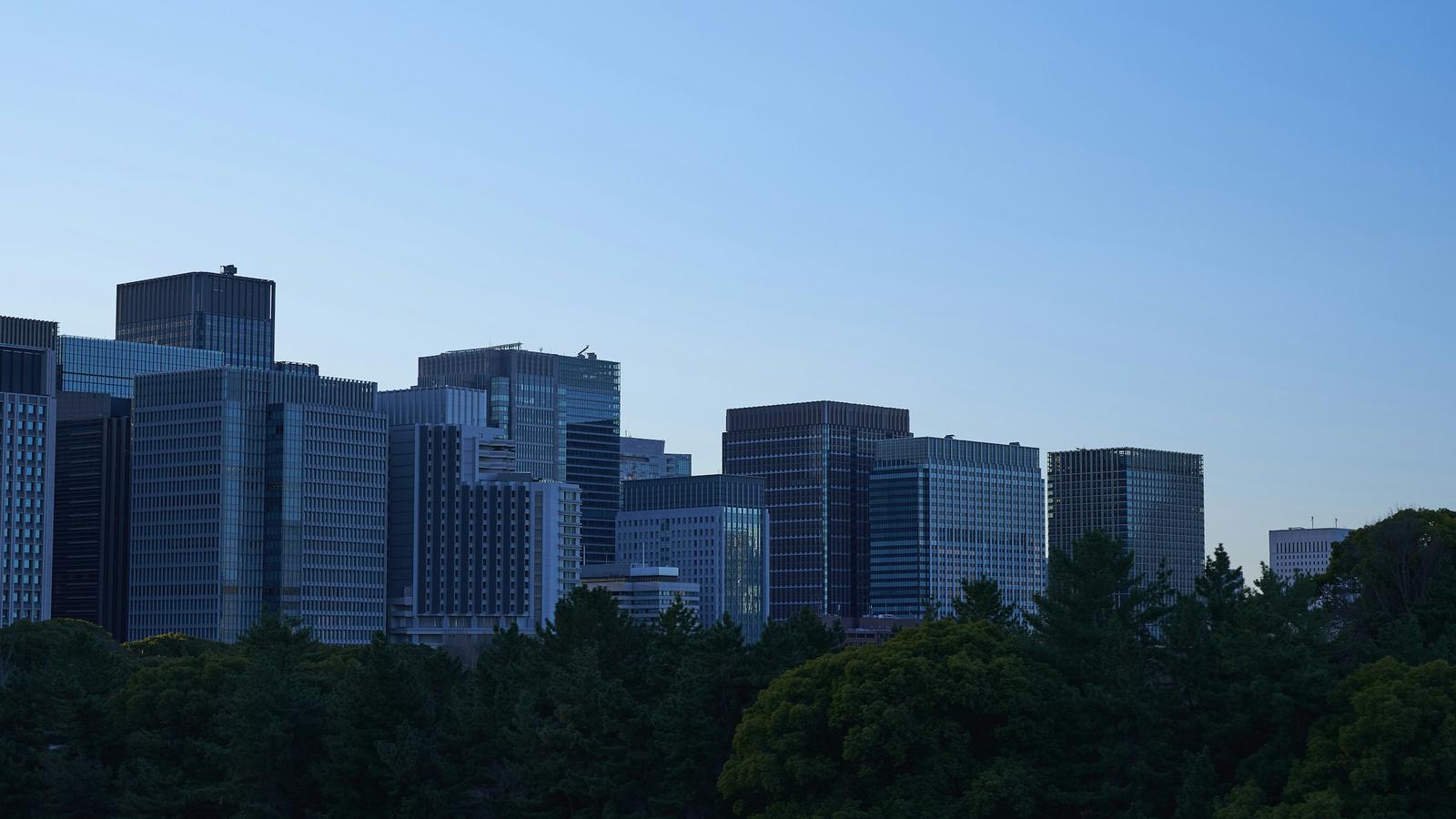
At HOSHINOYA Tokyo you take your shoes off at the door. The entrance, behind a tall door of Aomori hiba cypress, is laid with tatami, the hotel provides no slippers, and from then until you leave you walk on rush matting through a 17-storey tower in Otemachi, the office district beside the Imperial Palace. At the top, water drawn from 1,500 metres below the city fills an open-air bath with a square of sky above it.
This article is for travellers weighing a ryokan in the middle of Tokyo against the city's large hotels: which room to ask for, how the hot spring and the floor lounges work, what the house means for children and grandparents, and where it falls short. It is part of our series on the best luxury hotels in Japan for 2027 and sits beside our guide to Tokyo's luxury hotels. We read the hotel's own pages, Hoshino Resorts' press materials, the MICHELIN Guide and reputable press in November 2026, and contacted none of them; the sources are listed at the end.
Key points
- 84 rooms on 14 guest floors, six to a floor. Each floor has its own lounge, the OCHANOMA Lounge, open at any hour and only to the guests of that floor.
- The hot spring on the 17th floor rises from 1,500 metres below ground and has an indoor and an open-air bath. Hoshino Resorts says the bath and the spa are for staying guests only.
- Three room types: Kiku, about 80 m² for up to three, and Yuri (double) and Sakura (twin), about 50 m² for up to two.
- The windows sit behind the lattice of the facade. This is a house that looks inward; the palace views belong to the towers around it.
- Dinner is downstairs: a Japanese course in the dining room, an eight-seat sushi counter, and a vegetarian course with three days' notice.
- The World's 50 Best Hotels 2026 places it at No. 85, on its extended 51–100 list.
ASK US ABOUT HOSHINOYA TOKYO →
WHERE IT IS AND WHAT THAT GIVES YOU
HOSHINOYA Tokyo opened on July 20, 2016 at 1-9-1 Otemachi, the fifth house of Hoshino Resorts' HOSHINOYA brand. It has 17 floors above ground and 2 below. The architecture and interiors are by Rie Azuma of Azuma Architect & Associates, who designed the earlier HOSHINOYA in Karuizawa, Kyoto, Taketomi Island and Fuji; the small paved garden at its foot is by the landscape architect Hiroki Hasegawa. From across the street the tower reads as a dark office block. Close up, the facade becomes a metal lattice in asanoha-kuzushi, a broken hemp-leaf pattern taken from Edo komon kimono cloth.
The hotel is a 10-minute walk from the Marunouchi North Exit of Tokyo Station, and Otemachi subway station is just outside: exit A1 for the Marunouchi Line, C1 for the others. The hotel gives about 20 minutes by taxi from Haneda and about 60 from Narita, and can arrange an airport transfer on request. Otemachi is a district of banks and head offices, so for a ryokan it means a calm doorstep in the evening and at weekends. We found no notice of renovation or closure on the official site in November 2026.
WHICH ROOM TO ASK FOR
Every room is a tatami room with beds, furnished in bamboo and chestnut, with shoji screens shaped like the waist of a hand drum. Hoshino Resorts describes three types. Kiku, about 80 m², is the largest: it sits at the far corner of each floor, has a dining table and a walk-in wardrobe, sleeps up to three in three single-size beds laid side by side, and the hotel itself suggests it for longer stays. Yuri, with a double bed, and Sakura, with twin beds, are about 50 m² and sleep two.
For two people staying three nights or more, we would ask for Kiku. In a room where the floor is also the sitting room, a table to eat at and a wardrobe to unpack into change the stay more than the extra square metres suggest. For one or two nights, Yuri or Sakura is enough, and the choice between them is simply one bed or two. Furniture sits low, as it does in any ryokan; Afar notes that the staff can bring extra cushions for guests who prefer a higher seat.
Daylight comes in through the lattice and falls in patterns across the tatami, and the hotel describes the facade as veiling every room from the city. If a Tokyo window should frame the palace or the skyline, a neighbouring tower will serve you better. Two couples travelling together, or a family across two rooms, should ask for rooms on the same floor, so that the floor's lounge becomes a shared sitting room.
WHEN TO GO
The house changes its programme with the seasons. Moonlit kenjutsu, a sword and breathing practice on a rooftop, is an autumn programme for guests 12 and over (in 2026 it ran from September 1 to November 30); the 2027 dates are not yet published. From December 2, 2026 to February 28, 2027, guests leaving the bath are offered artisanal ice cream with a drizzle of matcha. A winter programme of Edo customs for good fortune runs from December 21, 2026 to February 2, 2027, and a spring stay built around the first signs of the season from February 1 to March 14, 2027.
For us winter is the strongest case for this hotel: an open-air bath at the top of a tower is at its best in cold, clear air. Spring brings the cherry trees of Chidorigafuchi, the palace moat where, according to Japan's national tourism organisation, a path of about 700 metres runs under the trees from around the end of March to early April, lit at night during the Chiyoda Sakura Festival. The East Gardens of the Imperial Palace, entered by the Ote-mon Gate, within walking distance of the hotel, are free and close on Mondays and Fridays, and from December 28 to January 3.
THE TABLES WORTH STAYING IN FOR
The dining room is in the basement, behind earthen walls made to look like layers of rock, with six tatami private rooms and four tables. Since September 2025 its dinner has been a course built on old Japanese home recipes that are disappearing from family tables, reworked by the executive chef Ryosuke Oka, who trained in French kitchens including Pierre Gagnaire before taking charge here in October 2023. The course is listed at ¥28,000 per adult, before tax and a 10% service charge, as of November 15, 2026, with a children's meal at ¥5,000. It must be reserved by 20:00 the day before, and same-day cancellation is charged in full.
In March 2025 the hotel added Sushi Otemon, an eight-seat counter in a corner of the same floor, with two sittings at 17:30 and 20:00. It keeps to Edomae technique while borrowing from sushi traditions elsewhere in Japan, and guests may come straight from the bath in the house's loungewear. The hotel lists it at ¥30,000 per person before tax and service, and asks that each party order only one dinner option. For vegetarian guests there is a full vegetarian course and a vegetarian Japanese breakfast, both with three days' notice.
SPA, POOL AND THE QUIET HOURS
The onsen is the heart of the house. Hoshino Resorts calls it Otemachi Onsen: a strong saline spring containing iodine, rising from where the sea once covered this ground, slightly dark in colour. From a cave-like indoor bath you walk out to an open-air bath whose walls frame the sky. Afar reports that the baths are separated by gender. We found no tattoo policy on the official pages, and would ask the hotel before arrival for any guest with one. On the same floor, the spa begins its treatments after a soak, and its signature uses leaf balls of steamed seasonal plants. The hotel lists its hour-long massage for guests 18 and over.
There is no pool in the hotel. Guests 16 and over may use the Spa Otemachi Fitness Club, with a gym, pool and studio, for an additional fee.
The quiet hours belong to the floor lounges. Each OCHANOMA Lounge is complimentary, with no dress code: sencha with a seasonal sweet from 15:00 to 16:30, caffeine-free evening drinks from 20:30 to 22:00, and letter writing on Edo washi in the morning. The kimono-style loungewear, designed by Jotaro Saito, can be worn to walk around Otemachi and the palace.
FAMILIES AND SEVERAL GENERATIONS
Every room takes one to three guests, and children under 12 may share a bed up to the room's capacity. A family of three fits in Kiku; a family of four needs two rooms, which is when the same-floor request matters. Dinner and breakfast have children's menus, and the restaurant keeps commercial baby food for different ages, or you may bring your own.
The programme has age limits that shape a family stay: the tea ceremony from 7, kenjutsu and some seasonal stays from 12, the fitness club and Edo Beauty Stay from 16, massage from 18. Tatami everywhere and no shoes is easy for small children. For grandparents it can be harder: the seating is low and the beds sit close to the floor, so we would mention knees and hips before arrival.
WHAT IT IS NOT FOR
It is the wrong choice for a guest who measures a Tokyo hotel by its view; the Four Seasons Hotel Tokyo at Otemachi, in the same district, looks straight over the palace gardens. It is a poor fit for anyone who swims every morning, since the pool is in a separate club. It suits guests at ease on the floor and on tatami; those who are not will be happier in a Western hotel with a ryokan night elsewhere. For the ryokan of forest and river, the brand's own HOSHINOYA Kyoto in Arashiyama is the fuller version.
HOW IT FITS A JOURNEY
We usually suggest HOSHINOYA Tokyo for the first or last nights of a journey, when Tokyo Station is close at hand for the Shinkansen. It also works as half of a split stay: two or three nights here for the bath and the quiet, then a tower hotel such as the Four Seasons for the views and the restaurants. From the entrance the hotel runs rickshaw tours to Kanda, Ningyocho and Nihonbashi, and river cruises from Nihonbashi Wharf.
One detail matters for planning dinners out: the hotel's dining page says it does not make reservations at outside restaurants for guests, and offers a list of places that can be reserved online. That is where we come in. We can arrange tables around the stay, cars from the airport or between hotels, and guides for the city, always subject to what each restaurant and supplier can offer on the day.
SOURCES AND HOW WE CHECKED
We read these pages on November 15, 2026, and contacted none of these organisations. Prices are those shown on the official site that day.
- HOSHINOYA Tokyo, official site: 84 rooms, 1 to 3 guests per room, check-in 15:00 and check-out 12:00, bed sharing for children under 12, address
- HOSHINOYA Tokyo, Dining: dinner course and Sushi Otemon times and prices, children's meal, vegetarian course with three days' notice, breakfast hours, no reservations made at outside restaurants
- HOSHINOYA Tokyo, Hot Spring and Spa: spring from 1,500 m, saline water, indoor and open-air baths on the top floor, leaf-ball treatment
- HOSHINOYA Tokyo, Activities: seasonal programmes and dates, age limits, rickshaw tours and river cruises, the fitness club with pool for an additional fee
- HOSHINOYA Tokyo, OCHANOMA Lounge: six rooms per floor, lounge for that floor's guests, hours of the sencha, evening drinks and letter writing
- HOSHINOYA Tokyo, Maps and directions: 10 minutes on foot from Tokyo Station, exits A1 and C1, airport times, transfers on request
- Hoshino Resorts press centre, facility overview (September 2025): opened July 20, 2016, 17 floors above ground and 2 below, room types and sizes, no slippers, designers, chef Ryosuke Oka, Sushi Otemon opened March 2025 with eight seats, bath and spa for staying guests only
- MICHELIN Guide, Hoshinoya Tokyo: 84 rooms, a lounge for every six rooms, a spring from nearly a mile underground, the spa on the 17th floor
- Afar, Hoshinoya Tokyo review: Rie Azuma as architect, opened 2016, baths separated by gender, low furniture and extra cushions on request
- Japan National Tourism Organization, Chidorigafuchi Moat: 700-metre path under cherry trees, end of March to early April, night lighting during the Chiyoda Sakura Festival
- Imperial Household Agency, East Gardens of the Imperial Palace: free entry, closed Mondays and Fridays and from December 28 to January 3, Ote-mon Gate
- The World's 50 Best Hotels 2026, official list: The World's 50 Best Hotels 2026 places it at No. 85, on its extended 51–100 list.
QUESTIONS TRAVELLERS ASK
Does HOSHINOYA Tokyo have a natural hot spring?
Yes. Otemachi Onsen rises from 1,500 metres below ground and fills an indoor bath and an open-air bath on the 17th floor. Hoshino Resorts says the bath and the spa are for staying guests only, and Afar reports that the baths are separated by gender.
Which room is the largest at HOSHINOYA Tokyo?
Kiku, about 80 m², at the far corner of each floor, with a dining table, a walk-in wardrobe and beds for up to three. Yuri (double) and Sakura (twin) are about 50 m² for two.
Can children stay at HOSHINOYA Tokyo?
Yes. Rooms take one to three guests, and children under 12 may share a bed up to the room's capacity. There are children's meals at dinner and breakfast. Some activities have age limits, from 7 for the tea ceremony to 18 for massage.
Is there a swimming pool?
Not in the hotel. Guests 16 and over may use the Spa Otemachi Fitness Club, with a gym, pool and studio, for an additional fee.
Will the hotel reserve restaurants outside for guests?
The hotel's dining page says it does not make reservations at outside restaurants, and offers a list of places that can be reserved online. STAYGO can arrange tables around your stay, subject to each restaurant's availability.
ASK US ABOUT HOSHINOYA TOKYO
Tell us who is travelling, how many nights you have in Tokyo, and how everyone feels about tatami, low seating and a shared bath. We will tell you whether this house suits your journey, which room we would ask for, and how to pair it with the rest of your stay.
Begin planningWe reply within 24 hours, in writing
Some of the restaurants and bars we arrange seat guests only by introduction or membership. We ask on your behalf; the table and the evening are the house's decision. We do not publish their names.